This Week’s Top 5 Stories in AI

Inside King Charles’ Letter to Nvidia’s CEO at AI Ceremony
Today’s architects of modern AI infrastructure rarely receive recognition outside technology circles, but that changed in a ceremony that blended celebration with a sobering reminder about AI’s dual nature.
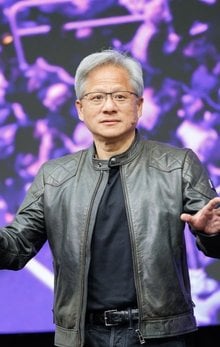
Nvidia Founder and CEO Jensen Huang and the company’s Chief Scientist Bill Dally received the 2025 Queen Elizabeth Prize for Engineering from His Majesty King Charles III, awarded for their contributions to modern machine learning (ML).
Yet the ceremony took on a new level when the King personally handed the CEO a letter about his thoughts on AI’s development.
“He said, there’s something I want to talk to you about. And he handed me a letter,” Jensen tells the BBC.
“It was his speech on AI safety. He obviously cares very deeply about AI safety.”
Microsoft: Inside the World’s First AI Superfactory
The race to train frontier AI models is pushing data centre infrastructure to its physical limits – and the constraints are increasing.
So much so, now the speed of light is determining how tightly processors can be packed together – and heat dissipation governs how much power can be pumped through a rack.
These are the hard boundaries influencing where and how AI gets built.
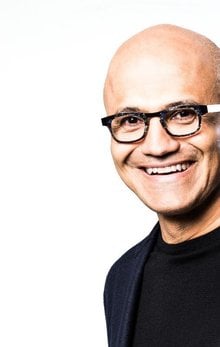
Tackling the challenge, Microsoft has opened its second Fairwater AI data centre in Atlanta, Georgia, connecting it to the existing Wisconsin site through a dedicated AI wide area network.
What’s unique about the factory is that the company has designed the facility to house hundreds of thousands of Nvidia GB200 and GB300 graphics processing units (GPUs) in a single flat network architecture – abandoning the traditional cloud data centre model in favour of something purpose-built for the demands of modern AI training.
Intel’s AI Chief Joins OpenAI for AGI Push: Explained
The global push to develop artificial general intelligence (AGI) has intensified competition for senior technical talent across the technology sector, with companies willing to poach key executives from rivals.
OpenAI has now recruited Sachin Katti from Intel, where he served as Chief Technology and AI Officer, to lead the development of computing infrastructure that will underpin the company’s AGI ambitions.
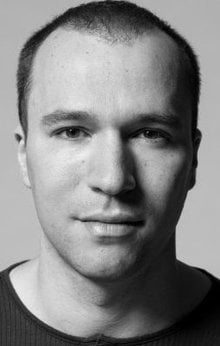
Greg Brockman, President of OpenAI, announces the appointment through X, saying Katti will “work on designing and building our compute infrastructure, which will power our AGI research and scale its applications to benefit everyone” he says, referring to the systems that will power OpenAI’s research into AGI.
AGI describes AI systems capable of performing tasks requiring human-like reasoning across different domains, rather than excelling at narrow, specific tasks.
Intel, which manufactures processors and computing hardware used in data centres worldwide, confirmed Katti’s departure and moved quickly to announce a leadership reshuffle.
Gartner: AI Won't Kill Jobs but Will Reshape 32m Jobs a Year
Are you worried that AI will take your job?
A new Gartner study suggests perhaps you shouldn’t be, as what is coming isn’t a deadly job apocalypse but a bridgeable chasm of change.
The study predicts that this chaos will set in starting in 2028-29, born of the need to reconfigure and redesign over 32 million jobs each year, to adapt to AI.
“The next era of enterprise performance will not hinge on the quantity of people employed, but on the quality of collaboration between humans and AI,” says Helen Poitevin, Distinguished VP Analyst at Gartner.

“Every day 150,000 jobs will evolve through upskilling, while 70,000 more jobs will need to be rewritten, reworked and redesigned.
“Executive leaders must plan their AI investments and goals to anticipate and manage these changes.
“They need to decide on their destination – whether to pursue human-first designs that emphasise supporting people in their work, or to select AI-first designs that aim to maximise efficiency by relying on AI to perform tasks.”
AI Bias: What Happens When AI Giants Fight Over Fairness
The fight over AI is moving from research labs into courtrooms and boardrooms, with tech giants taking radically different approaches to a problem that remains misunderstood and politically charged.
Two recent developments illustrate the emerging battle lines: Elon Musk’s xAI and X suing Apple and OpenAI over alleged anti-competitive practices, while Meta announces it wants to “remove bias” from its AI models – a goal that sounds simple but carries profound implications for how AI impacts our world.
At stake is more than market share, as these conflicts reveal questions about whose perspectives AI systems amplify, whose they silence and whether the pursuit of “neutrality” in AI is even possible – or desirable.
From chatbots to hiring algorithms, the struggle over AI bias mitigation exposes the urgent need for clearer ethical frameworks and regulatory guardrails.
Elon Musk’s lawsuit against Apple and OpenAI strikes at the commercial heart of AI competition.








Executives
Greg Brockman
President, Chairman, & Co-Founder

Helen Poitevin
Distinguished VP Analyst
Jensen Huang
Founder and CEO
Satya Nadella
Chairman and CEO