
AI Bias: What Happens When AI Giants Fight Over Fairness

The fight over AI is moving from research labs into courtrooms and boardrooms, with tech giants taking radically different approaches to a problem that remains misunderstood and politically charged.
Two recent developments illustrate the emerging battle lines: Elon Musk’s xAI and X suing Apple and OpenAI over alleged anti-competitive practices, while Meta announces it wants to “remove bias” from its AI models – a goal that sounds simple but carries profound implications for how AI impacts our world.
At stake is more than market share, as these conflicts reveal questions about whose perspectives AI systems amplify, whose they silence and whether the pursuit of “neutrality” in AI is even possible – or desirable.
From chatbots to hiring algorithms, the struggle over AI bias mitigation exposes the urgent need for clearer ethical frameworks and regulatory guardrails.
Why Elon Musk takes Apple and OpenAI to court over chatbot dominance
Elon Musk’s lawsuit against Apple and OpenAI strikes at the commercial heart of AI competition.
His companies argue that Apple’s exclusive integration of ChatGPT into iPhones creates an unfair advantage that shuts out rivals like xAI’s Grok chatbot.
With Apple commanding roughly 65% of the US smartphone market, access to its platform is a gateway to hundreds of millions of users.
“There is no valid business reason for the Apple-OpenAI deal to be exclusive,” Elon Musk argues in a Texas federal court filing – contending the arrangement blocks competitors and hands OpenAI valuable data about how millions of users interact with AI.
The case mirrors how competition law intersects with AI ethics.
The lawsuit argues that “the Apple-OpenAI arrangement has foreclosed competition among generative AI chatbots, deprived competing Gen AI chatbots of scale and reduced quality and innovation.”
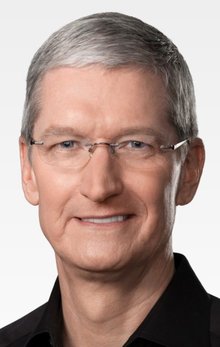
Apple CEO Tim Cook says when discussing Apple’s AI transformation: “Apple must do this. Apple will do this. This is sort of ours to grab... We will make the investment to do it,” according to Techspot.
Yet according to the Massachusetts Institute of Technology (MIT), he emphasises that “when you keep people at the centre of what you do, it can have an enormous impact.”
How Meta’s quest to build unbiased AI sparks controversy
While Musk fights for market access, Meta wades into the politics of AI bias mitigation itself.
When Meta released Llama 4, it declared that “it’s well-known that all leading LLMs have had issues with bias – specifically, they historically have leaned left when it comes to debated political and social topics.”
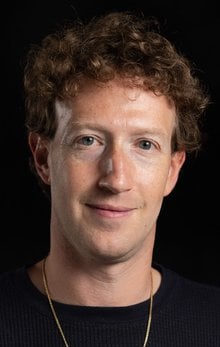
Yet when announcing Meta’s development with superintelligence, CEO Mark Zuckerberg says: “Meta’s vision is to bring personal superintelligence to everyone.
“We believe in putting this power in people’s hands to direct it towards what they value in their own lives.
“An even more meaningful impact on our lives will likely come from everyone having a personal superintelligence that helps you achieve your goals, create what you want to see in the world.”
However, this rhetoric masks thornier questions about whose values get encoded when Meta decides what constitutes bias worth removing.
“It’s a pretty blatant ideological play to effectively make overtures to the Trump administration,” says Alex Hanna, Director of Research at the Distributed AI Research Institute.
This means that the claim that leading AI models lean left is contested.
Research from the University of Washington, Carnegie Mellon University and Xi’an Jiaotong University in 2023 finds that Llama already gave the most right-wing authoritarian answers to prompts, while ChatGPT gave the most left-leaning responses.
Why Apple’s CEO fears humans thinking like computers
Tim Cook’s concerns about AI show deeper anxiety about technology’s impact on human values.
Paraphrasing Steve Jobs, he says: “Technology alone is not enough, it’s technology married to the liberal arts and with the humanities that make our hearts sing.”
- Apple controls approximately 65% of the US smartphone market
- OpenAI holds around 80% of the Gen AI chatbot market share in the US
- Meta claims LLaMA 4 lowered refusal rates on debatable political and social topics from 7% to below 2%
He adds: “I’m not worried about AI giving computers the ability to think like humans, I’m more concerned about people thinking like computers.
“Without value or compassion, without concern for consequences – that is what we need people to guard against.”
This perspective stands in tension with Meta and Grok’s positioning as models that answer questions others refuse – a stance that worries AI ethics experts who see content moderation and refusals as essential safety features.
Meta claims Llama 4 “refuses less on debated political and social topics overall (from 7% in Llama 3.3 to below 2%).”
Allen Institute for AI senior researcher Jesse Dodge questions this: “Refusals are an important part of building a model and having a model that’s usable to lots of people,” she says.
“I don’t know why they would advertise that it refuses a lot less.”
The technical minefield of fixing algorithmic bias
The technical challenge of addressing AI bias proves far more complex than political rhetoric suggests.
With billions of parameters, getting models to answer in particular ways isn’t straightforward – and clumsy attempts can backfire.
Vaibhav Srivastav, Head of Community and Collaborations at Hugging Face, explains that model creators can influence outputs at different stages.
Before training, they decide what data gets included and how sources are weighted.
During post-training, techniques like reinforcement learning from human feedback guide models toward preferred responses.
“Besides anecdotal evidence, little public knowledge exists about what goes into post-training these models,” Vaibhav says.
Meanwhile, system-level prompts is a particularly blunt tool that risks unintended consequences.
Both Meta and Google have stumbled here, generating inaccurate and insensitive images, like Google’s Gemini creating racially diverse Nazi soldiers in its attempts to counteract bias.
These mistakes highlight the ethical minefield of bias mitigation without clear principles or regulatory standards – and much of the bias stems from training data itself.
Because major models have scraped most of the internet that isn’t behind paywalls and because much of that data is in English – specifically American English – AI models tend to reflect perspectives captured in that language and cultural context.
How hiring algorithms perpetuate discrimination at scale
These consequences of inadequate bias mitigation are especially tangible in AI-powered hiring systems.
- AI hiring tools often perpetuate discrimination by basing decisions on historical data biased against protected groups. This leads to disadvantaged candidates being unfairly screened out. Current anti-discrimination laws do not fully cover AI’s opaque decision processes, raising urgent calls for clearer regulation and accountability.
Resume screening algorithms systematically disadvantage candidates based on gender, race and other protected characteristics – often in ways their creators neither intended nor understood.
When AI systems make hiring decisions, they encode biases present in historical data.
If past hiring favored certain demographics, the algorithm learns to replicate those patterns, potentially excluding qualified candidates and violating anti-discrimination laws.
The scale of algorithmic hiring means bias can perpetuate discrimination at unprecedented speed – meaning that these systems operate in a regulatory grey zone.
While employment discrimination laws exist, they weren’t written with AI in mind.
Who bears responsibility when an algorithm discriminates? How can candidates challenge decisions made by opaque systems? What transparency requirements should apply?
The hiring context exposes the inadequacy of framing bias mitigation as a simple left-versus-right issue.
If an algorithm that excludes qualified women from engineering roles, is that politically biased, or just discriminatory?
Without clear regulatory frameworks, companies deploying these systems face limited accountability.
When imbalance becomes harmful
GLAAD, the LGBTQ+ rights organisation, reports that Llama 4 now makes reference to discredited conversion therapy practices in some queries.

“Both-sidesism that equates anti-LGBTQ junk-science with well-established facts and research is not only misleading – it legitimises harmful falsehoods,” a GLAAD spokesperson says.
“All major medical, psychiatric and psychological organisations have condemned so-called ‘conversion therapy’ and the UN has compared it to ‘torture.’”
This illustrates a central tension in AI ethics: the difference between political neutrality and factual accuracy.
When Meta frames “both sides” of conversion therapy as legitimate debate rather than settled medical consensus, it’s not removing bias but choosing different biases.
The same principle applies to hiring algorithms that treat discriminatory patterns as neutral data points rather than ethical violations requiring correction.
What are AI giants really racing to achieve?
Today, the legal and regulatory situation on AI bias mitigation remains fragmented.
Tim Cook acknowledges the mounting pressure: “The reality is that Big Tech is under a lot of scrutiny around the world,” he says, according to the Economic Times.
“We need to continue to push on the intention of regulation and get them to offer that up, instead of these things that destroy the user experience and user privacy and security.”
So far, the EU’s AI Act is the most comprehensive attempt at AI regulation, including provisions for transparency and accountability in high-risk applications like hiring.
Yet global consensus remains elusive and enforcement mechanisms remain untested.
As AI systems become deeply embedded in consequential decisions – from hiring and lending to healthcare and criminal justice – the fight over whose values they encode will intensify.
Meta and Grok’s positioning as “uncensored” alternatives, Musk’s legal battles over market access – and ongoing debates over algorithmic fairness in hiring all reflect the same underlying struggle: control over the systems that increasingly mediate our world.
For the moment, the question facing regulators, ethicists and business leaders isn’t whether AI will be biased.
It’s whose biases win – and who gets to decide.




Executives

Elon Musk
Tesla CEO
Mark Zuckerberg
CEO
Tim Cook
Executive Chairman