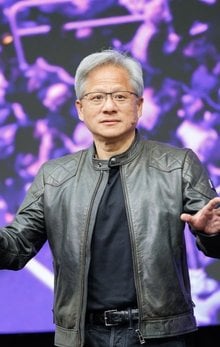
What is Nvidia CEO Jensen Huang's Biggest Business Regret?
From partnerships with OpenAI to backing Britain's AI start-up sector, Jensen Huang has always regarded strategic investments as an important part of his role as CEO of Nvidia.
It's an approach that, in recent years, has helped to establish Nvidia as the international force in AI that we know today.
All this success makes it all the more unexpected that "regret" is a word that features in Jensen's vocabulary.
In a recent interview with CNBC, he acknowledged that he does indeed wish that he'd committed substantially more capital to Elon Musk's AI venture xAI when it was in its nascent stages.
Despite Nvidia already holding a stake in xAI, which launched in 2023, Jensen expressed a desire to have expanded that position given Musk's history of creating revolutionary businesses.
Speaking to CNBC, he said: "The only regret I have about xAI – we're an investor already – is that I didn't give him more money. You know, almost everything that Elon is part of, you really want to be part of as well."
He continued: "He gave us the opportunity to invest in xAI. I'm just delighted by that."
Nvidia and xAI
During the conversation, Jensen clarified that Nvidia's stake in xAI shouldn't be mistaken for vendor financing – the approach of providing funds to customers so they can buy your products, a strategy that sparked alarm during earlier technology booms.
Instead of treating xAI as a client relationship, Jensen stressed it represented a bold commitment to a compelling opportunity: "That's an investment into a really great future company. And I'm really excited about that."
Throughout the interview, he positioned xAI alongside other emerging AI companies such as OpenAI and Anthropic, describing them as components of an influential movement of specialist AI businesses constructing the foundation for a new technological age.

In contrast to the dot-com period – which Jensen described as founded on weak business frameworks and speculative pricing – the current AI expansion is supported by substantial, proven enterprise requirements.
"Back then, as you recall, there were Pets.com, Hospitals.com… all the internet companies combined were what, US$30bn, US$40bn in size?," he said. "If you look at the hyperscalers now, that's about US$2.5tn of business that's already operating today."
This US$2.5tn of established enterprise computing capability is what Huang anticipates will shift towards Gen AI, enabled by Nvidia's GPU solutions.
"We've got to build into half a trillion dollars worth of capacity infrastructure that's already naturally growing by itself, and we're in the beginning phases of that work."
Nvidia's investment strategy
While the leather-clad CEO might wish he'd invested more heavily in xAI, he's certainly not lacking in strategic investments throughout the AI landscape.
"We're always looking for great startups to invest in," he said, pointing to his stake in CoreWeave, an American AI cloud-computing business.
Jensen outlined that Nvidia's approach to investment is deeply connected to developing the full AI infrastructure – spanning hardware through to applications.
He went on: "AI is several things. AI is energy, AI is chips, the models and the applications. You could look at me working across that entire stack of ecosystems around the world. And we need more energy. We need more chips. We need better models and more models. And we need a lot more applications."
From Cursor – an AI software coder that Huang identified in the interview as his "favourite enterprise AI service" – through to OpenEvidence's AI for digital nursing and medical diagnostics, Nvidia is establishing itself not merely as a chipmaker but as an engaged player in the coming generation of software and AI platforms.
"If I were to realise that the Cursor team was raising money before, I would have given them all of my money," the CEO said.
Additional portfolio investments feature robotics company Figure and autonomous driving technology ventures Wayve and Waabi.
Each contributes to what Huang characterises as a "revolutionary technology" transforming efficiency throughout sectors.
"There's just an incredibly large set of new companies that are enabled by this revolutionary technology called AI," Jensen concluded.
"These new companies are going to be future giants, and it would be great to be part of them, support their growth, and be part of that journey."


Executives
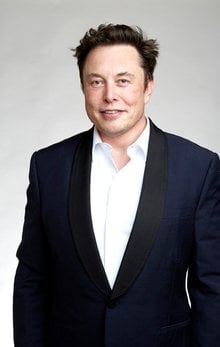
Elon Musk
Tesla CEO
Jensen Huang
Founder and CEO