This Week’s Top 5 Stories in AI

How the US$1bn OpenAI-Disney Deal Brings Magic to Sora Users
From being tangled in lawsuits to now being stronger together, AI giants and creative studios are turning a mystical chapter of collaboration.
Singing to this tune is the recent agreement between the Walt Disney Company and OpenAI, which will make Disney the first major content licensing partner for Sora, OpenAI’s popular, short-form Gen AI video platform.
This three year licensing agreement opens the gate of the magical Kingdom for Sora users, giving them access to more than 200 beloved characters from the Disney, Marvel, Pixar and Star Wars universe.
This agreement will provide Sora users with the creative power to generate fan-inspired video content using not just the characters, but costumes, props, vehicles and iconic environments from the company.
This means that the Disney-OpenAI deal is a step in future-proofing creativity and digital storytelling.
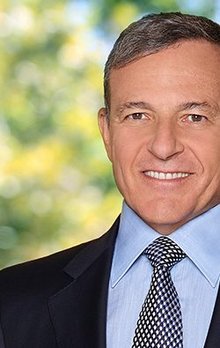
Robert A. Iger, CEO at The Walt Disney Company | Credit: Walt Disney
“Technological innovation has continually shaped the evolution of entertainment, bringing with it new ways to create and share great stories with the world,” says Robert A. Iger, CEO of Disney.
Inside Nvidia’s Tools for Faster GPU AI Personalisation
Fine-tuning large language models (LLMs) has become essential for enterprises seeking to customise AI systems for specific workflows – from customer support chatbots to coding assistants.
The challenge lies in getting smaller language models to respond consistently with high accuracy for specialised tasks, particularly when those tasks require domain expertise or adherence to particular formats.
Innovating for this challenge, Nvidia has released guidance on fine-tuning these models using Unsloth, an open-source framework optimised for the company’s graphics processing units (GPUs).

The announcement comes alongside the launch of Nvidia’s Nemotron 3 family of open models, designed for agentic AI applications that can orchestrate actions on behalf of users.
ADAM: The Nvidia-Powered Bartender Robot at the NHL Arena
The hospitality industry is increasingly turning to robotics to address persistent labour shortages, with deployments now extending beyond kitchen automation into customer-facing roles.
One such example took place at the T-Mobile Arena in Las Vegas, where hockey fans attending Golden Knights matches were served drinks by ADAM, a robot bartender that’s proving automation can handle more than just repetitive tasks.
ADAM, which stands for Automated Dual Arm Mixologist, is a practical application of edge AI computing in hospitality environments.
Developed by Las Vegas-based Richtech Robotics using Nvidia’s Isaac libraries, the system addresses workforce challenges while creating what the company describes as distinctive customer interactions at the NHL venue.
“The hospitality industry faces significant labor challenges and ADAM is our answer to meeting those needs while elevating the customer experience,” says Matt Casella, former President of Richtech Robotics as of 2nd December this year.
“With Nvidia’s Isaac platform, we’ve developed a solution that’s scalable, consistent and frankly, creates memorable moments for fans.”
How Amazon Uses AI to Strengthen Human Rights Due Diligence
Amazon has started to implement AI models designed to pinpoint forced labour risks throughout its extensive supplier network.
Amazon is using technology to identify potential human rights issues. Its machine learning (ML) system sifts through millions of data points, including historical audits, government reports and news signals, to flag supplier sites that could be high-risk.
This allows Amazon to better prioritise its due diligence resources across a complex business that includes e-commerce, logistics, cloud services and manufacturing.

According to Kara Hurst, Amazon’s Chief Sustainability Officer (CSO), the tool “successfully identified about 9 out of every 10 high-risk sites with 85% overall accuracy.”
In addition to this risk detection system, Amazon has created an AI tool that processes audit reports in minutes, a task that typically requires four hours of manual review. Kara explains that early versions helped process audit reports “65% faster: a remarkable difference.”
Why OpenAI Taps Ex-Chancellor Osborne for Global AI Push
As governments worldwide strive to learn how to regulate and deploy AI, technology companies are aiming to shape policy frameworks before rules become fixed.
OpenAI is now making its move by hiring one of Britain’s most connected political figures.
Former UK Chancellor George Osborne has joined OpenAI as Managing Director (MD) and Head of OpenAI for Countries, working from London.
The appointment puts a veteran of British politics at the centre of the company’s efforts to build relationships with governments across more than 50 countries.
Osborne served as Chancellor of the Exchequer from 2010 to 2016 under Prime Minister David Cameron.
His role at OpenAI involves working with national administrations on AI infrastructure, digital literacy programmes and the deployment of AI systems in public services.
“I recently asked myself the question: what’s the most exciting and promising company in the world right now? The answer I believe is OpenAI,” George writes in a post on X.
“So it’s a privilege to be going to work for OpenAI as Managing Director and Head of OpenAI for Countries, based here in London.”
Company portals





Executives
Kara H. Hurst
Vice President, CSO, Worldwide Sustainability
Robert A. Iger
CEO