
The AI Round up of Nvidia's Announcements at Computex
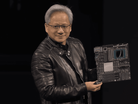
Nvidia is at the heart of the AI industry. Once known primarily for gaming graphics cards, it is now dominating AI computing hardware.
The company’s meteoric rise has mirrored the explosive growth of AI itself – and now at Taiwan's annual Computex technology conference in Taipei, the largest computing-focused trade show in Asia, the company has announced the next generation of AI technologies.
At this year’s event, themed AI Next, Nvidia introduced many new innovations, including NVLink Fusion, a major development in AI infrastructure, which allows industries to build semi-custom systems with multiple interconnected chips.
This is Nvidia’s latest effort to strengthen its AI ecosystem through strategic partnerships. This is all while simultaneously addressing the growing need for more specialised and efficient AI computing architectures, as large language models (LLMs) and Gen AI applications continue to expand in size and complexity.
Nvidia is also powering the world’s largest quantum research supercomputer, ABCI-Q, which was recently unveiled as a dedicated platform for advancing quantum computing research.
This milestone shows Nvidia’s role in accelerating breakthroughs in quantum technologies, with its GPUs and CUDA-Q platform forming the computational foundation for hybrid quantum-AI research across leading institutions and industry partners.
How NVLink Fusion creates new AI infrastructure possibilities
NVLink Fusion, a new silicon technology, enables businesses to develop customised AI solutions whilst leveraging Nvidia’s established computing architecture.
This innovation permits the integration of third-party accelerators and custom CPUs with Nvidia’s graphics processing units (GPUs), creating more flexible and powerful AI systems.
“A tectonic shift is underway: for the first time in decades, data centres must be fundamentally rearchitected – AI is being fused into every computing platform,” says Jensen Huang, Founder and CEO of Nvidia, during his keynote presentation.
The technology is already being adopted by several prominent firms, with MediaTek, Marvell, Alchip Technologies, Astera Labs, Synopsys and Cadence among the first to incorporate NVLink Fusion into their custom silicon development efforts.
Additionally, Fujitsu and Qualcomm Technologies will use the technology to integrate their custom CPUs with Nvidia GPUs in high-performance computing environments.
This approach addresses the growing demand for specialised AI solutions beyond Nvidia’s standard offerings, allowing partners to create systems tailored to specific applications while remaining within Nvidia's ecosystem.
NVLink Fusion is an expansion of Nvidia's business model beyond selling its own chips to licensing core technologies that can be incorporated into a wider range of products.
GR00T-Dreams update: Humanoid robotics taking centre stage
In a parallel development, Nvidia also announced Isaac GR00T N1.5, an update to its foundation model for humanoid robots, alongside GR00T-Dreams, a blueprint for generating synthetic motion data.
GR00T-Dreams leverages Cosmos Predict world foundation models to create synthetic neural trajectories, enabling robots to learn new tasks through a single image input.
This breakthrough accelerates robot training by generating vast quantities of synthetic motion data, effectively allowing machines to learn more efficiently.
Developing highly skilled humanoid robots needs a huge amount of diverse data, which is costly to capture and process, as robots need to be tested in the physical world.
- Nvidia Cosmos Reason
- Cosmos Predict 2
- Nvidia Isaac GR00T-Mimic
- Open-Source Physical AI Dataset
- Nvidia Isaac Sim 5.0
- Nvidia saac Lab 2.2
According to Nvidia, the GR00T N1.5 model was developed in just 36 hours using GR00T-Dreams technology, compared to what would have required nearly three months of manual human data collection.
The updated model enhances robots’ ability to adapt to new environments and workspace configurations, significantly improving their success rates for common tasks like sorting and material handling.
“Physical AI and robotics will bring about the next industrial revolution,” Jensen says during his presentation.
“From AI brains for robots to simulated worlds to practice in or AI supercomputers for training foundation models, Nvidia provides building blocks for every stage of the robotics development journey.”
Several major robotics firms, including Agility Robotics, Boston Dynamics and NEURA Robotics, are adopting Nvidia’s Isaac platform to enhance their humanoid robot capabilities, positioning Nvidia as a crucial supplier for the emerging robotics industry.
RTX Pro servers bolstering enterprise AI computing power
In addition to these developments, Nvidia announced its RTX Pro Server, which targets enterprise AI applications with improved performance compared to previous generations.
The servers, powered by RTX Pro 6000, are based on the Blackwell architecture and deliver up to 1.7 times the performance of the company's previous H100 systems.
These systems are an evolution from Nvidia’s traditional focus on providing chips for others’ servers to offering complete server solutions, as the RTX Pro servers are designed specifically for enterprise environments requiring high-performance AI computing capabilities, including content creation, model training and inference applications.
The announcement forms part of Nvidia’s broader Blackwell platform strategy, with the company positioning its technology as the foundation for next-generation AI infrastructure.
A partnership with Foxconn
In a commitment to the Taiwanese market, Jensen additionally announced a partnership with Foxconn to build a massive AI supercomputer in Taiwan.
Powered by 10,000 Nvidia Blackwell GPUs, the facility aims to advance AI research and industry innovation across the island.
This collaboration, which includes Taiwan’s government, establishes a significant AI computing resource for researchers, startups and enterprises in the region.
The supercomputer will be managed by Foxconn’s Big Innovation Company as part of Nvidia’s Cloud Partner programme.
Foxconn is also building smart hospital solutions using Nvidia’s technologies, accelerating physical and digital robotics for healthcare.

“Nvidia sees itself as a pioneer of a new AI era and is using Computex as a stage to strategically position its narrative: as an innovator, but also as an infrastructural cornerstone for new digital value chains,” Jensen says.
Explore the latest edition of AI Magazine and be part of the conversation at our global conference series, Tech & AI LIVE.
Discover all our upcoming events and secure your tickets today.
Also sign up to our free weekly newsletter for the latest insights and stories straight into your inbox.
AI Magazine is a BizClik brand
