
Inside Nvidia's AI Strategy: Powering Global AI
Artificial intelligence is reshaping industries, accelerating digital transformation and redefining business models. At the forefront of this revolution is Nvidia, which has evolved from a graphics card manufacturer into the infrastructure powerhouse of global AI.
As the race to develop and deploy AI intensifies, Nvidia remains a critical enabler of advanced computing.
With governments and corporations investing billions in AI capabilities, the company provides the computational power required to train and operate increasingly complex AI models.
Ahead of the Nvidia GPU Technology Conference (GTC), AI Magazine examines how the company has maintained its leadership in AI and what innovations it is set to unveil next.
Gen AI: driving Nvidia’s computing transformation
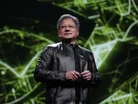
At CES 2025, Nvidia Chief Executive Officer Jensen Huang outlined the company’s AI vision, showcasing how it plans to lead the next phase of AI development. His keynote detailed Nvidia’s advancements in Gen AI, agentic systems and strategic partnerships aimed at making cutting-edge computing accessible worldwide.
AI is evolving rapidly, shifting from perception-based models to advanced reasoning and decision-making systems.
“It started with perception AI – understanding images, words and sounds. Then generative AI – creating text, images and sound,” Jensen said during his 90-minute CES keynote.
“Now, we're entering the era of physical AI, AI that can proceed, reason, plan and act.”
This stage enables AI models that can generate photorealistic images, complex 3D models and sophisticated written content, expanding opportunities in gaming, entertainment and virtual reality.
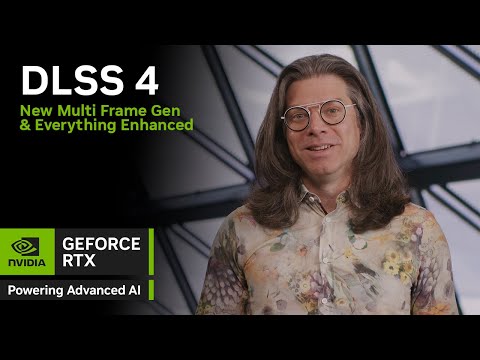
A key technological leap is Nvidia’s Deep Learning Super Sampling technology (DLSS 4), which introduces Multi Frame Generation, enhancing efficiency by generating three additional frames for every calculated frame.
“As a result, we’re able to render at incredibly high performance, because AI does a lot less computation,” Jensen explained.
Blackwell architecture: powering next-gen AI computing
Scaling AI effectively requires increasingly powerful hardware. Nvidia’s Blackwell GPU architecture, named after mathematician David Blackwell, delivers improved performance per watt and per dollar, addressing the rising demands of AI workloads.
Jensen introduced the GeForce RTX 5090 GPU, featuring 92 billion transistors and delivering 3,352 trillion AI operations per second (TOPS), at CES.
- Project Digits
- GeForce RTX 50 Series GPUs
- DLSS 4
- Blackwell GPU Architecture
- Nvidia Cosmos
- AI Foundation Models for RTX PCs
Holding up the GPU, he announced, “Here it is – our brand-new GeForce RTX 50 series, Blackwell architecture. The GPU is just a beast.”
Beyond gaming, this architecture supports a wide range of applications, including climate modelling and healthcare diagnostics. Industry analysts anticipate Nvidia will expand its product line later this year with a Blackwell Ultra series, offering significant performance enhancements.
Agentic AI and digital workers
AI is now advancing beyond perception and generation into what is known as agentic AI, systems capable of perceiving, reasoning, planning and acting autonomously.
“This is the next great leap, where AI agents evolve into digital employees capable of collaborating with humans,” Jensen said.
Nvidia’s NeMo framework, a conversational AI toolkit, enables organisations to develop digital assistants that can assist with drug discovery, automate logistics or detect software vulnerabilities.
Further developments in agentic AI are expected to be showcased at GTC.
Nvidia’s Cosmos platform: advancing robotics and automation
Training AI to understand physical environments remains a challenge. Nvidia’s Cosmos world foundation model platform addresses this by learning from physics principles such as motion and material interactions.
“The ChatGPT moment for general robotics is just around the corner,” Jensen said during his CES keynote.
Cosmos combines generative models, tokenizers and video processing pipelines, allowing AI systems to predict multiple future scenarios and optimise their actions. Integrated with Nvidia Omniverse, the platform enables developers to simulate and train robots before deploying them in the real world.
Several leading robotics companies, including 1X, Agile Robots, Figure AI and Neura Robotics, are already using Cosmos. Nvidia has made the platform open-source on GitHub.
In the autonomous vehicle sector, Cosmos enhances training datasets by creating detailed driving scenarios. This approach scales “hundreds of drives into billions of effective miles”, Jensen noted, providing the data necessary for safe self-driving technology development.
Project Digits and AI Blueprints: expanding AI accessibility
Making AI widely accessible is a key component of Nvidia’s strategy.
Jensen introduced Project Digits at CES 2025, a compact AI supercomputer powered by the GB10 Grace-Blackwell superchip, set to launch later this year.
“Every software engineer, every engineer, every creative artist – everybody who uses computers today as a tool – will need an AI supercomputer,” he said.
Project Digits is Nvidia’s smallest yet most powerful AI system.
The company also unveiled AI Blueprints, a suite of tools designed for agentic AI applications, including PDF-to-podcast conversion and video search functionalities.

AI’s impact on the automotive and manufacturing industries
Nvidia is revolutionising multiple industries, with AI playing a pivotal role in automotive and manufacturing.
In the automotive sector, Jensen unveiled the Nvidia DRIVE Hyperion platform, which integrates AI-powered sensors, processors and safety systems. “The autonomous vehicle revolution is here,” he said.
“Building autonomous vehicles, like all robots, requires three computers: Nvidia DGX to train AI models, Omniverse to test drive and generate synthetic data and DRIVE AGX, a supercomputer in the car.”
Toyota has announced plans to develop its next-generation vehicles using Nvidia DRIVE AGX Orin, running on the safety-certified Nvidia DriveOS operating system.
In manufacturing, Nvidia introduced the Isaac GR00T Blueprint for synthetic motion generation, enabling the training of humanoid robots through imitation learning. These blueprints integrate Nvidia AI Enterprise software with platforms like CrewAI, LangChain and LlamaIndex, facilitating the development of custom AI agents for business applications.
Nvidia’s Mega blueprint allows large-scale simulations of robotic fleets, supporting warehouse automation and logistics.

New Rubin architecture at GTC 2025
GTC 2025 is expected to reveal Nvidia’s next-generation Rubin architecture, representing a significant leap in AI computing. Industry sources suggest this architecture will introduce advanced reasoning capabilities, further pushing the boundaries of AI applications.
As the event approaches, analysts anticipate announcements on quantum computing and AI model advancements. Nvidia has reportedly begun sharing details of Rubin with select partners, hinting at major breakthroughs on the horizon.
Reflecting on Nvidia’s rapid advancements, Jensen concluded his CES keynote by saying, “It's been an incredible year.”
Explore the latest edition of AI Magazine and be part of the conversation at our global conference series, Tech & AI LIVE.
Discover all our upcoming events and secure your tickets today.
AI Magazine is a BizClik brand
