How OpenAI and Google Are Changing the Rules of Storytelling
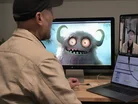
When Chad Nelson sketched his first forest creatures three years ago, he was simply experimenting with OpenAI’s then-new DALL-E image generator.
Today, those same characters are the stars of Critterz, a feature-length animated film with a sub-US$30m budget, a nine-month production timeline and ambitions to premiere at the Cannes Film Festival.
If traditional Hollywood represents the old guard of storytelling, Critterz is the rebel: proof that Gen AI isn’t just disrupting how stories are made, but who gets to make them.
Google has taken a different tack entirely. Its Gemini Storybook tool democratises narrative creation at scale.
Anyone can describe any story they can imagine and within seconds they’ll have a personalised, illustrated 10-page book, complete with read-aloud narration in over 45 languages.
One is aiming for the big screen; the other for the intimate screen of a parent’s phone at bedtime.
But what are these imaginative tools designed for children teaching enterprises about the future of Gen AI?
Together, they represent the dual fronts of AI’s invasion into one of humanity’s oldest traditions: storytelling.
Disrupting Hollywood: How AI cuts film costs and production timelines
The question isn’t so much whether AI can tell stories anymore, but about what happens when it does.
The numbers tell part of the story. Traditional animated features can cost upwards of US$200m and take three to five years to produce.
Yet Critterz is attempting to do it in nine months for a fraction of the cost.
- Critterz’s success could impact Hollywood economics by proving AI-powered content can meet cinematic standards while dramatically reducing costs and timelines.
“I have never been in this position in my life where we are starting a movie and I have no idea what’s about to happen,” admits James Richardson, Co-founder of Vertigo Films, the London-based production company behind the project.
“It’s a very ambitious and massive experiment.”
The film’s production pipeline is a hybrid approach that may define the next generation of content creation.
Human artists will draw sketches that are then fed into OpenAI’s tools, including GPT-5 and image-generating models. Human actors will then voice the characters, with the script coming from writers who worked on Paddington in Peru.
Across businesses everywhere, executives are constantly hearing that the key to AI success is a blend of human expertise and AI – and how these storytelling tools are created is emphasising that.
“OpenAI can say what its tools do all day long, but it’s much more impactful if someone does it,” Nelson, now a creative specialist at OpenAI, tells The Wall Street Journal.
“That’s a much better case study than me building a demo.”
OpenAI has already reimagined Critterz with Sora 2, its state-of-the-art AI video and audio generation model that produces physically accurate, realistic videos.
If Critterz succeeds at Cannes, it proves that AI-generated content can meet the exacting standards of traditional cinema.
If it fails, it becomes another cautionary tale about technology outpacing artistry that is bubbling across worldwide industries.
From pixels to page: Democratising creativity with Gemini Storybook
Gemini Storybook, meanwhile, is free, instant and designed for mass adoption.
“Gemini’s nascent reasoning, agentic and world-modelling abilities enable the creation of more advanced and proactive AI assistants and experiences far beyond traditional chatbots,” says Co-founder and CEO of Google DeepMind, Demis Hassabis.
The use cases are deliberately intimate.
Storybook can help a child understand the solar system, teach a lesson about kindness through a story starring elephants or turn a family trip to Paris into a personalised adventure. All that’s required is to upload the child’s drawing and watch it come to life as a narrative. It’s AI storytelling as an educational tool, bonding experience and creative outlet rolled into one.
“Create personalised, illustrated stories about anything with read-aloud narration,” Google’s overview says. “Just describe the story you want, add files and photos if you like – and Gemini will create a unique 10-page storybook.”
Where Critterz is betting on the power of cinema to move audiences, Gemini Storybook is betting on the power of personalisation to create emotional resonance – but both are causing debate.
The human and AI collaboration to redefine content creation
For business leaders, the implications of these tools are less about entertainment.
Elliot Grossbard, Managing Partner at advisory firm Growth-listic, sees Critterz as a template: “If this lands, studios, streamers and independents will see a template for faster cycles, leaner budgets and new pipelines.”
The economic model is transformative, because lower barriers to entry mean more voices can participate in creative industries previously gatekept by capital requirements.
Sam Altman, OpenAI’s CEO, said on the Huge if True podcast that he believes the transformative power of AI offers unprecedented opportunities for young people.
Regarding mounting concerns over potential job displacement, he says: “This always happens – and young people are the best at adapting to this.”
Touching on how society will adapt to a world saturated with AI-generated content, when asked how people in 2030 will discern “what’s real and what’s not real” in a media landscape filled with viral, AI-generated videos, Sam says that society has historically “accepted some gradual move” away from purely unaltered media.
He believes the “threshold for how real it has to be to be considered to be real will just keep moving…media is always a little bit real and a little bit not real.”
The more concerning interpretation is that AI-powered production tools could hollow out the middle class of creative labour – the storyboard artists, the junior animators, the assistant writers who learn their craft through repetition and collaboration.
The film industry’s guilds fought hard for protections against AI precisely because they saw this future coming.
The Critterz team has attempted to address this by developing a profit-sharing model for the roughly 30 people working on the project.
But scaling that approach across an industry being reshaped by technology that explicitly promises to “do more with less” is a different challenge entirely.
Navigating copyright and intellectual property in the age of Gen AI
Then there’s the legal minefield.
This year saw Disney and Universal sue AI provider Midjourney for allegedly copying copyrighted properties, and Warner Bros. Discovery followed with a similar lawsuit.
These are questions about intellectual property in an age when AI models are trained on vast corpuses of existing work.
Critterz could sidestep some of these issues because it employs humans to create the art that feeds into AI tools and to voice the characters – likely making it eligible for copyright protection, according to Nik Kleverov, Co-founder of Native Foreign, another production studio involved in the project.
But the broader question remains unresolved: Who owns the output when AI does the heavy lifting?
Google hasn’t publicly addressed how Gemini Storybook handles the intellectual property of the images and styles it generates.
For parents creating bedtime stories, it may not matter. For businesses considering AI-generated content at scale, it’s more of a risk.
When does AI-generated content impact authenticity and trust?
Perhaps the most interesting challenge isn’t technical or legal, but cultural.
Will audiences care that something was made by AI? Early evidence suggests the answer depends entirely on context.
Social media is already drowning in AI-generated content, much of it designed to game algorithms rather than connect with humans.
Tools like Google’s Veo 3 are so proficient that distinguishing real video from synthetic is increasingly difficult.
That’s creating a trust crisis that extends beyond entertainment into news, education and public discourse.

But context matters. A parent creating a personalised storybook for their child isn’t concerned about authenticity in the same way a filmgoer paying for a cinema ticket might be.
The former is a tool for connection; the latter is art seeking to be judged.
“This represents a step towards more interactive AI that not only understands narratives but visualises and brings them to life,” Demis says.
Perhaps the question is whether that interaction feels human enough to matter.
What enterprises can learn from AI’s reimagining of storytelling
As Critterz moves towards its Cannes debut and Gemini Storybook generates millions of personalised tales, the world watches two experiments unfold.
One tests whether AI can produce art that moves us in traditional ways, the other tests whether AI can make storytelling so accessible that its traditional forms become less relevant.
Olivier Godement, Head of Product at OpenAI, observes that “successful AI adoption requires top leadership buy-in and a clear team that mixes technical skills and deep business understanding.”
He’s talking about corporate strategy, but it crosses over to the creative industries themselves.
The companies making AI storytelling are building the future and inviting everyone – parents, filmmakers, educators, brands – to participate.
Whether that future is democratising or dystopian likely depends on whose story is being told and increasingly, whose tools are being used to tell it.


Executives
Demis Hassabis
Founder & CEO

Sam Altman