
Why did TSMC Put Off Buying ASML’s Lithography Machines?
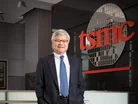
TSMC’s decision to forgo ASML’s cutting-edge lithography machines has sent ripples through the AI development community, raising critical questions about the computational infrastructure that will power next-generation artificial intelligence systems.
According to Bloomberg, TSMC’s Co-Chief Operating Officer Kevin Zhang said that the company’s new A13 node does not require High-NA extreme ultraviolet (EUV) machines. This could signal a significant shift in how AI hardware will evolve over the coming years.
The technology in question is used to print the most intricate layers on semiconductor wafers for chips that enable AI and augmented reality. The immediate market reaction was stark, with shares in ASML dropping dramatically following the announcement.
Understanding the lithography decision
ASML’s lithography machines are deployed by companies like Samsung Electronics and TSMC in semiconductor manufacturing.
ASML says that the EUV lithography systems are used to print the most intricate layers on a chip, with the rest of the layers printed using various deep-ultraviolet systems.
Chips made with EUV lithography enable smart technology, augmented reality, AI and other advanced technologies.
For AI developers, this decision could mean that the computational capabilities they rely on may evolve along a different technological path than previously anticipated.
The shift away from High-NA EUV technology represents a significant strategic choice for TSMC. This decision suggests that the company believes it can achieve the necessary performance improvements for AI workloads through alternative manufacturing approaches.
The implications extend beyond mere manufacturing processes. The choice reflects broader considerations about cost-effectiveness, production timelines and the specific requirements of AI chip architectures.
TSMC’s A13 node for AI workloads
TSMC recently announced its A13 node, which the company says is a direct shrinking of its A14 node announced in 2025.
TSMC says the A13 enables even more compact and efficient designs to address "insatiable customer demand" in computational requirements for next-generation AI, high performance computing and mobile applications.

TSMC Chairman and CEO Dr CC Wei says: “At TSMC, we understand our customers are always looking ahead to their next innovation and they come to us for a reliable stream of new silicon technologies, like A13, meticulously engineered to be ready for high-volume production right when their visionary new designs demand them.
“TSMC’s advanced process technologies lead the industry in density, performance and power efficiency and we continually strive to make them even better for our customers’ future products, ensuring customers’ success as their most reliable technological partner.”
Bloomberg reports that TSMC may adopt the new lithography technology in its manufacturing process in 2029.
What this means for AI development
ASML announced plans to cut 1,700 jobs in an effort to slash bureaucracy.
Business Insider reported that the company is planning a six-week summer recruitment freeze, following the earlier announcement of the job cuts.
The Wall Street Journal reported that prices of ASML shares slid 3%, US$16.76bn. At time of writing, ASML’s market cap stands at US$478.96bn, remaining Europe’s most valuable company.
With a market cap of roughly US$1.8tn, TSMC is one of the most valuable companies in the world.
McKinsey notes that the semiconductor industry’s highly interdependent global value chain is now under pressure amid rising geopolitical tensions, new tariff policies, material and component shortages and potential restrictions on exports.
It is possible that other semiconductor manufacturers may double down on EUV semiconductor manufacturing in an attempt to gain a competitive edge over TSMC.
The question of why the business creating the world’s most advanced semiconductors for AI has called the most advanced lithography technology too expensive still stands, particularly as computational demands for training frontier AI models continue to escalate exponentially.
Company portals


Executives
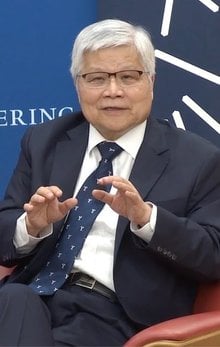
C. C. Wei
CEO