Can Intel Pounce as TSMC Struggles with Surging Chip Demand?
Global AI growth continues to strain semiconductor supply lines, with Taiwan Semiconductor Manufacturing Company (TSMC) telling top customers it cannot fully meet their demand for advanced AI chips.
TSMC, the world’s largest contract chipmaker, has alerted key clients including NVIDIA and Broadcom that capacity at its most advanced chipmaking nodes is becoming increasingly limited.
That warning, first reported by The Information, highlights mounting pressure in the market for cutting-edge processors as cloud computing, data centre activity and enterprise applications all demand more from chip manufacturers.
As AI usage scales across these sectors, competition for top-tier chip production grows sharper. TSMC finds itself at the centre of this, producing the highest-end semiconductors for leading AI companies. But hyperscale cloud providers, chipmakers and system builders all want preferential access, causing supply constraints to stretch across multiple quarters.
Industry analysts now say longer lead times at advanced nodes are pushing some firms to consider alternative suppliers. Delays risk slowing the rollout of AI infrastructure, so customers begin exploring ways to reduce their reliance on a single foundry.
AI demand lifts profit but not pressure
TSMC’s latest financial results show just how strong the AI chip boom remains. The company has reported a 35% year-on-year profit increase in Q4, setting a new record and outperforming market forecasts.
TSMC posted revenue of US$33.7bn and net income of US$16.3bn for the period, marking the eighth straight quarter of year-on-year profit growth – driven by demand for advanced semiconductors.
High-performance computing – which includes AI and 5G – accounts for 55% of the quarter’s total revenue. Chips manufactured using seven-nanometre or smaller technologies contributed 77% of wafer revenue, showing the sector’s ongoing move towards smaller, faster and more energy-efficient designs.

TSMC Chief Financial Officer Wendell Huang told an earnings call: "We expect our business to be supported by continued strong demand for our leading-edge process technologies."
The organisation forecasts Q1 2026 revenue of between US$34.6bn and US$35.8bn – growth of up to 38% compared to the same quarter last year.
TSMC began mass production of 2 nm chips in Q4 2025 and plans to increase output through 2026. Capital expenditure is set to rise to between US$52bn and US$56bn next year, up from US$40.9bn in 2025.
Jake Lai, Senior Analyst at Counterpoint Research, tells CNBC that 2026 is shaping up to be a "breakout year" for AI servers, backed by growth in both chip manufacturing and packaging technology.

Intel re-enters the equation
TSMC’s production bottlenecks are shifting the semiconductor market landscape. One company gaining attention is Intel, which continues efforts to rebuild its own manufacturing capability after years of production delays.
Intel does not need to match TSMC to benefit. Analysts suggest the company could serve as a release valve for an overloaded supply chain by offering foundry capacity to customers facing shortages.
Intel’s facilities also offer geographic spread and greater alignment with US industrial priorities – factors that become more attractive as firms look to de-risk amid geopolitical tensions and trade uncertainty.
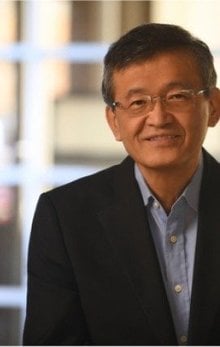
Investor confidence in Intel appears to be strengthening. Shares have risen 19% in 2026 so far, buoyed by strong trading and greater belief in the company’s long-term plans. Momentum gained further when US President Donald Trump praised Intel’s latest processors after a meeting with CEO Lip-Bu Tan.
NVIDIA has already invested in Intel and speculation is continuing that Apple may use its foundry services in parts of its chip supply.
Global growth meets global risk
TSMC is expanding production capacity overseas to meet rising demand, building facilities in Japan, Europe and Arizona, where it acquires extra land to support further construction.
CEO C.C. Wei says the Arizona site will form a “gigafab cluster” aimed at boosting efficiency and helping serve US-based customers more effectively.
But growth abroad carries costs. TSMC warns that production facilities outside Taiwan will run at thinner profit margins, citing higher expenses and greater operational complexity. Wei also cites global tariff policies as a risk to consider as 2026 progresses.
Beyond AI, further risks remain. Memory supply issues and higher component prices could impact demand in consumer tech, particularly smartphones and personal computers. Still, TSMC believes its focus on high-end chips provides a degree of protection.
What's certain is that AI continues to reshape semiconductor supply and demand, stretching even the most advanced chipmakers. As production lags behind market needs, space is opening up for rivals like Intel to reclaim relevance.
Company portals



Executives
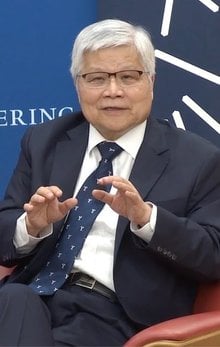
C. C. Wei
CEO
Lip-Bu Tan
Chief Executive Officer