Are Chinese Firms Catching Up With Nvidia on AI Chip Making?
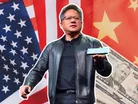
Beijing's drive to diminish its dependence on US technology has reached a pivotal moment, with Chinese semiconductor manufacturers presenting a substantial challenge to Nvidia's leadership in the AI chip sector.
The initiative gathered pace after DeepSeek's 2024 introduction of a ChatGPT competitor that briefly caused Nvidia's market capitalisation to plummet.
At the time, the start-up had limited recognition but it proved capable of training artificial intelligence models with considerably fewer premium chips than rivals, creating turbulence across Silicon Valley.
The domestic manufacturers propelling China's chip push
Chinese technology corporations have subsequently intensified their endeavours to create substitutes for Nvidia's offerings.
Last September, Alibaba revealed a new chip that state-run Chinese media claimed could equal the capabilities of Nvidia's H20 semiconductors whilst consuming less power.
The H20s are reduced-specification processors created expressly for the Chinese market in compliance with American export controls.
Huawei introduced what it characterised as its most advanced chips to date, along with a three-year strategy to contest Nvidia's market leadership.
The firm announced it would release its designs and software publicly within China to attract companies away from American products.
Nvidia has recognised the transformation. "The competition has undeniably arrived," a spokesperson recently told the BBC, adding that the company would "continue to work to earn the trust and support of mainstream developers everywhere".
Additional Chinese chipmakers have likewise obtained substantial agreements with prominent domestic enterprises.
MetaX (not to be confused with either Meta or X) is currently providing advanced chips to state-controlled telecoms provider China Unicom, whilst Beijing-headquartered Cambricon Technologies has witnessed its Shanghai-traded shares increase by more than double over three months.
The question of performance
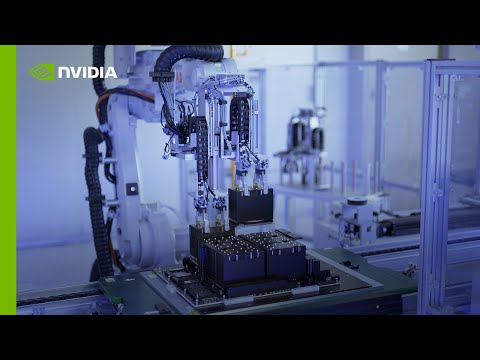
However, specialists warn that assertions from Chinese producers should be examined thoroughly owing to scarce publicly accessible data and variable testing standards.
Computer scientist Jawad Haj-Yahya, who has evaluated both American and Chinese chips, believes that China's semiconductors perform similarly their American counterparts when it comes to predictive AI, but fall short in complex analytics.
"The gap is clear and it is surely shrinking. But I don't think it's something they will catch up on in the short-term," he explains.
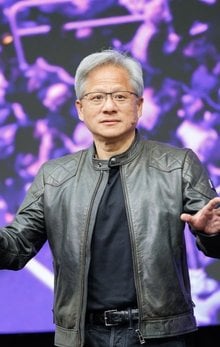
At the highest level, Nvidia's CEO, Jensen Huang, has suggested that China is just "nanoseconds behind" the US in chip development.
Speaking on the BG2 podcast in September, he urged America to compete "for its survival", crediting China's "vibrant entrepreneurial, high-tech, modern industry".
The semiconductor strategy
Computing professor Chia-Lin Yang from National Taiwan University characterises China's recent chip sector declarations as a "bargaining chip" in its ongoing tariff negotiations with the US.
Specialists believe that Beijing aims to apply pressure on Washington to sell advanced equipment or risk losing its position in such a large market.
The majority of experts concur that China continues to depend on the US for the most powerful chips.
Semiconductor engineer Raghavendra Anjanappa recognises that China can decrease its reliance on American chips in less-sophisticated applications but lacks the "raw performance" of US chips to train more complex AI systems.
American export restrictions have aimed to decelerate China's advanced technology progression, including preventing Beijing's access to premium Nvidia chips.
The US has "hit China exactly where its dependency is deepest," Raghavendra explains.
"But China's not far off in the grand scheme and they might only need five more years to be independent from the US," he adds.
President Xi Jinping has pledged to make China more self-sufficient and not depend on "anyone's gifts" as the nation invests tens of billions of dollars in what he calls "high-quality development".
Company portals


Executives
Jensen Huang
Founder and CEO