
Inside Trump’s Plans to Boost US AI and Ban ‘Woke’ Models
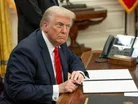
President Donald Trump has signed three executive orders targeting what his administration describes as “woke” AI models whilst removing regulatory barriers to accelerate AI development in the US.
The orders, signed at an AI summit in Washington, form part of a 28-page “AI Action Plan” containing more than 90 policy actions designed to maintain America’s competitive position in AI development.
“We believe we’re in an AI race, and we want the United States to win that race,” David Sacks, Trump Administration Crypto Tsar, told reporters.
The plan aims to build data centre infrastructure whilst eradicating what the administration terms “ideological bias” from AI systems.
President Trump addressed critics during his keynote speech at the summit, which was hosted by the All-In podcast.
“The American people do not want woke Marxist lunacy in the AI models,” he says, according to the Guardian. “Once and for all, we are getting rid of woke. Is that OK?”
The President asserted that his predecessor Joe Biden had “established toxic diversity, equity and inclusion ideology as a guiding principle of American AI development”, the Guardian reports.
President Trump added: “So you immediately knew that was the end of your development.”
How federal funding requirements targeting AI bias
One executive order requires AI companies receiving federal funding to maintain politically neutral AI models free from what the administration describes as “ideological dogmas such as DEI” – referring to diversity, equity and inclusion programmes.
The directive states that whilst the federal government “should be hesitant to regulate the functionality of AI models in the private marketplace”, public procurement carries “the obligation not to procure models that sacrifice truthfulness and accuracy to ideological agendas.”
The metrics for determining political bias in AI models remain contentious and open to interpretation. This ambiguity may allow the administration to target companies at its discretion based on subjective assessments of model outputs.

The order puts pressure on an industry increasingly seeking partnerships with government agencies. Several AI companies, including OpenAI, Anthropic and Google, received contracts worth up to US$200m from the Department of Defense this month to develop government tools.
A second executive order focuses on deregulating AI development by increasing data centre construction and removing environmental protections that could hamper their building. .
Infrastructure expansion and export promotion
The third order promotes the export of American AI technologies internationally.
President Trump frames the competition as a contest for geopolitical dominance, with China investing billions in AI chip manufacturing and data centres to compete with US companies.
Chinese companies such as DeepSeek, which creates AI models, have released systems that rival outputs from Silicon Valley firms including OpenAI, Google’s DeepMind division and Anthropic.
“AI is a revolutionary technology that’s going to have profound ramifications for both the economy and national security,” David says, according to the BBC. “It’s just very important that America continues to be the dominant power in AI.”
The plan calls for federal agencies to review and repeal policies that obstruct AI development whilst encouraging adoption in both government and private sectors.
Officials say the plan was shaped by more than 10,000 public comments following President Trump’s initial executive order calling for accelerated AI development.
Biden administration safeguards repealed
President Trump rescinded a Biden administration executive order on his first day in office that established safety and security standards for AI use in federal government.
The 2023 order had mandated safeguards and standards for the technology.
“With the right government policies, the US can solidify its position as the leader in AI and secure a brighter future for all Americans,” the White House states.
Critics argue the plan removes oversight and safeguards to benefit technology companies.
“The White House AI Action plan was written by and for tech billionaires, and will not serve the interests of the broader public,” Sarah Myers West, Co-executive Director of the AI Now Institute, told the BBC.
She adds that “the administration’s stance prioritises corporate interests over the needs of everyday people who are all already being affected by AI”.
Jim Secreto, former Deputy Chief of Staff to Biden’s Commerce Secretary Gina Raimondo, says that President Trump’s plan abandons safeguards protecting American national security and public trust.
“Accelerating innovation is essential, but dismantling responsible guardrails risks turning America’s AI revolution into a reckless gamble,” he says.
Conservative criticism of AI model bias
The administration’s focus on “woke” AI reflects conservative grievances against technology companies, which Republicans accuse of possessing liberal biases and suppressing rightwing ideology.
This criticism has shifted from concerns over internet search results to anger against AI chatbots and image generators.
Elon Musk, who owns social media platform X and AI company xAI, has positioned his Grok chatbot as “anti-woke”. Despite a public dispute with President Trump last month, Musk may benefit from the new order given his emphasis on controlling AI’s political outputs.
Conservatives have highlighted incidents such as Google’s Gemini image generator producing racially diverse depictions of historical figures, including German Second World War soldiers, as evidence of liberal bias, according to the Guardian.
AI researchers have also identified problems of racial and gender bias in model creation.
AI systems are trained on content including social media posts and news articles that may contain stereotypes or discriminatory material, which becomes incorporated into these tools.
President Trump additionally proposes changing AI’s name. “I can’t stand it,” he says, referring to the use of “artificial”, the Guardian reports.
“I don’t even like the name, you know? I don’t like anything that’s artificial. So could we straighten that out, please? We should change the name. I actually mean that. It’s not artificial. It’s genius.”
The AI regulation debate was a sticking point in recent negotiations about President Trump’s budget bill passed by Congress earlier this month.
The bill originally included a 10-year moratorium barring states from regulating, but lawmakers stripped that language from the final version.
Jim warns that “promoting aggressive AI exports without reasonable controls strengthens China’s hand”.