How Trump Scrapping AI Safety Regulations Impacts Global AI
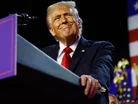
In a policy turnaround, US President Donald Trump has nullified a 2023 executive order that made it obligatory for AI companies to report safety data to the federal government, highlighting a dramatic change in the US government's strategy towards AI oversight.
This development occurred on Trump's initial full day in the White House following his inauguration on January 20, 2025, where he signed an executive order titled 'Initial Rescissions of Harmful Executive Orders and Actions.
The rescinded executive order, originally signed by former President Joe Biden in 2023, was the US's most extensive federal regulation concerning AI development until that point.
It demanded that developers of AI technologies that potentially impacted national security, the economy, public health, or safety must submit safety testing data to federal authorities prior to public deployment.
These regulations were set under the Defense Production Act, signifying a move away from the US's usual minimalist regulation of technology and the directive also compelled federal agencies to establish safety standards and manage risks associated with cybersecurity and other threats including chemical, biological, radiological and nuclear hazards.
However, the decision by President Trump to repeal this order aligns with the 2024 Republican Party platform, which argued that the mandate stifled AI innovation.
Impact on AI regulation and development
Trump's repeal immediately stops the implementation of critical safety and transparency requirements for AI developers.

This casts doubts on the future functions of the US AI Safety Institute, spawned under the Commerce Department, tasked with creating voluntary standards and best practices for employing AI technologies.
This policy shift also occurs as General AI capabilities are rapidly evolving and the global competition for AI dominance intensifies.
The timing is particularly crucial as other nations strive to assemble their own regulatory frameworks around this transformative technology.
Global context and contrasting approaches
The US's course of action significantly diverges from the EU’s approach.
In 2024, the EU implemented the AI Act, perhaps the most comprehensive AI governance framework currently available.
This regulation forbids specific uses of AI, like facial recognition technologies in public spaces and places strict oversight on 'high-risk' AI applications in critical sectors such as healthcare and law enforcement.
- US President Donald Trump has rescinded a 2023 executive order mandating AI safety disclosures to the federal government
- Trump's action aligns with the 2024 Republican Party platform, which argued the order hindered AI innovation
- The revocation immediately halts implementation of key safety and transparency requirements for AI developers
The revocation immediately halts implementation of key safety and transparency requirements for AI developers
Meanwhile, despite the rollback of federal regulations, state-level AI laws in the US are still operational.
States like California, home to many top AI enterprises, have introduced legislation concerning AI transparency and the use of deepfakes.
Additionally, states such as Colorado and Illinois have instituted safeguards against algorithmic discrimination in the hiring process.
Industry reaction and concerns
The response from the technology industry to these regulatory changes has been varied. While some consider it a removal of innovation impediments, others are alarmed by the potential risks of unregulated AI development.
Last week, the US Commerce Department enacted new restrictions on exports of AI chips and technology, eliciting criticism from some of the biggest players in the industry, including Nvidia.
Ned Finkle, Nvidia's Vice President of government affairs, says in a blog post: "Built on American technology, the adoption of AI around the world fuels growth and opportunity for industries at home and abroad."
Speaking at that time, Ned said: "The Biden Administration now seeks to restrict access to mainstream computing applications with its unprecedented and misguided 'AI Diffusion' rule, which threatens to derail innovation and economic growth worldwide."
This move, along with the revocation of the AI safety order, underscores the intricate balance between fostering innovation and ensuring responsible AI development.
Despite this, the future of US AI policy under President Trump appears to lean towards a less interventionist stance.
Though Trump has not specified what will replace the rescinded order, he has installed David Sacks, a venture capitalist and outspoken critic of tech regulation, as his lead on cryptocurrency and AI issues.
"Today, companies, startups and universities across the globe are leveraging mainstream AI to advance sectors like healthcare, agriculture, manufacturing and education," Ned says, emphasising the global stakes involved.
Explore the latest edition of AI Magazine and be part of the conversation at our global conference series, Tech & AI LIVE.
Discover all our upcoming events and secure your tickets today.
AI Magazine is a BizClik brand
