What the Latest Trump Tariffs Mean for the AI Industry
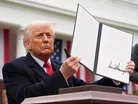
Global trade tensions have reached new heights as US President Donald Trump has unveiled extensive new tariffs on imports to the US.
Across the world, ongoing debates have been escalating about supply chain resilience, national security concerns and growing economic nationalism.
The technology sector, particularly dependent on intricate global manufacturing networks stretching across Asia, finds itself at the epicentre of these trade disruptions.
Semiconductor production, where Taiwan holds a dominant position in advanced chip manufacturing, is the heart of the technology sector — and now has become a focal point of geopolitical strategy as nations compete for technological self-sufficiency.
The administration’s framework imposes baseline 10% duties on all imports, with targeted nations facing rates as high as 50%.
The White House is calling it 'Liberation Day' measures.
Trump’s speech
Speaking from the White House Rose Garden, President Trump described 2 April 2025 as “one of the most important days in American history.”

“For decades, our country has been looted, pillaged, raped and plundered by nations near and far, both friend and foe alike,” he says.
“Our country and its taxpayers have been ripped off for more than 50 years, but it is not going to happen any more.”
Trump characterised the policy as a “declaration of economic independence” aimed at bringing prosperity back to the US.
“This will be, indeed, the golden age of America. It's coming back and we're going to come back very strongly,” he says.
Asian economies face steepest Trump tariffs
Primarily, Asian trading partners received the highest rates under the new tariff structure, including:
- China: 54%
- Cambodia 49%
- Vietnam 46%
- Thailand 36%
- Taiwan 32%
- Japan 24%
Meanwhile, the EU will contend with a 20% duty on exports to the US, a move European Commission President Ursula von der Leyen describes as a “major blow to the world economy.”
“Uncertainty will spiral and trigger the rise of further protectionism,” she says.
“The consequences will be dire for millions of people around the globe.”
Furthermore, the UK faces the baseline 10% rate alongside Singapore, Brazil and Australia, though smaller economies confront higher percentages.
Market volatility despite chip exemptions
The technology sector faces substantial disruption from these tariffs, with China producing approximately 30-35% of global manufacturing output, according to the UN Statistics Division.
Taiwan has objected to its 32% tariff rate as unreasonable.
The White House has published a fact sheet indicating that semiconductors will be exempt from the reciprocal tariff structure, providing limited relief to companies like Nvidia, Advanced Micro Devices (AMD) and Qualcomm, which purchase chips from Taiwan Semiconductor Manufacturing Company (TSMC) — one of the biggest semiconductor manufacturers in the world.
Nevertheless, technology stocks fell sharply following Trump's announcement.
Nvidia saw its stock drop 4.7%, AMD fell 4.5%, Broadcom dipped 5.2%, while Micron dropped 6.4%.
Additionally, Apple saw its stock slip more than 6% along with Amazon, which relies heavily on manufacturing in China and will feel the impact of the additional levies.
Trump addressed potential corporate objections to the tariffs directly: “To any company that objects to our common sense, reciprocal tariffs... My answer is very simple.
“If they complain, if you want your tariff rate to be zero, then you build your product right here in America.”
Wedbush analyst Daniel Ives described the tariffs as “worse than the worst case scenario” for technology investors.
“The technology industry will clearly be under major pressure on this announcement [over] worries about demand destruction, supply chains and especially the China and Taiwan piece of the tariffs,” he says.
The next move for chip manufacturers
In anticipation of tariff-related disruptions, numerous chip manufacturers are relocating production facilities from China to the US.
For instance, TSMC plans to invest an additional US$100bn in US operations, expanding its manufacturing presence to increase domestic production and reduce dependency on foreign supply chains.
TSMC’s Chief Executive Officer C.C. Wei announced this investment in March at the White House.
At the time of this announcement Trump highlighted the national security implications of domestic semiconductor production: “We must be able to build the chips and semiconductors that we need right here. It's a matter of national security for us.”
TSMC says it looks “forward to discussing our shared vision for innovation and growth in the semiconductor industry, as well as exploring ways to bolster the technology sector along with our customers.”
Explore the latest edition of AI Magazine and be part of the conversation at our global conference series, Tech & AI LIVE.
Discover all our upcoming events and secure your tickets today.
AI Magazine is a BizClik brand