Why has Elon Musk Partnered with Intel on Terafab?
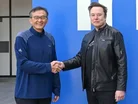
Earlier this year, Elon Musk, the CEO of Tesla, xAI and SpaceX, announced plans to build two large specialised semiconductor fabrication facilities designed to power the next generation of AI infrastructure.
Now, Musk has announced new details, including partnering with Intel for his Terafab venture, a collaboration between all three companies that require advanced AI chips, aimed at addressing the critical shortage of AI compute capacity.

"Intel is excited to partner with us on some of the core manufacturing technologies," Musk had said in Tesla's Q1 earnings call.
Intel partnership signals compute ambitions
Intel announced in a recent post on X that it was "proud to join the Terafab project" with SpaceX, xAI and Tesla "to help refactor silicon fab technology".
Intel said: "Our ability to design, fabricate and package ultra-high-performance chips at scale will help accelerate Terafab's aim to produce 1 TW/year of compute to power future advances in AI and robotics."
One terawatt per year of compute capacity could mean a dramatic acceleration in AI model training capabilities and deployment infrastructure.
"We plan to use Intel's 14A process, which is state-of-the-art and, in fact, not yet totally complete," Musk stated in the Q1 earnings call. "Given that by the time Terafab scales up, 14A will be probably fairly mature or ready for prime time."
The Financial Times notes that Intel has struggled to land external customers for its manufacturing business, with its 14A technology still being tested by tech clients. Intel conducted mass layoffs in 2025 as a way of managing financial losses.
The company's stock has risen dramatically in Q1 of 2026.
AI infrastructure investment accelerates
McKinsey data shows that globally, semiconductor companies plan to invest about US$1tn through 2030 in new fabrication facilities.
Musk explains: "We're still working out the details of the Terafab deployment.
"In the near term, Tesla will be building the research fab on our Giga Texas campus. This is something we expect to be probably around US$3bn."
He plans to consolidate every stage of semiconductor production at the Texas facilities, creating a vertically integrated AI chip production system.
Vaibhav Taneja, CFO of Tesla, said during the earnings call: "The other thing on the research fab, I think we've said it before, we plan to do memory, logic, everything in the same place, including mask, because we want to have a quick iteration loop so that we can see and basically scale the technologies which we are trying to bring up."
Compute capacity shortage threatens AI progress
Morningstar says that critical mineral supply chain risks come as chipmakers face soaring demand for semiconductors amid the AI buildout, with data centre demands already sparking shortages for other products such as laptops and cars.
The shortage of AI-capable chips has become a limiting factor for machine learning research and deployment. Companies developing large language models and autonomous systems face lengthy wait times for the specialised hardware required to train and run AI systems at scale.
Announcing the Terafab, Musk said that demand from his companies alone outweighed global supply.
He explained: "This chart explains why we need to build the Terafab because all of the rest of the output from earth is about 2% of what we need."




Executives
Elon Musk
Tesla CEO
Lip-Bu Tan
Chief Executive Officer
Vaibhav Taneja
Chief Financial Officer