Does Elon Musk have the Answer to Powering AI's Future?
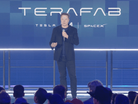
Elon Musk's ambitious TeraFab initiative is designed to consolidate the entire semiconductor production process, bringing chip design, mask fabrication, manufacturing, testing, packaging and iterative optimisation under one roof.
During an unveiling on 21 March in Austin, Texas at the now-defunct Seaholm Power Plant, Elon characterised the initiative as "the most epic chip-building exercise in history so far".
The facility represents a joint undertaking between Tesla, xAI and SpaceX, with an objective to generate more than one terawatt (TW) of compute capacity annually. Current plans could allocate roughly 80% of this output to space-based computing operations, while the remaining portion would support terrestrial applications.
Elon draws parallels between the project and science-fiction narratives, stating: "Let's turn science fiction into science fact."
Addressing the capacity gap
According to Elon, the plan stems from necessity. Existing global semiconductor fabrication facilities currently deliver only 2% of the total compute capacity required for TeraFab's objectives.
While acknowledging the contributions of current supply chain partners such as Samsung, TSMC and Micron, Elon observed that industry expansion rates fall short of project requirements.
"All of the fabs on Earth only provide 2% of what we need for the TeraFab project," he said. "We're very grateful to our existing supply chain; we would like them to expand as quickly as they can and we will buy all of their chips."
This substantial shortfall has driven the decision to develop proprietary manufacturing capacity. The Advanced Technology Fab in Austin represents the initial phase of this strategy, housing integrated equipment for chip production and lithography mask creation. According to Elon, this configuration "doesn't exist anywhere else in the world".

Elon has positioned the Advanced Technology Fab as the foundation for a broader scaling initiative aimed at humanity's evolution into a "galactic civilisation". He outlines this vision across three progressive stages: harnessing planetary energy resources, capturing stellar energy output and eventually accessing galactic-scale energy.
"The way to scale civilisation is to scale power in space," Elon says, noting that Earth intercepts only a minimal fraction of solar energy output.
Space-based computing advantages
Deploying AI chips in space-based environments could offer notable efficiency and cost benefits.
Space-positioned chips can utilise solar power directly, potentially reducing battery dependency while receiving at least five times more solar energy compared to terrestrial installations. This advantage stems from the absence of atmospheric attenuation, diurnal cycles and seasonal variations.
Elon contrasts this with Earth-based operations, observing that "increasing power on earth has become harder and more expensive over time". Space-based compute scaling could prove both more accessible and cost-effective.
The advanced semiconductor designs will encompass two distinct categories. One variant will be optimised for edge computing and the other for inference applications, targeted for deployment in Tesla's Optimus humanoid robots and vehicle fleet.
Elon projects that humanoid robot production volumes could eventually exceed vehicle manufacturing by a factor of 10 to 100 times. He anticipates annual production reaching between one to 10 billion units, with Tesla producing a "very high percentage of those".