Samsung's Role in Scaling the Future of AI Hardware
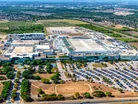
Samsung Electronics has officially entered the equipment installation and commissioning phase at its new semiconductor facility in Taylor, Texas, marking a critical step in scaling the hardware infrastructure required to sustain the global AI revolution.
Originally reported by The Korea Herald, the progress follows Samsung’s landmark 2021 investment of US$17bn in the site.
The news arrives amid a tightening race for silicon sovereignty, highlighted by Elon Musk’s recent plans to construct dedicated semiconductor fabs in Texas. Musk predicts that the combined appetite for high-performance compute from Tesla, SpaceX and xAI will soon outstrip the world's total manufacturing capacity.
Powering next-gen silicon
As of early 2026, the Taylor facility has secured temporary occupancy certificates for primary sections.

Crucially for the AI sector, sources indicate that Samsung began testing extreme ultraviolet (EUV) lithography equipment in March – a prerequisite for producing the advanced process nodes required for modern AI accelerators and GPUs.
To support this massive technical undertaking, Samsung is aggressively scaling its workforce. The company estimates the Taylor site will create 1,800 direct roles within its first decade.
Currently, 170 positions are open in Taylor, with an additional 99 in Austin, specifically targeting high-level technical expertise. Key roles include Implant and Wet Clean Process Engineers, Metrology and Automation Engineers, and Field Safety and Planning Specialists.
Strengthening the AI supply chain
The US$17bn Texas investment is broken down into US$6bn for physical infrastructure and US$11bn for the specialised machinery and machinery required to print the world’s most complex circuits.
Announcing the facility in 2021, Kinam Kim, former Vice Chairman and CEO of Samsung Electronics Device Solutions Division, "As we add a new facility in Taylor, Samsung is laying the groundwork for another important chapter in our future.
"With greater manufacturing capacity, we will be able to better serve the needs of our customers and contribute to the stability of the global semiconductor supply chain."
Boosted by US$6.4bn in direct funding from the CHIPS and Science Act in 2024, Samsung expects its US-based, federally-funded facilities to be fully operational by 2030. This builds on a Texas legacy starting in 1996 with the first Austin Fab, which was modelled on the Hwaseong site in Korea.
The trillion-dollar AI hardware frontier
According to McKinsey, the semiconductor industry – valued at approximately US$630bn–$680bn in 2024 – is on a trajectory to reach up to US$1.1tn by 2030.
This growth is being driven almost exclusively by the scaling of data centres and AI model training requirements, and prompted Musk to announce his own plans for two large-scale Texas fabs.
While Musk is moving toward vertical integration to secure the future of xAI and Tesla’s autonomous ambitions, he remains a vocal proponent of current industry leaders.
"We are very grateful to our existing supply chain – to Samsung, TSMC, Micron and others," he said at the recent launch. "And we would like them to expand as quickly as they can. And we will buy all of their chips. I have said these exact words to them. But there’s a maximum rate at which they're comfortable expanding."
Company portals


Executives
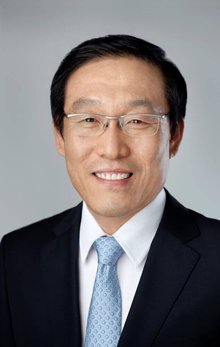
Dr Kinam Kim
Chairman of Samsung Advanced Institute of Technology, Samsung Electronics
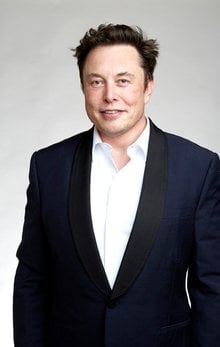
Elon Musk
Tesla CEO