What's the Aim of the AI Impact Summit and Who's Attending?

A flagship AI event is being attended this week by the world's most notable tech leaders.
The AI Impact Summit is being hosted by India and its Prime Minister Narendra Modi, who says the aim is to declare a "shared roadmap for global AI governance and collaboration".
The summit, which began on Monday and will come to a close on Friday, is bringing together top executives from the likes of Google, Anthropic and OpenAI for a series of panel discussions and keynote speeches.
It is also hosting non-profit organisations focused on deploying the "social good" of AI, in health, education and governance.
However, issues including overcrowding, reports of tech products have been stolen and fears certain keynotes could dominate proceedings have threatened to overshadow the summit.
Who is attending the AI Impact Summit?
The summit's Delhi venue is expected to host more than 250,000 delegates over the course of the week. These include 20 heads of state, with more than 100 countries taking part.
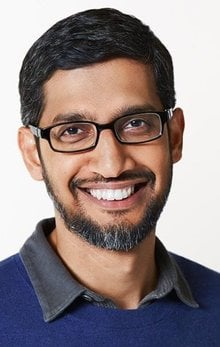
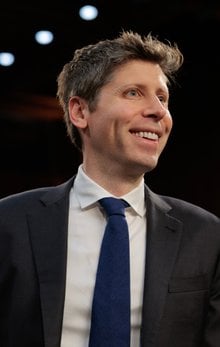
Sam Altman, CEO of OpenAI, Sundar Pichai, CEO of Google and Alphabet, and Brad Smith, President & Vice Chair at Microsoft, are among the most notable tech bosses in attendance.
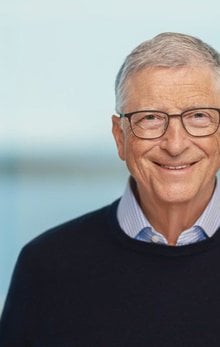
Perhaps the most-discussed attendee of the summit is Microsoft founder, Bill Gates, whose name recently appeared in the Epstein files.
On Tuesday, Priyanka Chaturvedi, Deputy Leader of Indian nationalist party Shiv Sena (UBT) shared screenshots showing that Gates' name had been removed from the list of key attendees on the AI Impact Summit's website, and commended the Indian Ministry of Electronics and IT.
On Wednesday, The Gates Foundation said he would be attending to deliver his keynote on Thursday. But just hours before he was due to speak, his organisation said he will not attend "to ensure the focus remains on the [summit's] key priorities".
Modi has also invited numerous global leaders and policymakers to the summit. They include French President Emmanuel Macron, the President of Spain Pedro Sánchez Pérez-Castejón and the President of the Netherlands Dick Schoof.
The aforementioned nations all ranked in the top 10 when it came to AI adoption in 2025, according to Microsoft's AI Diffusion Report.
Meanwhile, Rishi Sunak and George Osborne, the former UK Prime Minister and Chancellor respectively, are in attendance pushing for wider adoption of AI.
Defining moments at the summit
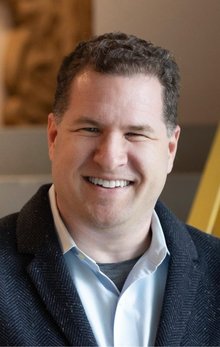
Speaking at the summit on AI safety, Rob Sherman, Meta's Vice President of Policy and Deputy Chief Privacy Officer, raised concerns over India's proposed three-hour "offensive content" takedown requirement, which is set to come into effect on 20 February – despite Facebook's commitment to the country's AI regulations.
"Philosophically, we're very aligned with the goals," Rob said. "But operationally, three hours is going to be really challenging."
Elsewhere, Vineet Nayar, former CEO of HCL Technologies, warned of Indian IT companies focusing on profit over employment. India's unemployment rate rose from 4.8% in December 2025 to 5% in January.
"From an employment point of view, I think it is very important for us to understand that Indian companies, including Indian IT companies, are going to be profit-driven," he said. "If you believe that they are going to create employment, you must be dreaming."
"Therefore, the question is how do we create employment in this environment, and that employments comes from mass scale startups, which is what this government has already been doing."
Away from keynotes and panels, controversy has surrounded event logistics amid overcrowding and security concerns.
Dhananjay Yadav, Founder of NeoSapiens, alleged on X that wearables from his firm's stand were stolen, stating that he and his team paid for flights, accommodation and the booth "only to see our wearables disappear inside a high security zone".
He has since posted an update that the devices had been recovered by Delhi Police.
Scaling AI safely
As attendees at the AI Impact Summit push for a "shared roadmap" related to AI governance, safe adoption has emerged as a hot topic of conversation.
Levent Ergin, Chief Strategist for Agentic AI at Informatica, states: "As countries accelerate AI capability, the real differentiator will not be model size but control.
"The ability to know where data comes from, how it is used and how decisions are monitored at scale is crucial.
"AI systems are only as effective as the context they are built on, making trusted data, transparency and oversight essential to scaling AI safely.”







Executives
Bill Gates
Chair
Rob Sherman
Vice President, Policy & Deputy Chief Privacy Officer
Sam Altman
Sundar Pichai
CEO