What Bill Gates Thinks About Microsoft & OpenAI’s Alliance
Technology firms have invested billions of dollars in AI research over the past five years as competition intensifies to develop systems capable of human-like reasoning.
Microsoft’s partnership with OpenAI is one of the sector’s most significant financial commitments, though it began with considerable internal doubt.
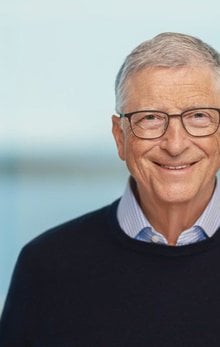
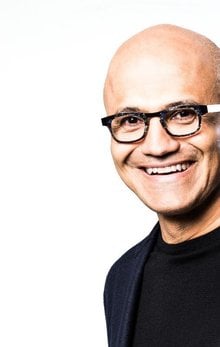
Microsoft’s initial US$1bn investment in OpenAI in 2019 faced scepticism from Co-founder Bill Gates, according to CEO Satya Nadella.
The investment marked the start of a partnership between the cloud computing firm and the AI research company that has since grown to more than US$13bn in total commitments.
OpenAI was operating as a non-profit organisation at the time, having been founded just four years earlier.
Its potential to develop transformative AI systems remained uncertain when Microsoft made its first investment.
Satya discloses the initial resistance during an interview with YouTube channel TPBN: “Remember this was a nonprofit and I think Bill even said, ’Yeah, you’re going to burn this billion dollars,’” he says.
Yet the Microsoft CEO says the company maintained a tolerance for risk despite the uncertainty.
“We kind of had a little bit of high risk tolerance and we said we want to go and give this a shot,” he says.
The size of the investment required approval from Microsoft’s board of directors, though Satya says the process proved straightforward.

“I must say it was not that hard to convince anyone that this is an important area and it’s going to be risky,” he says.
How investment growth became a US$13bn stake
The 2019 investment established the foundation for Microsoft’s expanded commitment.
The technology firm has since increased its total investment to more than US$13bn and recently acquired a 27% stake in OpenAI Group PBC, which OpenAI values at US$135bn.
The partnership includes an agreement for OpenAI to purchase US$250bn worth of Azure services, Microsoft’s cloud computing platform, over an extended period.
This arrangement provides OpenAI with the computing infrastructure required to train its AI models, which are systems that learn patterns from data to perform tasks such as generating text.
Satya acknowledges the outcome was far from certain: “In retrospect, who would have thought? I didn’t put in a billion dollars saying, ’Oh yeah, this is going to be a hundred bagger,’” he says.
OpenAI’s profile changed following the launch of ChatGPT in November 2022.
The conversational AI system attracted one million users within five days of its release.
Why Bill Gates shifts his position on AI potential
The Microsoft CEO addresses the concept of artificial general intelligence (AGI), which refers to AI systems capable of performing any intellectual task that humans can undertake.
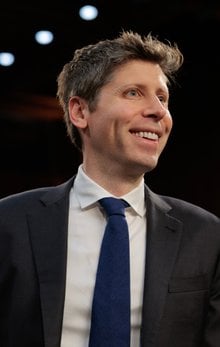
“Both Sam and I agree on this, it’s become a bit of a nonsensical word,” Satya says, referring to OpenAI CEO Sam Altman.
“It’s just changing and everybody defines it differently.”
Bill Gates, who initially expressed concern about the investment, has since recognised the pace of AI development.
Speaking on The Tonight Show in February, he addresses the potential for AI to automate various tasks: “There will be some things we reserve for ourselves,” he says.

“But in terms of making things and moving things and growing food, over time those will be basically solved problems.”
The OpenAI partnership has strengthened Microsoft’s position in AI development while increasing the influence of its Azure platform.
“We kind of had a little bit of high risk tolerance and we said we want to go and give this a shot,” Satya says.


Executives
Bill Gates
Chair
Sam Altman
Satya Nadella
Chairman and CEO