Why Intel Partners With Tata for India Chip Manufacturing
Global semiconductor supply chains are undergoing a geographic shift as governments wake up to the risks of concentrated chip production in Taiwan and China.
Now, Intel and Tata Electronics have signed a Memorandum of Understanding (MoU) to explore manufacturing and assembly at facilities Tata is building in Gujarat and Assam.
The collaboration marks a tangible step in India’s ambition to become more than just a massive consumer of imported chips.
For Intel, which has aimed to keep pace with rivals like Nvidia in the AI chip race, it offers a foothold in one of the world’s fastest-growing computing markets.
Lip-Bu Tan, CEO of Intel Corporation, positions the deal as part of the company’s broader growth strategy, says: “Intel’s technology has driven decades of advancement in computing and as we continue to innovate, our ambition is to broaden our reach, accelerate growth and deliver even greater value to our customers.
“We see this as a tremendous opportunity to collaborate with Tata to rapidly scale in one of the world’s fastest-growing compute markets, fuelled by rising PC demand and rapid AI adoption across India.”
Intel designs and manufactures processors for computers, servers and data centres, though it has faced mounting pressure from competitors in recent years, particularly in markets for AI accelerators.
Why Tata commits US$14bn to build India’s chip capacity
Tata Electronics, part of the 156-year-old Tata Group conglomerate, is pouring approximately US$14bn into semiconductor infrastructure.
The investment includes India’s first semiconductor fabrication plant in Gujarat and a chip assembly and testing facility in Assam.
Fabrication plants produce the silicon wafers on which chips are manufactured, while assembly and testing facilities package finished chips and verify they work.
Both represent the kind of capital-intensive operations that India has historically lacked, despite being one of the world’s largest electronics consumers.
Natarajan Chandrasekaran, Chairman of Tata Sons, says: “The Tata Group is deeply committed to developing a robust semiconductor industry in India.
“We are excited to collaborate with Intel and this strategic alliance would accelerate our efforts. Together, we will drive an expanded technology ecosystem and deliver leading semiconductors and systems solutions, positioning us well to capture the large and growing AI opportunity.”
The MoU covers potential manufacturing and packaging of Intel products at Tata’s upcoming facilities. The companies will also examine opportunities to develop AI-enabled PC solutions tailored for Indian consumers and businesses.
How India pushes an US$18bn semiconductor initiative
India’s semiconductor ambitions have gained momentum under government initiatives led by Prime Minister Narendra Modi’s administration.
The India Semiconductor Mission has approved more than 10 projects worth a cumulative US$18bn as New Delhi seeks to position the country as a viable alternative to Taiwan and China.
The stakes are clear. Taiwan Semiconductor Manufacturing Company produces the majority of advanced chips globally, a concentration that became painfully apparent during pandemic-related disruptions.
Dr Randhir Thakur, CEO and Managing Director of Tata Electronics, says: “This MoU aligns with Tata Electronics’ roadmap across EMS, OSAT and Semiconductor Fab, enabling a reliable and resilient supply chain for our customers.
“This collaboration would drive cost competitiveness, faster time-to-market, greater operational agility and enable Intel products to capture the surging demand for next-generation AI compute in India.”
Tata already has experience in electronics manufacturing, producing components for Apple’s iPhone operations in India.
The semiconductor push represents a move up the value chain into the more complex business of actually making chips.

Beyond silicon production, Intel and Tata plan to explore AI-enabled PCs for the Indian market.
These devices incorporate processors designed to handle AI workloads locally rather than relying entirely on cloud servers.
India is projected to become one of the top five global PC markets by the end of the decade, making it an attractive opportunity for both companies.
Natarajan sees the partnership as central to India’s industrial transformation: “Together, we will drive an expanded technology ecosystem and deliver leading semiconductors and systems solutions, positioning us well to capture the large and growing AI opportunity,” he says.
Company portals



Executives

Dr Randhir Thakur
CEO and Managing Director
Lip-Bu Tan
Chief Executive Officer
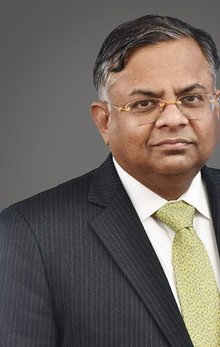
Natarajan Chandrasekaran
Chairman