
This Week's Top Five Stories in AI
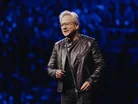
Is GPT-5.5 Delivering ‘Life-Changing’ Results for NVIDIA?
Global computing behemoth NVIDIA is integrating OpenAI’s new GPT-5.5 to power its internal agentic coding application Codex.
While AI agents have revolutionised developer workflows in the last few years, its next frontier is to tackle complex knowledge work. This will allow teams to process vast information, solve intricate problems and drive innovation through new ideas.
More than 1,000 NVIDIA employees are already impressed by OpenAI’s new tool that is driving productivity across departments spanning engineering and product to marketing, finance, HR and sales.
The frontier model runs on NVIDIA GB200 NVL72 rack-scale systems, providing high-performance infrastructure required for large-scale inference.
Google Cloud's Bid to Fund Partners' Agentic AI Adoption
Google Cloud has unveiled a US$750m fund designed to provide new resources and incentives to partners within its 120,000-member ecosystem.
The investment aims to accelerate joint customers' transformations with agentic AI, supporting global consulting firms, systems integrators, software partners and channel partners.
The fund will enable AI value identification, agentic AI prototyping, agent building and deployment, upskilling and teams of embedded Google forward-deployed engineers.
"Google Cloud's partners are already leaders in agentic AI development and deployment, and have become important channels for distributing AI technologies," comments Kevin Ichhpurani, President of Global Partner Ecosystem at Google Cloud.
"With this expanded funding, we will be able to dedicate new resources and technology to support our partners as they accelerate our mutual customers' agentic AI journeys."
Why is Elon Musk taking OpenAI CEO Sam Altman to Court?
Elon Musk and Sam Altman’s legal battle is painting a messy picture of the long-standing rivalry between two of the most powerful leaders in AI.
The legal front began back in 2024 when the Tesla and xAI CEO claimed OpenAI and its leaders had breached the company’s original non-profit mission, but the relationship between the tech tycoons had soured much earlier.
Elon – who co-founded OpenAI along with Sam Altman, Greg Brockman and others – had also invested about US$38m in the startup, which he says was obtained under the notion that the company would function as a non-profit entity.
OpenAI is set to go public later this year, with a valuation of US$1tn, after it restructured into a Public Benefit Corporation back in October 2025 – which forms the crux of the legal dispute.
Siemens: Moving Industrial AI from Assistance to Execution
Siemens' newly-unveiled industrial engineering agent, Eigen, represents a move from AI assistance towards what it calls industrial execution.
The product represents one of the first commercial AI systems capable of planning and executing industrial automation engineering tasks.
Siemens has allocated €1bn (US$1.76bn) to industrial AI development – and Eigen forms part of that investment.
The Eigen Engineering Agent functions within engineering systems rather than generating recommendations. It writes automation code, configures systems and repeats tasks until benchmarks are achieved.
Vasi Philomin, Executive Vice President of Data and AI at Siemens, says: "The real big shift here is that we are moving away from AI that supports, to AI that actually completes work end-to-end and we're doing this in the context of real world engineering systems."
Why is China blocking Meta’s US$2bn Manus Acquisition?
The Singaporean startup Manus is finding that a change of address is not enough to evade the regulatory eye in Beijing. Despite relocating from China, the country’s regulators are now getting in the way of its US$2bn acquisition by Meta.
The National Development and Reform Commission (NDRC) prohibited the transaction on 27 April 2026, requiring the two parties to withdraw the deal that was initially announced in December 2025.
The late-stage intervention involving the two non-Chinese companies has drawn much alarm among tech founders and venture capitalists. Many are now reassessing the viability of the infamous Singapore-washing model strategy, where companies relocate from China to the city-state to avoid scrutiny from Beijing and Washington.