
Why is China blocking Meta’s US$2bn Manus Acquisition?

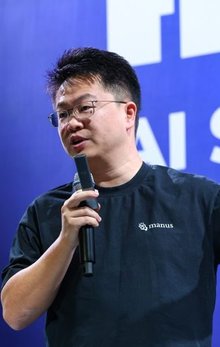
The Singaporean startup Manus is finding that a change of address is not enough to evade the regulatory eye in Beijing. Despite relocating from China, the country’s regulators are now getting in the way of its US$2bn acquisition by Meta.
The National Development and Reform Commission (NDRC) prohibited the transaction on 27 April 2026, requiring the two parties to withdraw the deal that was initially announced in December 2025.
The late-stage intervention involving the two non-Chinese companies has drawn much alarm among tech founders and venture capitalists. Many are now reassessing the viability of the infamous Singapore-washing model strategy, where companies relocate from China to the city-state to avoid scrutiny from Beijing and Washington.
Reaching across borders
Since Manus was founded in China, it remains subject to the country’s strict export control regulations. These laws govern the sale of domestic technology to foreign firms.
Back in January, China’s Ministry of Commerce said it would conduct an assessment and investigation into Meta’s acquisition. This was followed by months of scrutiny into how the deal complied with technology import and export rules.
The NDRC said in a brief statement that the decision to prohibit the investment was made in accordance with laws and regulations. In March, two of Manus’ co-founders were also prevented from leaving the country amid a review of Meta’s acquisition.
A spokesperson for the social media giant told the BBC that the transaction complied fully with applicable law. They say, “We anticipate an appropriate resolution to the inquiry.”
The unwinding of the acquisition would mean significant difficulty for Meta. In March, the company mentioned that the team at Manus was already deeply integrated into Meta operations.

Vying for dominance
In December 2025, Manus announced that it surpassed US$100m in annual recurring revenue.
The startup managed to achieve this in just eight months after its product launch. It claims itself as the fastest startup in the world to hit the nine-figure milestone from a standing start.
Previously, the company had raised US$75m in a funding round led by US venture capital firm Benchmark in April 2025.
Following this, analysts said that the rapid financial growth made the startup a “natural fit” for Meta, which has been aggressively increasing its AI investment under CEO Mark Zuckerberg.
However, there has been much tension between Beijing and Washington for dominance over the emerging technology. The White House recently stated it would work with US firms to combat “industrial-scale campaigns” to steal AI advances.
In a statement, the White House mentioned that new information showed “foreign entities, principally based in China” were copying US models.
When asked about China’s move to block Meta’s acquisition, Chen Xu, APEC Senior Officials Meeting Chairman, told reporters that it is important for all parties to act in a spirit of mutual benefit.
Chen says that if the issue is handled properly, it could facilitate more substantive discussions within APEC.
With US lawmakers prohibiting American investors from backing Chinese AI companies directly and Beijing discouraging founders from moving business offshore, Manus’ future remains in the hands of rising geopolitical tensions.
In a broader sense, the standoff reflects a continuing struggle for technological supremacy in AI between the world’s two largest economies.


Executives

Mark Zuckerberg
CEO
Tao Zhang
Co-Founder