Inside Microsoft’s Copilot Updates for Human-Centred AI
As enterprises increasingly implement AI, technology companies race not to just create chatbot products, but ones that differentiate from each other.
Yet a byproduct of so much AI innovation is growing concerns over AI’s impact on human connection and wellbeing.
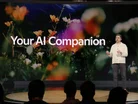
In response, Microsoft AI has released its Copilot Fall Release, introducing features designed to foster collaboration rather than isolation – positioning the assistant as what the company describes as an AI companion rather than a replacement for human interaction.
“We’re dropping the Copilot Fall Release, a big step forward in making AI more personal, useful and human-centered,” says Mustafa Suleyman, CEO of Microsoft AI.
“There’s a lot of noise around AI. Headlines, hype, fear. At Microsoft AI, we want to change the outlook.”
Behind Blackstone’s Funding in Saudi Arabia AI Data Centres
The global push for data centre capacity is only increasing as AI models demand ever more computing power.
Now Middle Eastern sovereign wealth funds have positioned themselves as crucial sources of capital for a sector that burns through billions of dollars before a single server goes live.
As a result, Private equity firm Blackstone is now partnering with Humain, Saudi Arabia’s state-backed AI company, in a US$3bn deal to build data centres across the kingdom.
AirTrunk, the data centre operator owned by Blackstone and the Canada Pension Plan Investment Board, will work with Humain to finance, develop and operate facilities that house the computer systems and storage equipment needed to run AI models.
OpenAI and PayPal: How AI Agents Are Learning to Shop
OpenAI has announced a partnership with PayPal that will see commerce functionality built into ChatGPT through the Gen AI leader’s Agentic Commerce Protocol.
Developed by OpenAI, the protocol creates the technical infrastructure for AI assistants to move from conversation to transaction, handling product discovery, selection and purchase completion within a single interface.
ChatGPT currently processes hundreds of millions of user queries weekly. Many of these interactions involve product research or purchasing decisions. The PayPal integration will allow ChatGPT to complete these commercial interactions rather than directing users to external websites. This capability transforms the AI assistant from an advisory tool into a transactional agent.
The architecture relies on PayPal adopting the Agentic Commerce Protocol to connect its merchant network to ChatGPT. From 2026, the AI assistant will have access to product catalogues from tens of millions of businesses. Users will be able to discover products through natural language conversation and complete purchases using PayPal's payment infrastructure without leaving the ChatGPT interface.
Nvidia Hits US$5tn Valuation Amid Global AI Expansion
Nvidia, the most valuable company in the world, has reached a US$5tn market capitalisation after CEO Jensen Huang laid out the company’s vision for the future at its GTC Washington DC event.
The new partnerships and announcements, which centred around bringing manufacturing back to America, pushed the company's market cap to now reach US$5.11tn.
Jensen also announced that the company has US$500bn in bookings for its new Blackwell and Rubin chips over the next five quarters.
“We are going through a platform shift,” he said. “That shift is a once in a lifetime opportunity for us to get back into the game for us to start innovating with American technology.
“Today we are announcing that we are going to do that.”
OpenAI, Oracle & Vantage: Inside the US$15bn Data Centre
The AI gold rush has a logistics problem: it needs vast amounts of land, reliable power and communities willing to welcome energy-guzzling data centres.
Port Washington, Wisconsin – a lakeside town of 12,000 people – has said yes to all three, landing a US$15bn campus that could influence the local economy and test whether green promises can coexist with industrial-scale AI infrastructure.
OpenAI, Oracle and Vantage Data Centers are betting big on Port Washington with the Lighthouse campus – a sprawling development housing four hyperscale data centres that’ll deliver nearly1GW of AI computing capacity by 2028.
To put that in perspective, it’s enough electricity to power 700,000 homes – except it’ll be feeding the processors crunching through training runs for large language models (LLMs) instead.

This project is swimming in sustainability commitments that read like a playbook for how tech companies hope to get communities onside.
Vantage is enabling new renewable energy generation across Wisconsin through solar, wind and battery storage, with an interesting twist: 70% goes to Lighthouse, but 30% flows to regular Wisconsin consumers.
It’s a clever political move that spreads the benefits beyond the campus gates.
The setup still relies on renewable energy credits to hit that 100% zero-emission target – meaning the actual electrons powering the servers might come from coal or gas plants while Vantage offsets the emissions through renewable purchases elsewhere.
It’s standard practice in the industry, though purists argue it’s not quite the same as being directly powered by wind turbines.