
Microsoft's 50th Anniversary: Copilot Strategy and Upgrades
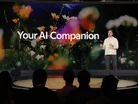
At Microsoft's 50th birthday celebration in Redmond, Washington, Mustafa Suleyman, Chief Executive of Microsoft AI, spoke about the company's AI strategy.
He particularly focused on the company’s success from its well known AI assistant, CoPilot – also emphasising his targeting of a particular metric's improvement to guide his strategy on AI – saying his consumer and research division is tracking the usual measures of adoption for Copilot.
These measures include daily and weekly active users, distribution and usage intensity for Copilot's consumer offering.
However, he also directed his team's attention toward a different performance indicator.
“I really, really focus the team on SSR, the rate of successful sessions,” he said in an interview during the event – SSR referring to sessions where users achieve their intended outcomes when using the AI assistant.
Microsoft Copilot improvements driving growth in successful sessions
Mustafa was among a select group of executives who addressed attendees at Microsoft's anniversary event, joining former Chief Executives Bill Gates and Steve Ballmer, and current Chief Executive Officer Satya Nadella on stage at the company's headquarters.

He explained that traditional software evaluation methods have evolved significantly.
In previous periods when consumer feedback was less immediate, developers relied on proxy measurements such as time spent using applications or problem-solving capabilities to gauge quality.
“Now, we actually get to learn from the anonymised logs and extract the sentiment,” he said – sentiment analysis involves using computational techniques to identify and categorise opinions expressed in text.
Microsoft has deployed an AI model to evaluate user sentiment and determine the success rate of Copilot interactions.
This approach uses machine learning (ML) to analyse patterns in user conversations with the AI assistant and classify them as successful or unsuccessful.
“Over the last four months, it's gone up dramatically and that's what we optimise for,” Mustafa said, referring to the successful session rate.
Microsoft demonstrates Your AI Companion: Microsoft's vision for personal Copilot
Microsoft also announced its new AI companion at the event.
This personalisation features includes memory capabilities that allow Copilot to recall past conversations and learn user preferences.
- Memory and personalisation
- Actions and automation
- Copilot vision
- Appearance customisation
- Deep research and content tools
- Enterprise integration
“With your permission, Copilot will now remember what you talk about, so it learns your likes and dislikes and details about your life: the name of your dog, that tricky project at work, what keeps you motivated to stick to your new workout routine,” Mustafa wrote in a blog post.
Beyond the technical improvements, he also emphasised the deeper relationship Microsoft aims to build between users and their AI companions: “Copilot will understand you in the context of your life and show up, on your terms, in the right way at the right time.
“This is far richer, more dynamic, supportive and emergent than any software we've seen before. It's a new kind of relationship with technology, a new era.”

Addressing privacy concerns, Mustafa emphasised user control remains central to the Copilot experience: “You remain in control, you are the pilot and you make the calls and set the boundaries.”
This evolution of Copilot from a general AI assistant to a personalised companion is a shift in the company's approach, as now, Microsoft intends to create a unique experience for each user based on their specific needs and preferences.
“An AI companion is completely personal, built around individual needs, values and expectations,” Mustafa explained.
“That's why ultimately, there will be as many different Copilots as there are people using them.
Ultimately, Microsoft's strategy centres on creating a deeply personalised AI experience that adapts to each user's unique context and needs: “But the important point is that throughout Copilot is more than an AI, it's yours,” Mustafa says.
Explore the latest edition of AI Magazine and be part of the conversation at our global conference series, Tech & AI LIVE.
Discover all our upcoming events and secure your tickets today.
AI Magazine is a BizClik brand
