This Week’s Top 5 Stories in AI
Inside Saudi Arabia’s Push for Advanced AI Chip Access
Access to advanced semiconductor technology has become a key bargaining tool in global diplomacy, with the US controlling exports of the chips that power AI systems.
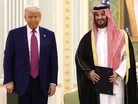
Now, Saudi Arabia’s Crown Prince Mohammed bin Salman travels to the White House, seeking approval to acquire these chips as part of his push to establish the kingdom as an AI hub.

The meeting with US President Donald Trump also centres on expanding cooperation in AI and nuclear technology, alongside discussions about defence guarantees.
Saudi Arabia is pressing hard for approval to acquire advanced computer chips, which are required for running the data centres and computing systems that underpin AI development.
The chips use nanometre-scale manufacturing processes to achieve the processing power needed for training and deploying machine learning (ML) models.
How Nvidia Won Every MLPerf Training v5.1 Benchmark
The performance hungry kingdom of AI has a Monarch with unmatched power: Nvidia, the world’s largest public company and the first ever to hit US$5tn valuation.
Now dominating the entire MLPerf v5.1 Training Benchmarks, by showcasing the best performance across all seven benchmarking targets, Nvidia set new records with its state of the art Blackwell Ultra GPU architecture.
With this massive win, Nvidia takes home the title of championing the benchmarking scales while being the only platform to submit entries across all the categories, a testament to the versatility of its Cuda software stack.
Nvidia achieved the fastest time to train large language models (LLMs), image generation, recommender systems, computer vision and graph neural networks.
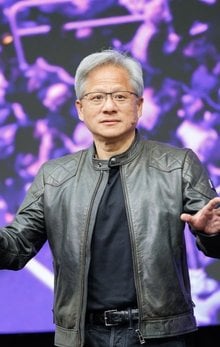
At the Nvidia GTC held in Washington D.C, Nvidia CEO Jensen Huang recalls that: “For 30 years we have been developing this form of computing we call accelerated computing.”
“We invented the GPU, we invented the programming model called Cuda.
“It’s moment has now arrived.”
Google’s CEO: The Fate of All Firms if the AI Bubble Bursts
The AI industry has witnessed huge investment flows in recent months – with valuations climbing to levels that have prompted comparisons to the dotcom boom of the late 1990s.
Now, a head of one of the sector’s largest players has issued a warning that no company will be spared if the bubble bursts.
- Alphabet’s market capitalisation: US$3.44tn in November 2025
- Alphabet’s share price doubled in seven months
- Alphabet invested £5bn ($6.58bn) in UK AI in 2025
- OpenAI-related deals: US$1.4tn, with revenues under 0.1% of that
- AI consumed 1.5% of global electricity in 2024
- Alphabet aims for net zero by 2030, but progress may slow
Sundar Pichai, CEO of Alphabet – the parent company of Google – says even his firm would not escape the fallout from any market correction despite its scale and resources.
Speaking to BBC News at Google’s California headquarters, he acknowledges the current moment as “extraordinary” but notes elements of “irrationality” have crept into what he describes as an otherwise rational boom.
“I think no company is going to be immune, including us,” he says when asked whether Google could weather a potential downturn.
The admission is striking given Alphabet’s current position.
The company’s market capitalisation now sits at US$3.5tn after its share price doubled in just seven months – driven by investor confidence in its ability to fend off the threat from OpenAI, the developer of ChatGPT.
Part of that confidence stems from Alphabet’s push into specialised superchips for AI applications, putting it in direct competition with Nvidia, the semiconductor company.
Led by CEO Jensen Huang, the company recently became the first to reach a US$5tn valuation.
HelloFresh: How AI is Accelerating Recipe Production
HelloFresh, the world’s leading meal kit provider, has deployed an AI-powered system that addresses a production bottleneck in its recipe card creation process.
The company operates across 18 countries with eight brands, delivering hundreds of millions of meals quarterly to customers who receive pre-portioned ingredients and chef-created recipes at home.
The technology reduces production time from several months to hours, enabling HelloFresh to bring new dishes to market faster across its global operation. The system automates layout and design tasks whilst preserving chef-led recipe development.
Extended editing and design cycles previously meant recipes waited weeks or months before reaching customers, limiting HelloFresh’s ability to respond to food trends or adjust menus based on customer feedback.
Frontier Firm AI: How Nestlé Uses AI to Drive Performance
As AI continues to weave itself into the fabric of global business, companies are pushing to harness its potential not just for automation but to reinvent how work gets done.
Now Nestlé, the Swiss multinational behind household names like Nescafé and KitKat, has taken a step forward by joining the Frontier Firm AI Initiative.
This collaboration between Harvard University’s Digital Data Design Institute (D^3 Institute) and Microsoft aims to explore how AI can operate alongside humans to drive business performance.
Nestlé’s Chief Information Officer (CIO), Chris Wright, says: “AI isn’t a pilot at Nestlé; it’s already at work from farm to fork.
“AI helps us get ideas to market faster, optimise recipes, provide trusted nutrition and recipe advice and create content for our digital channels.”
The scope touches on everything from analysing supplier contracts to refining planning, forecasting and logistics.
Company portals




Executives

Christopher Wright
Head of Information Technology and Nestlé Group CIO
Jensen Huang
Founder and CEO
Sundar Pichai
CEO