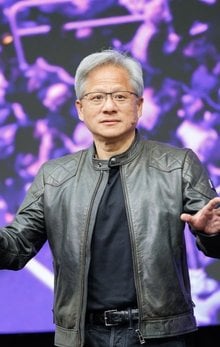
Why Trump Has Barred China from Nvidia’s Blackwell AI Chips
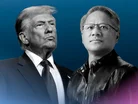
The global competition for AI dominance has taken a huge turn as governments try to control access to the semiconductors that power machine learning (ML) systems.
After years of development and intense rivalry between China and the US, the US now will restrict access to Nvidia’s Blackwell AI chips to American companies only, blocking China and potentially other countries from purchasing the most powerful semiconductors on the market, according to US President Donald Trump.
Speaking in a recorded interview that aired on CBS television’s 60 Minutes programme and in separate comments to reporters aboard Air Force One, the president says that the top-end Blackwell chips produced by Nvidia would be reserved exclusively for US customers.
“The most advanced, we will not let anybody have them other than the United States,” he tells CBS.

“We don’t give [the Blackwell] chip to other people,” he says.
The policy would bar China and potentially the rest of the world from accessing the most sophisticated semiconductors, marking a sharp turn from earlier administration guidance.
Why Nvidia’s South Korea deal has been thrown into doubt
The timing raises questions over deals Nvidia has already announced.
Nvidia says it would supply more than 260,000 Blackwell AI chips to South Korea, with some of the country’s largest businesses including Samsung Electronics set to receive the semiconductors.
Since Samsung manufactures memory chips and consumer electronics and Nvidia manufactures the chips through partners in Taiwan and packages them in Malaysia before global distribution.
- President Trump restricts Nvidia’s Blackwell AI semiconductors to American firms exclusively
- Nvidia announces deal to deliver Blackwell chips to South Korean businesses
- Comments on potential China sales of reduced-capability chips draw lawmaker criticism
That announcement came just months after President Trump’s administration released an AI blueprint that sought to expand AI exports to allied countries.
The strategy aimed to maintain American dominance over China in the technology sector while strengthening partnerships with allies.
Despite the president’s aim, he leaves the door ajar for Chinese companies to access watered-down versions of the chip: “We will let them deal with Nvidia but not in terms of the most advanced,” he says in the 60 Minutes interview.
The possibility of any Blackwell variant reaching Chinese firms has drawn criticism from some in Washington, who argue the technology would boost China’s military capabilities and accelerate its AI development.
John Moolenaar, a Republican Congressman who chairs the House Select Committee on China, says such a move “would be akin [to] giving Iran weapons-grade uranium.”
Questions have swirled around this issue since August, when the President first suggested he might allow sales of scaled-down Blackwell chips to China.
He hinted he might discuss the matter with Chinese president Xi Jinping ahead of their summit in South Korea last week, but ultimately says the topic did not come up.
Nvidia CEO Jensen Huang’s response
Nvidia has not sought US export licences for the Chinese market because of Beijing’s stance on the company, CEO Jensen Huang says.
“They’ve made it very clear that they don’t want Nvidia to be there right now,” he says during a developers’ event, adding that it needs access to China to fund US-based research and development.


Executives
Jensen Huang
Founder and CEO