
How Nvidia CEO Brokered Chip Deal Between Trump and Beijing
The semiconductor wars between Washington and Beijing have escalated dramatically over the past two years, with AI chips becoming the centre of technology rivalry.
What started as trade disputes has evolved into a complex web of export controls, licensing requirements and strategic manoeuvring that has left even the biggest players scrambling to adapt.
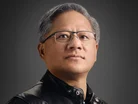
Earlier this year, America tightened restrictions of Nvidia’s sales to China, but now, Nvidia is announcing that it plans to resume sales of its H20 AI chip to China following meetings between CEO Jensen Huang and both US President Donald Trump and Chinese officials in Beijing.
A Washington vs China recap
Nvidia has been wrestling with these export and licensing pressures more than most.
The chip giant, which dominates roughly 80% of the global AI processor market, has watched billions in potential revenue evaporate as Washington tightened restrictions on sales to China.
The company was forced to build facilities to manufacture AI supercomputers entirely in the US – and to redesign products specifically for the Chinese market, creating watered-down versions of its flagship processors that comply with US regulations whilst still appealing to customers in Beijing.
The Trump administration’s approach has been particularly aggressive, with new restrictions introduced in April that effectively banned Nvidia’s H20 chip from Chinese markets.
But the company has also been working to position itself as a strategic partner to US interests, emphasising its commitment to domestic manufacturing and job creation.
Nvidia’s CEO has been making the rounds in Washington, pitching the company as essential to America’s AI leadership whilst simultaneously trying to preserve access to China’s lucrative market.
This balancing act has become increasingly precarious as both countries treat AI chips as critical national infrastructure.
Chinese companies have been stockpiling processors where possible, whilst also investing heavily in domestic alternatives.
Meanwhile, US policymakers worry that advanced semiconductors could enhance China’s military capabilities, particularly in areas such as surveillance and weapons development.
Now the company has said it is filing applications with the US government to restart sales of the H20 chip, which processes data for AI applications.

Nvidia expects to receive the necessary licences soon after receiving assurances from Washington.
Jensen Huang promoting AI benefits in Washington and Beijing
In the US capital, the CEO met with President Trump and US policymakers, reaffirming Nvidia’s support for the administration’s effort to create jobs, strengthen domestic AI infrastructure and onshore manufacturing.
Furthermore, the discussions in Beijing emphasises how researchers worldwide can advance safe and secure AI for the benefit of all.
He told Chinese state broadcaster CCTV: “The Chinese market is massive, dynamic and highly innovative and it’s also home to many AI researchers.
“Therefore, it is indeed crucial for American companies to establish roots in the Chinese market.”
Nvidia has faced increased competition from Chinese technology company Huawei Technologies and other makers of graphics processing units.
However, Chinese companies, including major technology firms, still seek Nvidia chips due to the company’s computing platform known as CUDA, which enables software developers to use graphics processors for general computing tasks.
Export controls cutting Nvidia’s revenue by US$15bn
Nvidia’s AI chips have been a key focus of US export controls designed to prevent advanced semiconductors from reaching China amid national security concerns.
It is indeed crucial for American companies to establish roots in the Chinese market.
The company said these restrictions would cut its revenue by US$15bn.
The H20 chip was developed specifically for the Chinese market after US export restrictions were imposed on national security grounds in late 2023.
The AI chip was Nvidia’s most powerful legally available product in China until it was effectively banned by Washington in April.
Yet the H20 ban forced Nvidia to write off US$5.5bn in inventories.
The US government has further expressed concern that the Chinese military could use AI chips to develop weapons.
Nvidia has criticised the export restrictions the Trump administration imposed in April that stopped it from selling its H20 chip in China.
New RTX Pro GPU targeting the Chinese market
As part of Nvidia’s move back to China, it has also announced a new model tailored to meet regulatory rules in the Chinese market.
The company revealed development of a new AI chip designed specifically for China, called the RTX Pro GPU.

Nvidia described the model as “fully compliant” with US export controls and suitable for digital twin AI applications in sectors such as smart factories and logistics.
The CEO announced the new RTX Pro GPU “is ideal for digital twin AI for smart factories and logistics” during his visits to both capitals.
In May, Reuters reported Nvidia was preparing to launch a new AI chip, based on the RTX Pro 6000D, in China at a significantly lower price point than the H20.
The graphics processing unit would be part of Nvidia’s latest generation Blackwell-architecture AI processors and was expected to be priced well below the H20 due to its weaker specifications and simpler manufacturing requirements.
The letter to Jensen Huang from US senators
China generated US$17bn in revenue for Nvidia in the fiscal year ending January 26, accounting for 13% of the company’s total sales, based on its latest annual report.
It’s no wonder that Nvidia has been pushing to incorporate China into its supply chain again, yet Jensen’s visit is being closely watched in both China and the US, where a bipartisan pair of senators last week sent a letter to him asking him to abstain from meeting companies that are working with military or intelligence bodies.
Yet as the CEO notes during his visits, the world has reached an inflection point where AI has become a fundamental resource, like energy, water and the internet.
He also emphasises Nvidia’s commitment to support open-source research, foundation models and applications, which democratise AI and will empower emerging economies in every region.
“General-purpose, open-source research and foundation models are the backbone of AI innovation,” he explains to reporters in DC.
“We believe that every civil model should run best on the US technology stack, encouraging nations worldwide to choose America.”
