NASA & Nvidia: Using Deep Learning for Scientific Discovery
Nvidia’s journey into deep learning began not by design, but through an unforeseen application of its core technology.
Founded in 1993 as a graphics company, Nvidia spent its early years mastering high-performance processing for the video game industry.
A pivotal moment occurred in 2003 when NASA approached the company to develop a photorealistic Mars simulation. This early collaboration demonstrated the immense potential of graphics hardware for complex scientific computation and marked the beginning of a highly productive partnership.
The definitive breakthrough, however, arrived in 2006 with the release of CUDA, a parallel computing platform that allowed scientists to harness the processing power of graphics cards for general-purpose applications. Suddenly, the same chips engineered to render explosions in video games could process vast datasets and train neural networks at unprecedented speeds.
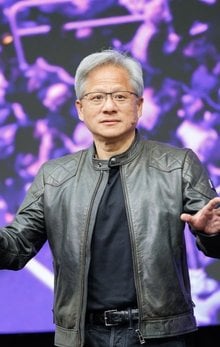
By 2012, the deep learning revolution was in full force. Alex Krizhevsky’s AlexNet, trained on Nvidia GPUs, decisively won the ImageNet challenge, proving that deep neural networks could vastly outperform traditional computer vision methods. This was the moment Nvidia’s Founder and CEO, Jensen Huang, would later call the beginning of “the new industrial revolution.”
For early adopters like NASA, this milestone opened extraordinary possibilities. While the space agency had always been a pioneer in computational methods, the convergence of massive datasets from its satellites and space telescopes with GPU-accelerated deep learning promised to fundamentally reshape scientific discovery.
What is deep learning?
Deep learning has transformed from an academic curiosity into the driving force behind the world’s most ambitious scientific endeavours.
What began as mathematically elegant but computationally impossible neural networks in the 1960s has evolved into the backbone of modern AI, changing how we understand our planet, our universe and our place within it.
Deep learning is a subset of machine learning (ML) that uses multi-layered artificial neural networks to analyse large data sets, learn complex patterns and make intelligent decisions autonomously: mimicking the human brain’s ability to recognise features and improve over time without explicit programming.
In simple terms, it’s a way computers learn by using layers of artificial neurons to recognise patterns, similar to the human brain.
How DeepSat monitors Earth’s vital signs
NASA’s first major deep learning initiative exemplified the transformative potential of AI in scientific research.
Faced with the challenge of monitoring Earth’s changing climate through satellite imagery, NASA scientists recognised that traditional methods couldn’t scale to handle the enormous volumes of data streaming back from space.
As a result, the agency developed DeepSat, a deep learning framework designed specifically for satellite image classification and segmentation.
This wasn’t about processing pretty pictures from space but about understanding changes to our planet’s carbon cycle, vegetation patterns and climate systems.
The scale of this undertaking was staggering.
NASA trained DeepSat using 330,000 image scenes across the continental US, with average image tiles measuring 6,000 by 7,000 pixels and weighing about 200 megabytes each.
The entire dataset approached 65 terabytes for a single time epoch, with ground resolution down to one metre.
Sangram Ganguly, former Senior Research Scientist at NASA Ames Research Center and now CTO at Rhombus Power, reported the results: “Our best network dataset produced a classification accuracy of 97.95% and outperformed three state-of-the-art object recognition algorithms by 11%,” he said.
DeepSat now enables scientists to quantify carbon sequestration by vegetated landscapes, downscale climate projection variables and assess urban heat island effects.
The system also provides critical data for understanding how our planet responds to climate change, information that governments and organisations worldwide rely upon for policy decisions.
The computational core for this work came from Nvidia’s Tesla GPUs and the NASA Ames Pleiades Supercomputer GPU cluster, equipped with 217,088 CUDA cores.
Training that once would have taken months or years could now be completed in days or weeks, dramatically accelerating the pace of climate science.
Listening to the universe: LIGO’s gravitational wave detection
While DeepSat looked down at Earth, another NASA collaboration with Nvidia was listening to the cosmos itself.
The Laser Interferometer Gravitational-wave Observatory (LIGO) faced a computational challenge that seemed almost impossible: detecting gravitational waves from colliding black holes millions of light-years away in real-time.
Einstein’s general relativity predicted gravitational waves, but detecting them required identifying incredibly subtle patterns in extremely noisy data.
Traditional computational methods were too slow to enable the real-time analysis necessary for coordinating observations with other telescopes around the world.
“AI is the engine of modern science – and large, open deep learning models for America’s researchers will ignite the next industrial revolution.”
In response, Daniel George and Eliu Huerta at the NCSA Gravity Group developed a solution using deep convolutional neural networks running on Nvidia Tesla GPUs.
Their system could detect gravitational wave signals whose amplitude was significantly weaker than background noise and estimate the masses of colliding black holes with remarkable precision.
Dr Eliu Huerta, Head of the NCSA Gravity Group, explains the impact: “Gravitational wave astrophysics is a multidisciplinary effort. At NCSA we combine our expertise in HPC, HTC, analytical and numerical gravitational wave source modeling.
“Then we boost it with innovative applications of AI to push the frontiers of the field. Our partnership with Nvidia is a key element in our daily research activities.”
The AI inference method improved performance by a factor of 100 – and GPU acceleration provided another 50-fold improvement.
This is over three orders of magnitude enhancement in processing speed, enabling real-time detection of gravitational waves and launching the era of multi-messenger astrophysics.
The modern era: Scaling scientific AI
The partnership between NASA and Nvidia has evolved substantially in recent years, showing the maturation of deep learning from experimental technique to essential scientific infrastructure.
- Deep learning enables unparalleled real-time AI processing that overcomes latency and scale limitations in scientific discovery and space exploration
NASA now hosts annual GPU hackathons where teams from multiple NASA centres collaborate on accelerating computational fluid dynamics and AI applications, often achieving performance improvements ranging from 40% to 250 times faster processing.
The space agency has also embraced Nvidia’s RAPIDS data science libraries to accelerate workflows ranging from atmospheric chemistry simulation to air quality forecasting.
Christoph Keller at NASA’s Global Modeling and Assimilation Office uses ML to simulate chemical transformations in the atmosphere, reducing the computational cost of running comprehensive air quality models like GEOS-CF, which simulates 250 chemical species in near real-time.
David Salvagnini, who serves as Chief Data Officer (CDO) and Chief Artificial Intelligence Officer (CAIO) at NASA says: “AI has been very involved in the use of AI and ML – helping in the discovery of exoplanets and planetary exploration, including autonomous systems such as the Mars Perseverance Rover.”
In recent years, Nvidia and NASA have been working closely on accelerating data science workflows using RAPIDS and integrating these GPU-accelerated libraries with scientific use cases.
Inside Nvidia’s investment in scientific AI
Today, the relationship has evolved beyond individual projects into infrastructure development.
The US National Science Foundation announced a partnership with Nvidia to develop a set of AI models that will transform the ability of America’s scientists to leverage AI, advancing scientific discovery and ensuring US leadership in AI-powered research and innovation.
NSF will contribute US$75m, with Nvidia providing an additional US$77m, to support the Open Multimodal AI Infrastructure to Accelerate Science (OMAI) project, led by the Allen Institute for AI (Ai2).
Jensen says: “AI is the engine of modern science – and large, open models for America’s researchers will ignite the next industrial revolution.
“In collaboration with NSF and Ai2, we’re accelerating innovation with state-of-the-art infrastructure that empowers US scientists to generate limitless intelligence, making it America’s most powerful and renewable resource.”
Looking beyond Earth to space-based computing
The collaboration is now extending beyond terrestrial applications into space itself.

Companies like Hewlett Packard Enterprise (HPE), Nvidia, IBM and SpaceX, in collaboration with NASA and the US Department of Defense, are pioneering radiation-hardened servers, AI-driven automation and high-performance computing (HPC) solutions for space-based operations.
“Orbital debris is a huge problem for NASA – AI will play a significant role in detection and remediation actions,” David forecasts.
“NASA will balance innovation with prudent risk management as we adopt and implement more and more AI, especially when complementing the entire workforce with Gen AI tools.”
This is the next frontier: deploying AI computing infrastructure directly in space, enabling real-time processing of scientific data without the delays and bandwidth limitations of transmitting everything back to Earth.
From monitoring climate change through DeepSat to detecting gravitational waves with LIGO, from atmospheric chemistry simulation to space-based computing, the NASA-Nvidia partnership has consistently pushed the boundaries of what’s possible in computational science.
Dr Huerta’s observation captures the essence of this collaboration: “Making real-time analysis possible is the key to realising multi-messenger astrophysics, one of the top ten big ideas for future investment for the US National Science Foundation.”
As we face challenges ranging from climate change to understanding the nature of the universe, the partnership between NASA and Nvidia demonstrates how AI strategy in science requires not just advanced algorithms, but the computational infrastructure, collaborative frameworks – and long-term vision to transform how we discover knowledge about our world and beyond.


Executives
Dave Salvagnini
NASA Chief Data Officer
Jensen Huang
Founder and CEO