Surya: IBM and NASA’s AI Solution to Space Weather Forecasts
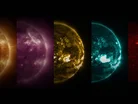
IBM and NASA have introduced Surya, an AI foundation model able to interpret high-resolution solar observation data for forecasting solar weather.
This open-source model, shared on Hugging Face, is a new front for researchers, technologists and policymakers globally – addressing the challenges posed by our increasing dependency on interconnected technologies such as GPS, power grids, and telecommunications.
The effects of the sun’s dynamic activity are becoming increasingly threatening, with solar flares and coronal mass ejections (CMEs) posing risks to satellite operations, navigation systems, and aviation safety.
According to risk scenarios from Lloyd’s, a single severe solar storm could induce economic losses of up to US$2.4tn over five years, with an expected cost of US$17bn from just one significant event.

“Think of this as a weather forecast for space,” says Juan Bernabe-Moreno, Director of IBM Research Europe for the UK and Ireland.
“Just as we work to prepare for hazardous weather events, we need to do the same for solar storms.
“Surya provides unprecedented capability to anticipate what’s coming and represents a critical step toward protecting our technological civilisation from the star that sustains us.”
Technology’s role in the increasing need for solar weather insights
Although distance separates Earth and the sun by approximately 93 million miles, it can have profound implications.
Burst activities can harm satellites, imperil astronauts, disrupt aviation routes, or interfere with agricultural GPS navigation.
This means that space-based technology plays a more crucial role as deep space exploration gains momentum and industries increasingly rely on these means.
There is an ever-growing need for accurate and timely solar weather forecasts to protect lives and infrastructure.
Traditionally, solar weather forecasting has grappled with the complex nature of the sun, often relying on incomplete satellite imagery and limited datasets.
This complexity has made accurate predictions elusive, particularly for real-time scenarios or targeted predictions necessary to determine the source and intensity of emerging solar flares.
How Surya is helping
Surya optimises predictive solar analysis by training on nine years of high-resolution solar imagery from NASA’s Solar Dynamics Observatory.
This dataset is ten times larger than those typically used in AI models.
The technical challenges were significant, requiring both expansive scale and fine detail.
The result is a model with exceptional spatial resolution, delivering detailed solar imagery insights.
Initial tests indicate Surya’s capacity to enhance solar flare classifications accuracy by 16% compared to earlier methods.
For the first time, researchers can obtain visual predictions of where flares will occur on the solar surface, with a lead time of up to two hours.
Surya also raises benchmarks for predicting the emergence of active solar regions, solar wind speed and solar EUV spectra, all of which are vital in understanding and forecasting space weather impacts on Earth.
“We are advancing data-driven science by embedding NASA’s deep scientific expertise into cutting-edge AI models,” explains Kevin Murphy, Chief Science Data Officer at NASA Headquarters in Washington.
“By developing a model trained on NASA’s heliophysics data, we’re making it simpler to analyse the sun’s complexities with unprecedented speed and precision.
“This model enhances our understanding of how solar activity affects critical systems and technologies that we count on here on Earth.”
Open access to solar weather data
The release of Surya and its dataset to the public through Hugging Face marks a watershed moment for data-driven scientific discovery and solar weather prediction democratization.
The largest curated heliophysics dataset is now publicly available, empowering researchers to develop diverse applications and contribute to technological resilience across sectors and nations.
Surya also becomes part of the Prithvi family of AI foundation models, which include tools for geospatial and weather analysis, reflecting a broader IBM-NASA mission to apply advanced AI to the world’s most complex scientific and technological challenges.