Inside Saudi Arabia’s Push for Advanced AI Chip Access
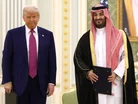
Access to advanced semiconductor technology has become a key bargaining tool in global diplomacy, with the US controlling exports of the chips that power AI systems.
Now, Saudi Arabia’s Crown Prince Mohammed bin Salman travels to the White House, seeking approval to acquire these chips as part of his push to establish the kingdom as an AI hub.
The meeting with US President Donald Trump also centres on expanding cooperation in AI and nuclear technology, alongside discussions about defence guarantees.
Saudi Arabia’s goals as regional competition drives chip negotiations
Saudi Arabia is pressing hard for approval to acquire advanced computer chips, which are required for running the data centres and computing systems that underpin AI development.

The chips use nanometre-scale manufacturing processes to achieve the processing power needed for training and deploying machine learning (ML) models.
Securing approval to acquire advanced computer chips would be critical to the kingdom’s plans to become a central node in global AI and to compete with the United Arab Emirates, which in June signed a US multi billion-dollar data centre deal that gave it access to high-end chips.
The push for AI technology forms part of Vision 2030, Crown Prince Mohammed’s ambitious plan to diversify the kingdom’s economy and strengthen its position relative to regional rivals.
The programme aims to reduce Saudi dependence on oil revenue by developing new technology sectors and establishing the kingdom as a regional hub for AI infrastructure and development.
The nuclear and defence deals linked to AI ambitions
Saudi Arabia wants security guarantees from the US following regional developments that have shaken confidence in Riyadh, the capital of Saudi Arabia.

MBS also wants to strike an agreement with Washington on developing a Saudi civilian nuclear programme, part of his effort to diversify from oil.
Such a deal would unlock access to US nuclear technology and security guarantees and help Saudi Arabia level up with the UAE, which has its own programme and traditional foe Iran.
But progress on a US deal has been difficult because the Saudis did not want to agree to a US stipulation that would rule out enriching uranium or reprocessing spent fuel, both potential paths to a bomb.
The Kingdom has also sought a defence pact ratified by the US Congress in recent negotiations.
But Washington has made that contingent on the kingdom normalising ties with Israel.
Riyadh has, in turn, linked that to a commitment from Israel’s government, the most right-wing in its history, to Palestinian statehood.
Israeli Prime Minister Benjamin Netanyahu, who agreed to a Trump-brokered ceasefire with Hamas in Gaza last month after two years of war, reaffirmed his staunch opposition to Palestinian independence.
According to Reuters, Dennis Ross, a former Middle East negotiator for Democratic and Republican administrations now at the Washington Institute for Near East Policy, expects an executive order that would call for the US and the Saudis “to immediately consult on what to do in response to the threat” while not committing Washington to actively come to the defence of Riyadh.
“That could run the gamut of providing a range of different assistance, replacing arms, deploying defensive missile batteries like THAAD or Patriot, deploying naval forces with a Marine unit – to actively taking part in the combat in an offensive not only defensive manner,” he says.
The Kingdom’s AI ambitions remain central to Vision 2030, with access to advanced chips representing a foundation for building domestic AI capabilities and competing with regional technology hubs.
Dennis expects an announcement of an agreement on nuclear energy, or at least a statement on progress towards one.