SK Hynix Inches Near US$1tn Market Cap as AI Demand Surges
Fuelled by the rising appetite for AI infrastructure spending, SK Hynix is gaining steam as it gets closer to topping the historic US$1tn market capitalisation.
The company was valued at less than US$100bn about a year ago when it was in the midst of a historic transformation that laid the groundwork for its current valuation.
Its growth is driven by AI-related demand for both conventional memory chips and high-bandwidth memory (HBM) chips used in AI servers.
Shares in the company have risen more than 200% this year. This follows an increase of 274% in 2025. It closed on Wednesday with a market value of around US$948bn, up more than 200% so far this year and 274% across 2025.
While the market cap has dipped more than 7% at the time of writing, the index remains up by more than 86% this year. It currently commands the 16th position in the top companies by market valuation.

South Korea leads Asia’s AI boom
If and when SK Hynix reaches the US$1tn milestone, South Korea will be crowned the first country outside the USA to have more than one trillion-dollar company.
Only Taiwan and Saudi Arabia have trillion-dollar worth companies other than the US. Taiwan’s TSMC remains the biggest company in Asia by market value at more than US$1.622tn.
Recently, the Korea Composite Stock Price Index (KOSPI), which is the representative stock market index of South Korea tracking all common stocks traded on the main board of the Korea Exchange (KRX), broke 7,000 for the first time.
This was after Samsung Electronics crossed US$1tn on 6 May, becoming only the second Asian company to do so after TSMC.
Fabien Yip, who is a Market Analyst at IG in Sydney, says: “My theory is that the market is running on FOMO sentiments, especially on AI-related names in Japan and Korea.”
This year, strong demand for AI is placing South Korea at the heart of the AI boom in Asia.
Labour disputes creates an opening
The South Korean union at Samsung is furious over a gap in bonus pay with SK Hynix. It has planned an 18-day strike from 21 May 2026 if demands are not met.
Samsung Electronics shares fell as much as 9.3% on 15 May 2026. The decline follows a statement from the South Korean labour union confirming its commitment to a planned strike. This decision comes despite the company proposing to resume pay talks without conditions.
As Samsung and its union have failed to reach a pay deal this week, the company has urged for talks to resume. South Korea’s Labour Commission has also called for government-mediated talks on Saturday.
Analysts say rivals such as SK Hynix, Micron and TSMC could benefit from spill over demand as a prolonged strike could eventually weigh on the broader chip supply chain.
However, analysts also say this benefit may not last over the long term.
Dominating the HBM supply
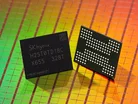
SK Hynix currently commands the lion’s share of the HBM market, a specialised type of memory that stacks DRAM chips vertically. Its proximity to the GPU allows for lightning-fast data transfer speeds, which is essential for training large language models.
Without this specific hardware, the advanced chips produced by NVIDIA, Google and AMD would face severe performance throttling.
In October 2025, the SK Hynix’s CFO confirmed that the entire HBM production capacity for 2026 was already sold out. This unprecedented backlog highlights a shift in industry dynamics.
Major tech firms are now securing hardware years in advance to ensure they are not left behind in the AI race. Executives suggest this shortage will likely persist into 2027 as demand continues to outpace manufacturing yield.
SK Hynix aims to capitalise on this supply dominance and the labour woes at its rival Samsung to secure its market lead, helping it cement its membership in the trillion-dollar league.