How AI Is Rescuing the Ocean from a Plastic & Climate Crisis
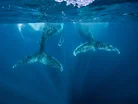
The ocean has been absorbing humanity’s mistakes for centuries.
Industrial runoff, agricultural waste and since the 1950s – when global plastic production began its exponential climb from 2 million tonnes annually to over 400 million today – an ever-growing tide of plastic debris.
For decades, the response was linear: deploy more boats, hire more observers and manually collect what could be seen – but it wasn’t working.
By 2050, the WWF estimates there could be more plastic floating in the ocean than fish.
The world’s already living through the prelude – as 90% of seabirds are ingesting plastic, half of marine turtles have consumed it – and the Great Pacific Garbage Patch isn’t just an eyesore but an active saboteur of the ocean’s ability to regulate climate.
What’s changed isn’t the problem’s urgency, but the availability of tools that can operate at the problem’s scale.
Machine learning (ML), satellite imaging and cloud computing have matured from experimental technologies into operational infrastructure.
For enterprises, the ocean’s decline is a test case for whether AI can operate at the scale and speed that the planet's challenges demand.
In response, tech giants AWS and Google are deploying AI in partnerships that are reimagining how humanity monitors, restores and protects marine ecosystems.
The tools are proving grounds for AI’s operational capabilities in unpredictable, resource-constrained environments – and slowly, making a visible impact
When cloud computing meets ocean plastics
The Ocean Cleanup’s partnership with AWS is attempting to create a ’plastic navigation system’ – essentially GPS for garbage – that predicts debris movement and optimises cleanup operations before ships ever leave port.
“We are joining forces with AWS to accelerate ocean plastic removal using AI,” The Ocean Cleanup says.
“AWS will provide a range of technologies from IoT, satellite and edge computing to deploying drones and flotation devices to precisely track plastic accumulation. This will help create a ‘plastic navigation’ system that predicts debris movement and optimises cleanup operations.
“AWS will enhance our marine life detection systems using AI-driven technologies, reducing the need for Protected Species Observers to monitor them 24 hours a day.”
This isn’t about sending ships to wander hopefully across the Pacific but about using data-driven predictions to steer vessels towards the most effective collection zones – the same operational efficiency principles that drive logistics optimisation in any industry.
The organisation has already withdrawn 64 million pounds of marine debris globally.
With AI integration, the companies are targeting a 90% reduction in floating ocean plastics by 2040.
Now, cloud-based infrastructure is reducing the need for around-the-clock Protected Species Observers, reallocating resources from monitoring to actual plastic removal.
“When people say something is impossible, the sheer absoluteness of that statement should be a motivation to investigate further,” says Boyan Slat, CEO of The Ocean Cleanup, who founded the organisation in 2013 after observing more plastic bags than fish during a scuba diving trip in Greece.
Dr Werner Vogels, Chief Technology Officer (CTO) of Amazon, says: “Plastic pollution represents one of the most pressing environmental challenges of our time and The Ocean Cleanup’s mission is vital for the health of our planet.
“This collaboration demonstrates how advanced cloud computing and AI can serve as powerful tools for environmental stewardship, not only transforming oceanic data into actionable insights but also creating a blueprint for how technology can address critical environmental challenges across the globe.”
If AI can predict debris movement across thousands of kilometres of open ocean, the same predictive capabilities can optimise fleet management, emergency response or infrastructure maintenance.
The ocean becomes a laboratory for AI systems that must perform reliably in chaotic, high-stakes conditions.
How Google is mapping the invisible forests beneath the waves
While AWS targets what floats on the surface, Google is looking beneath it, demonstrating how AI pattern recognition solves problems human observation alone cannot.
What’s been discovered is that Australia’s Great Southern Reef is in crisis.
Kelp forests that once thrived now occupy just 5% of their former range in parts like Tasmania, victims of climate-induced sea temperature rises.
For businesses watching climate adaptation strategies, this is a microcosm of broader challenges: How do you identify resilience in complex systems under stress?
“Kelp is unlike any other organism on earth,” writes Kate Brandt, Chief Sustainability Officer (CSO) of Google.
“Some of these seaweed species can grow two feet per day, up to 200 feet total.
“That rapid growth means less carbon in the atmosphere and fewer pollutants in the ocean.”
Google’s response, developed through its US$1bn Digital Future Initiative, leverages Google Earth Engine and Vertex AI to map over 7,000km² of kelp canopy.
The AI is identifying heat-resistant kelp strains – varieties that persist despite rising ocean temperatures – by analysing patterns across vast datasets that would take human researchers decades to process manually.
Google is using AI to identify outliers in a stressed system, then using those outliers to inform restoration strategy.
It’s anomaly detection applied to ecology – the same principle that drives fraud detection in finance, predictive maintenance in manufacturing or quality control in supply chains.
The initiative involves collaboration with CSIRO, IMAS, The Nature Conservancy, the Kelp Forest Alliance and the Great Southern Reef Foundation.
“With the help of Google AI and the spirit of collaboration between all partners, we’re taking real steps towards restoring these vital kelp forests that previously seemed impossible,” says Professor Craig Johnson, Marine Ecologist and Director at the University of Tasmania’s Marine and Antarctic Futures Centre.
The efficiency equation
Strip away the environmental mission and what these partnerships demonstrate is AI optimising operations in conditions where precision matters and waste is unaffordable.

The Ocean Cleanup’s predictive modelling proves AI can dramatically reduce operational expenses in unpredictable environments.
Research reveals that the Great Pacific Garbage Patch isn’t only damaging marine life but also hindering the ocean’s climate regulation capabilities.
Plastics adversely affect ocean oxygen output and carbon capture, potentially accelerating climate change – but their removal is economically unviable without AI making the process efficient enough to scale.
This is where Google’s kelp mapping showcases how satellite data and AI identify patterns invisible to human observation.
Between 2014 and 2023, Google restored approximately 67 acres of native habitat, planting 4,500 native trees near their Bay Area campuses.
These endeavours extend to AI projects like irrigation innovations in Taiwan and France, and infrastructure enhancements in Chile.
“At Google, we’re using AI to map the existing invisible forests and discover new varieties that can survive and thrive in more challenging environments,” Kate highlights.
“It’s just one of the ways we’re seeing AI help preserve nature.”
For business leaders, the lesson shows how AI handles complexity, uncertainty and scale.
If ML can predict ocean currents and identify climate-resilient species, similar approaches can predict market shifts or optimise resource allocation under volatile conditions.
Both initiatives highlight something enterprises often miss: AI isn’t replacing human expertise; it’s amplifying it.
The Ocean Cleanup still employs human decision-makers.Google’s kelp project relies on marine ecologists to interpret AI findings.
The technology identifies patterns and predicts outcomes, but humans determine what those insights mean. That collaboration model determines whether enterprise AI deployments succeed or fail.
How to scale AI when failure isn’t an option
The ocean operates on geological time. Kelp might grow two feet per day, but ecosystems take decades to recover.
That’s the tension these AI initiatives navigate: Deploying technology that works in milliseconds to address problems that unfold across generations.
For enterprises, that tension is familiar.
The Ocean Cleanup’s target of 90% reduction by 2040 requires sustained AI performance and operational discipline over 15 years.
The question isn’t whether AI can contribute to ocean sustainability – these projects prove it can. The question is whether organisations can maintain AI systems at scale, under pressure, when stakes are existential.
The Great Southern Reef remains relatively unknown compared to the Great Barrier Reef.
Google is addressing that through its Arts & Culture collection, spotlighting the reef’s importance and invigorating Indigenous narratives.
It’s a reminder that technology alone doesn’t create change – it requires storytelling and stakeholder engagement.
These ocean sustainability initiatives are early signals of how AI will be deployed across industries facing complexity and urgent timelines.
The principles are transferable: Use AI to identify patterns humans can’t see, optimise operations where efficiency determines viability and build collaboration models that leverage both machine precision and human judgment.
Company portals




Executives
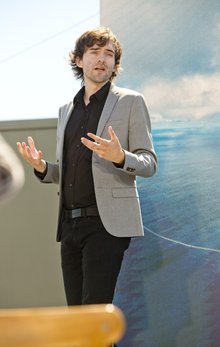
Boyan Slat
Kate Brandt
Member Board of Trustees
Werner Vogels
VP & CTO