How Microsoft AI is Leading Fight to Find Subsea Ghost Nets
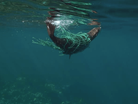
The challenge of locating ghost nets – abandoned fishing gear that silently destroys marine ecosystems – has long seemed impossible to overcome.
Traditional methods relied on manual searching, a process that was time-consuming and limited in scope. Yet artificial intelligence is now transforming this landscape, offering a scalable solution to one of the ocean's most pressing environmental threats.
When WWF Germany sought to tackle the phantom menace lurking beneath the waves, it partnered with Microsoft and its AI for Good Lab to launch ghostnetzero.ai, an AI-supported platform that is revolutionising marine conservation efforts.
Ghost nets represent a substantial proportion of ocean plastic waste, with lost fishing gear accounting for around 30% of plastic pollution in the world's seas.
Each year, 20% of all fishing gear is lost, creating deadly traps for fish, seabirds, turtles and marine mammals. These nets decompose over centuries, breaking down into microplastics that exacerbate pollution.
The problem is compounded by their invisibility – lurking unseen beneath the water surface, they are difficult to detect and challenging to locate.
AI-powered sonar analysis
The artificial intelligence model developed by Microsoft's AI for Good Lab automatically analyses high-resolution sonar data from the seabed, identifying locations where ghost nets are likely to be found.
This approach uses existing sonar images collected worldwide for various purposes, including securing shipping traffic and exploring locations for offshore wind turbines. By repurposing this data, the AI enables efficient detection of ghost nets without requiring new data collection efforts.
Juan Lavista Ferres, corporate vice president and chief data scientist of the AI for Good Lab at Microsoft, explains the technology's potential. "The Microsoft AI for Good Lab developed a model that allows GhostNetZero to analyse sonar data to identify and remove ghost nets with the accuracy and efficiency that is only possible with AI," he says.
The AI has been trained to detect subtle differences in sonar images from different systems, distinguishing between suspicious structures such as sanded-in nets and cables.
According to WWF, the AI's accuracy has already reached 90%, enabling the organisation to extend its search to larger sea areas.
Collaborative data platform
The ghostnetzero.ai platform, developed with support from Accenture, functions as a collaborative hub where research institutes, authorities and offshore wind power companies can donate suitable sonar recordings.
This collaborative approach addresses one of the fundamental challenges in ghost net detection – the lack of systematic data collection and the time required to analyse images manually.
Thomas Knüwer, Chief Creative Officer at Accenture Song ASG, describes the transformation. "The co-developed platform replaces tedious manual searching with a scaled process that analyses data at remarkable speed," he says.
Gabriele Dederer, research diver and project manager for ghostnets at WWF Germany, underlines the importance of this approach.
"The seabed is mapped all over the world and there is a huge amount of data. If we can specifically check existing image data from heavily fished marine zones, this is a real game-changer in the search for ghost nets," she says.

Mediterranean Sea application
The platform proves crucial in the Mediterranean Sea, where fishing gear accounts for up to 89% of litter. WWF is working with fishers, divers, scientists and local authorities in France, Italy and Croatia to map and retrieve ghost gear.
However, identifying and retrieving the gear presents challenges due to the lack of systematic data collection and the assessment of retrieval feasibility.
Stefania Campogianni, Project Manager on Plastic Pollution for WWF Mediterranean, highlights the potential impact. "This new platform will give us the chance to scale up the amount of data collected and accelerate the identification of ghost gear," she says.
The combination of AI-powered detection and collaborative data sharing represents what Gabriele calls "a significant breakthrough" in marine conservation. So far, WWF Germany has manually sifted through images captured by side-scan sonar and recovered 33 tonnes of nets from the Baltic Sea. With AI analysis, this effort can now scale exponentially.
Melanie Nakagawa, Chief Sustainability Officer at Microsoft, captures the transformation: "AI is making the invisible visible. Ghost nets, or abandoned fishing gear, drift silently through our seas and oceans, entangling over 500 species – from turtles to sharks to whales."



Executives
Melanie Nakagawa
Chief Sustainability Officer