How is AWS Using AI to Clean Up Ocean Plastics?
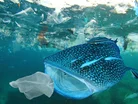
By 2050, the WWF estimates there could be more plastic in the ocean than fish.
WWF also states that 90% of seabirds ingest plastic and half of marine turtles have consumed plastic.
Research from The Ocean Cleanup reveals that the Great Pacific Garbage Patch is not only damaging marine life but also hindering the ocean's climate regulation capabilities.
To address this, The Ocean Cleanup has partnered with AWS, aiming to enhance oceanic clean-up efforts with the power of AI.
The Ocean Cleanup shares on LinkedIn: “We are joining forces with Amazon Web Services to accelerate ocean plastic removal using AI. AWS will provide a range of technologies from IoT, satellite and edge computing to deploying drones and flotation devices to precisely track plastic accumulation."
“This will help create a 'plastic navigation' system that predicts debris movement and optimises cleanup operations. AWS will enhance our marine life detection systems using AI-driven technologies, reducing the need for Protected Species Observers to monitor them 24 hours a day.”
The Ocean Cleanup's mission
The Ocean Cleanup is a nonprofit organisation focused on developing scalable technologies to eliminate plastics from oceans.
It's strategy involves stopping plastic inflow through rivers and extracting the existing plastic debris from the ocean.
The idea for The Ocean Cleanup originated during CEO, Boyan Slat’s scuba diving experience in Greece, where he observed more plastic bags than fish.
He introduced his concept in 2012 at a TEDx Conference and founded the organisation in 2013.
Under his leadership, the organisation conducted the necessary scientific studies, tests and concept iterations, achieving Proof of Technology in 2021 for both river interception and addressing the Great Pacific Garbage Patch.
Boyan says: “When people say something is impossible, the sheer absoluteness of that statement should be a motivation to investigate further.”
AI's role in ocean plastic reduction
The partnership with AWS will employ AI, machine learning (ML) and cloud computing to aim for a 90% reduction in floating ocean plastics by 2040.
AWS provides an AI-powered detection system that offers precise tracking of plastic accumulation and predictive modelling of debris movement, significantly enhancing resource management and operational efficiency.
The initiative will initially focus on identifying hotspots of plastic distribution across ocean surfaces.
This technology will steer ships towards the most effective collection zones based on data-driven movement predictions of plastic debris.
With cloud-based infrastructure, The Ocean Cleanup aims to enhance its marine life detection systems, thus diminishing the necessity for around-the-clock Protected Species Observers.

The impact of plastic extraction
Removing plastics from the ocean is crucial to preserving marine biodiversity and preventing plastics from breaking down into microplastics that infiltrate the food chain.
The Ocean Cleanup has already withdrawn 64 million pounds of marine debris globally and aims to further advance its efforts with the integration of AI.
The incorporation of AI not only cuts down on costs - by reducing the reliance on full-time Protected Species Observers - it also reallocates resources towards the removal of plastics.
According to The Ocean Cleanup, plastics adversely affect ocean oxygen output and carbon capture, potentially accelerating climate change.
Their removal is, therefore, vital to mitigating this acceleration.
Dr. Werner Vogels, Chief Technology Officer of Amazon, comments: “Plastic pollution represents one of the most pressing environmental challenges of our time, and The Ocean Cleanup’s mission is vital for the health of our planet.
“This collaboration demonstrates how advanced cloud computing and AI can serve as powerful tools for environmental stewardship, not only transforming oceanic data into actionable insights but also creating a blueprint for how technology can address critical environmental challenges across the globe.”