
How is AI Powering Restoration of Australia’s Kelp Forests?
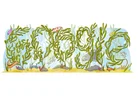
Australia’s Great Southern Reef is a crucial, yet endangered, marine ecosystem.
This once-flourishing domain, rich with giant kelp forests, is now suffering the consequences of climate-induced sea temperature rises.
The disappearance of kelp in extensive stretches of this habitat has prompted a technological response.
Google, alongside a network of environmental allies, is harnessing AI techniques to combat the diminishing condition of these vital marine surroundings.

An ecosystem in crisis
The Great Southern Reef, a biodiversity hotspot along Australia’s southern coastline, is home to a vast array of marine life, ranging from fairy penguins to the critically endangered red handfish.
Despite its ecological significance, it remains relatively unknown to the public, unlike its northern counterpart, the Great Barrier Reef.
Kelp forests that once thrived now occupy just 5% of their former range in parts like Tasmania.
The degradation of these kelp forests poses significant environmental challenges.
They play roles similar to terrestrial forests by moderating the climate, safeguarding biodiversity and supporting fisheries and carbon cycling.
Their decline destabilises the entire ecological network, increasing its susceptibility to climatic changes.
Kate Brandt, Chief Sustainability Officer of Google, writes on LinkedIn: “Kelp is unlike any other organism on earth. Some of these seaweed species can grow two feet per day, up to 200 feet total.”
“That rapid growth means less carbon in the atmosphere and fewer pollutants in the ocean.”
Did you know? Kate Brandt featured at No.1 in Sustainability Magazine's Top 250 Women in Sustainability for 2025.
AI and satellite technologies for restoration
In collaboration with CSIRO, IMAS, The Nature Conservancy, the Kelp Forest Alliance and the Great Southern Reef Foundation, Google Australia is deploying advanced digital solutions to identify and restore existing kelp forests.
Through its US$1bn Digital Future Initiative, Google is leveraging the capabilities of Google Earth Engine and Vertex AI to map over 7,000km² of kelp canopy and identify heat-resistant kelp strains that persist despite rising ocean temperatures.
Integrating this AI-driven analysis with genetic studies, scientists aim to cultivate and redeploy kelp varieties more equipped to withstand the challenges of a warming ocean.
As part of their commitment to global cooperation, Google is making the generated tools and data open-source, boosting similarly focused international endeavours.
Professor Craig Johnson, Marine Ecologist and Director at the University of Tasmania’s Marine and Antarctic Futures Centre, says: “With the help of Google AI, and the spirit of collaboration between all partners, we’re taking real steps towards restoring these vital kelp forests that previously seemed impossible.”
This technologically enhanced approach to ecological restoration builds upon Google’s broader environmental pursuits, such as its “Designing for Ecology” program, which integrates biodiversity considerations into campus planning and land management.
Partnerships for climate resilience
The advancement in AI applications shows promise not only within marine landscapes but also extends to global environmental initiatives.
Between 2014 and 2023, Google orchestrated the restoration of approximately 67 acres of native habitat, bolstering biodiversity by planting 4,500 native trees near their Bay Area campuses.
These endeavours include AI-influenced projects like irrigation innovations in Taiwan and France, and infrastructure enhancements in Chile to promote water sustainability.
“At Google, we’re using AI to map the existing invisible forests and discover new varieties that can survive and thrive in more challenging environments,” Kate highlights on LinkedIn.
“It’s just one of the ways we’re seeing AI help preserve nature.
Through partner collaborations with NGOs, science experts and local communities, Google is amplifying conservation efforts to tackle pressing global issues, from habitat destruction to water shortages.
The effort to restore Australia’s kelp forests transcends regional concern to pose a global opportunity.
By unifying expertise from ecology and AI within a public-private framework, this initiative showcases what can be achieved in climate responsiveness and ecological rehabilitation.
Furthermore, Google enhances awareness by spotlighting the Great Southern Reef’s importance through its Google Arts & Culture collection, thus invigorating Indigenous narratives.
Such endeavours are more than mere research initiatives; they represent imperative calls for action.
A thriving planet necessitates innovation, collaborative responsibility and partnerships that aim to either renew lost wonders or conserve what presently exists.
Explore the latest edition of AI Magazine and be part of the conversation at our global conference series, Tech & AI LIVE.
Discover all our upcoming events and secure your tickets today.
AI Magazine is a BizClik brand
