
The Smuggling of Nvidia’s Chips Into China: Explained

Two Chinese nationals face federal charges for operating a scheme that illegally exported millions of dollars worth of Nvidia’s advanced AI chips to China – circumventing US trade restrictions implemented during escalating technological tensions between Washington and Beijing.
The US Department of Justice alleges that Chuan Geng and Shiwei Yang used California-based ALX Solutions as a front company to ship restricted semiconductor technology to China without proper export licences over a three-year period.
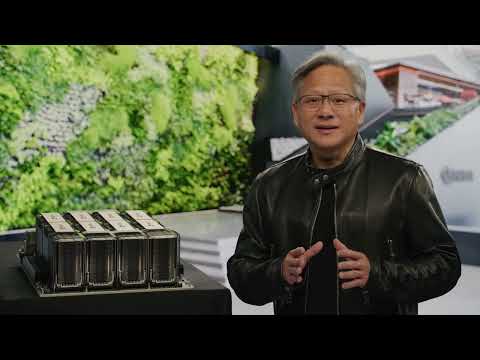
The operation targeted Nvidia’s H100 graphics processing units, which are designed for training large AI models and GeForce RTX 4090 GPUs, high-performance graphics cards used for gaming and AI applications.
Court filings reveal that neither ALX Solutions nor the defendants applied for or obtained licences from the Commerce Department, making their activities illegal under US export control regulations.
The scheme involved routing shipments through Singapore and Malaysia to obscure the ultimate Chinese destinations.
Prosecutors have detailed financial arrangements where ALX Solutions shipped goods to companies in Singapore and Malaysia but received payments from separate entities based in Hong Kong and China.
One payment alone totalled US$1m from a China-based firm in January 2024, according to court documents.
ALX Solutions falsify supplier documentation to major distributors
The smuggling operation involved falsifying end-user information provided to major technology suppliers including Super Micro Computer, a server manufacturer that produces systems incorporating Nvidia chips.
A 2023 invoice valued at more than US$28.4m allegedly declared the processors were destined for a Singapore-based customer that US export control officers later determined did not exist at the listed address.
“It appears that ALX Solutions shipped the Nvidia products to different end users,” court documents state.
The chips were diverted to alternative recipients rather than the declared Singapore company, raising questions about the effectiveness of current supply chain verification processes.
Chuan, described as a California permanent resident, handled the company’s financial operations whilst Shiwei, who allegedly overstayed her visa, served as company secretary.
The Department of Justice noted that Singapore and Malaysia are frequently used as transit hubs to conceal illegal shipments destined for China, taking advantage of these countries’ positions as regional trading centres.
The scheme exploited Southeast Asian ports to mask the true destination of restricted semiconductor technology.
Shipments would arrive at facilities in Singapore or Malaysia before being forwarded to Chinese recipients, creating additional layers that complicated detection by US authorities monitoring direct exports to China.
Nvidia emphasises compliance framework amid smuggling allegations
Nvidia has responded to the allegations by emphasising its commitment to export control compliance.
A company spokesperson states that smuggling chips “is a non-starter” and that the chipmaker “sells products to well-known partners who help to ensure that all sales comply with US export control rules.”
Jensen, Nvidia’s CEO, had previously negotiated arrangements with both President Trump’s administration and Chinese authorities to restart exports of the company’s H20 chips to China in July.
The H20 is a modified version of Nvidia’s flagship AI processors, designed to comply with US export restrictions while still serving Chinese market demand.
“The Chinese market is massive, dynamic and highly innovative and it’s also home to many AI researchers” Jensen said following those negotiations.
“Therefore, it is indeed crucial for American companies to establish roots in the Chinese market.”
However, Nvidia’s most powerful AI training chips remain prohibited from export to China under current US trade restrictions.
The H100 processors at the centre of this smuggling case represent some of the most advanced semiconductors available for AI applications, capable of training the large language models (LLMs) that power systems like ChatGPT.
Nvidia warned that diverted products would lack official service, support and software updates, potentially creating operational risks for end users who acquire chips through unofficial channels.
This policy serves both as a deterrent to smuggling and a way to maintain some control over the technology’s ultimate applications.
Super Micro Computer, identified by prosecutors as an unwitting supplier in the scheme, tells the BBC it remains “firmly committed to compliance with all US export control regulations” and would cooperate with authorities investigating the case.
Export restrictions reflect broader US-China technology rivalry
The arrests highlight the ongoing technological competition between the US and China, with Washington implementing increasingly strict controls on semiconductor exports to prevent Beijing from accessing cutting-edge AI technology with potential military applications.
Current US export restrictions target advanced semiconductors and the equipment used to manufacture them, based on concerns that China could use AI capabilities to enhance surveillance systems, develop autonomous weapons, or gain strategic advantages in emerging technologies.
The H100 chips central to this case are particularly significant because they enable the training of large AI models that require massive computational resources.
These processors have become essential infrastructure for companies developing AI applications, making access to them a strategic priority for nations seeking to advance their AI capabilities.
Shiwei was arrested on Saturday whilst Chuan surrendered to authorities shortly thereafter.
Both appeared in federal court in Los Angeles on Monday and face potential sentences of up to 20 years in prison if convicted on charges related to export control violations.
The case demonstrates the lengths to which some actors will attempt to circumvent trade restrictions whilst highlighting US authorities’ commitment to enforcing these controls through criminal prosecution.
For technology companies operating in the semiconductor supply chain, the prosecutions serve as a reminder of the compliance obligations and potential criminal liability associated with export control violations.
The investigation also raises questions about the effectiveness of current verification systems used by distributors to confirm the legitimacy of end users purchasing restricted technology.
The ability of ALX Solutions to obtain millions of dollars worth of advanced processors using falsified documentation suggests potential gaps in supplier due diligence processes.
“Any diverted products would have no service, support or updates,” Nvidia warns.