
Cassava and Nvidia Bringing AI Supercomputing to Africa
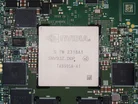
The US$700m collaboration between Cassava Technologies, an emerging technology firm in Africa and Nvidia, is a huge engagement in Africa’s technological market.
This partnership, aims to develop Africa’s first AI data centre utilising ’s high-performance supercomputers and chips, establishing new targets for AI infrastructure on the continent.
Unlike China’s state-driven initiatives under projects like the Digital Silk Road, this is a private sector-led approach, emphasising a shift in Western investment strategies towards Africa’s tech infrastructure.
Eric Omorogieva, representing the US-based New Lines Institute, says: “Few companies come close to the dominance of Nvidia in the AI sector due to its advances in GPUs.
“Nvidia holds a 93% share in the global GPU market and is the innovator behind most of the advanced chips required to power top systems around the world.”
This presence presents unique opportunities for African start-ups, where access has been traditionally limited by cost and availability.
Bridging Africa’s AI infrastructure gap
The collaboration addresses a fundamental gap obstructing AI development in Africa.
According to UN Development Programme research, only 5% of Africa’s AI professionals have the computing power needed for breakthroughs in AI innovation.
Within this limited group, a mere fraction operates with on-premise access to GPUs, with others constrained by cloud budgets capped at US$1,000 monthly.
Eric emphasises the necessity of this infrastructure: “Addressing this computational gap necessitates specialised infrastructure for AI development.”
Nvidia, led by Jensen Huang, is positioned as a frontrunner in this infrastructure provision. Partnering with Cassava Technologies, the giant aims to significantly enhance AI capabilities across Africa with AI data centres referred to as AI factories.
“These factories offer numerous advantages to businesses, including enhanced system performance, scalability for increasing workloads and the crucial ability to transform raw data into actionable intelligence that can generate revenue,” says Eric, underscoring the potential revenue and performance benefits for African enterprises.

Strategic deployment in African nations
The initial deployment phase began in South Africa in June, with Nvidia introducing 3,000 GPUs to a newly constructed data centre by Cassava.
This project is slated to expand over the next few years with an additional 12,000 GPUs distributed across facilities in Egypt, Nigeria, Kenya and Morocco.
In tandem with technological advancements, a memorandum signed with the South African AI Association aims to extend GPU access to over 3,000 AI professionals, enhancing human capital alongside technological assets.
This venture is structured to accelerate AI-driven innovation across diverse sectors such as healthcare, agriculture and fintech, vital for socio-economic development.
Cassava Technologies’ CEO, Ziaad Suleman, says: “Africa has historically contended with receiving second-rate technology," expressing determination to leverage Nvidia's partnership to change this dynamic."
Global business and geopolitical implications
This alliance is forged against the growing geopolitical competition between the US and China, both vying for influence through digital infrastructure development.
While China offers cost-competitive AI models like DeepSeek R1 and Alibaba’s Qwen, the US companies maintain an edge with exclusive access to high-grade AI components like Nvidia's GPUs and chips, which Eric believes will “unlock the potential for indigenous African AI systems.”
In this context, the US has introduced a “commercial diplomacy” approach targeting Africa, moving from traditional aid to boosting trade and direct private investments, indicating a strategy shift in international relations.
