Top 10: AI Hardware Providers

The AI hardware sector is expanding from a niche market into one of technology’s most contested markets.
Since there is no AI without AI hardware, this market is only getting bigger – from what was once the domain of a handful of established chip makers to an ecosystem.
Three forces are impacting this market: tech titans are bringing chip design in-house rather than relying on external suppliers, specialised processors are emerging for specific AI tasks beyond traditional computing – and nations worldwide are prioritising technological independence in critical hardware.
The result is a market where traditional boundaries are dissolving.
Cloud giants are becoming chip designers, startups are challenging decades-old architectural assumptions – and geopolitical tensions are spurring innovation in unexpected quarters.
From purpose-built inference chips to quantum-inspired processors, the hardware powering tomorrow’s AI applications looks remarkably different from today’s general-purpose solutions.
Now understanding who’s building what and why has never been more crucial.
10. Cerebras Systems
CEO: Andrew Feldman
HQ: Sunnyvale, CA
Speciality: Building wafer-scale processors for AI training and inference
Andrew Feldman is an entrepreneur and the co-founder and CEO of Cerebras Systems.
He leads the company’s mission to revolutionise AI computing by creating the world’s largest processors, a challenge that was considered nearly impossible for decades.
Cerebras’s Wafer-Scale Engine (WSE) has been a breakthrough, enabling the company to build AI supercomputers that solve previously intractable problems in a fraction of the time.
The company’s recent achievements include a partnership with Meta and a high-profile deal with the Emirati AI holding company G42, signaling its growing relevance.
9. Microsoft
CEO: Satya Nadella
HQ: Redmond, WA
Speciality: Cloud infrastructure and AI-driven productivity software
Microsoft’s decision to develop custom silicon, including the Azure Maia AI Accelerator and Azure Cobalt CPU, is a move to optimise its cloud infrastructure and diversify its supply chain.
As Chairman and CEO of Microsoft, Satya Nadella has orchestrated this strategic pivot, placing a massive emphasis on cloud computing and AI.
He has successfully embedded AI into the very fabric of the company’s offerings, from its Copilot service to a foundational partnership with OpenAI.
8. Groq
CEO: Jonathan Ross
HQ: Mountain View, CA
Speciality: Ultra-low latency AI inference with LPUs
Prior to founding Groq, Jonathan Ross was one of the lead designers of Google’s Tensor Processing Unit (TPU), giving him a deep understanding of AI-specific hardware.
He has since pioneered the Language Processing Unit (LPU), a novel architecture designed specifically for the unique demands of real-time AI inference.
His work has enabled Groq to achieve unprecedented speeds, breaking records for token generation and establishing a new standard for conversational AI.
7. Amazon
CEO: Matt Garman
HQ: Seattle, WA
Speciality: Cloud computing and purpose-built AI chips
As CEO of Amazon Web Services (AWS), Matt Garman leads the world’s dominant cloud computing platform.
While AWS is a major user of third-party GPUs, its development of custom silicon, such as the Trainium and Inferentia chips, signals a strategic expansion into AI hardware provision.
This move is part of a broader strategy to offer customers highly optimised, purpose-built and cost-effective solutions for both AI training and inference.
AWS’s chips have secured high-profile partnerships with major companies like Anthropic and Databricks.
6. Google
CEO: Demis Hassabis
HQ: Mountain View, CA
Speciality: Custom AI accelerators and cloud services
Under Demis Hassabis, Google has pursued a strategy of deep vertical integration, designing and deploying its custom Tensor Processing Units (TPUs).
These chips serve as the foundational hardware for both Google’s internal AI research and its commercial cloud services, giving the company full control over its technological stack.
As the CEO of Google DeepMind, Demis runs a unified AI research and development division of Alphabet.
He has guided the company in numerous groundbreaking advancements, including mastering complex games and developing foundation models like Gemini.
5. Qualcomm
CEO: Cristiano Amon
HQ: San Diego, CA
Speciality: On-device AI for mobile, automotive and IoT
Cristiano Amon is the President and CEO of Qualcomm, a company long dominant in mobile computing that is now strategically expanding into new verticals.
Under his leadership, Qualcomm is pursuing a bold “edge AI” strategy, embedding intelligence directly into devices from smartphones and PCs to cars and IoT sensors.
This approach prioritises privacy, efficiency and real-time processing, positioning Qualcomm as a key player in the next wave of AI beyond the data centre.
4. Meta
CEO: Mark Zuckerberg
HQ: Menlo Park, CA
Speciality: Social media and metaverse infrastructure
Meta’s appointment of a Chief AI Officer and the internal restructuring of its AI labs shows a new era of investment in both software and hardware – signalling Meta’s aim to build out the massive infrastructure required to support its AI-hungry services.
The development of the company’s custom MTIA accelerator is also a critical step in this strategic direction.
Mark Zuckerberg, Founder, Chairman and CEO of Meta Platforms, has doubled down on the company’s commitment to AI, viewing it as the foundational technology for its future services.
3. Intel
CEO: Lip-Bu Tan
HQ: Santa Clara, CA
Speciality: End-to-end AI solutions from client to cloud
Lip-Bu Tan became Intel’s CEO in late 2024, inheriting a company in the midst of a significant change.
His leadership is focused on steering Intel from its traditional CPU-centric model to a multi-architecture “xPU” company, leveraging its vast manufacturing capabilities and expansive ecosystem.
Intel aims to deliver a predictable cadence of leadership products, with a primary focus on capitalising on the exponential growth of the AI PC and data centre markets.
2. AMD
CEO: Dr. Lisa Su
HQ: Santa Clara, CA
Speciality: High-performance CPUs and open-architecture GPUs
AMD has secured a leading position in the data centre CPU market and is emerging as a credible challenger to Nvidia in the AI GPU space.
This is driven by its Instinct accelerators and a strategic commitment to an open software platform, ROCm, which aims to provide a viable and cost-effective alternative to Nvidia’s proprietary ecosystem.
As Chair and CEO of AMD, Dr. Lisa Su has orchestrated a remarkable turnaround, transforming the company into a leader in high-performance and adaptive computing.
A distinguished electrical engineer, her leadership has guided AMD’s renewed focus on the data centre.
1. Nvidia
CEO: Jensen Huang
HQ: Santa Clara, CA
Speciality: Pioneering accelerated computing and Gen AI platforms
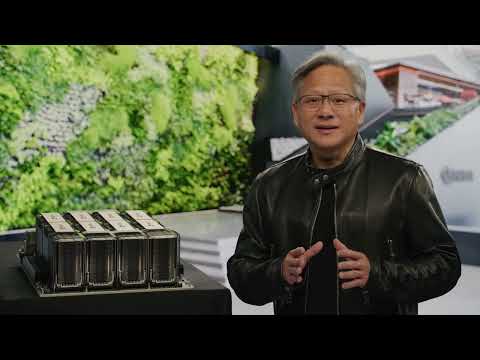
Jensen Huang, a Co-founder of Nvidia in 1993, has led the company’s evolution from a graphics firm to a global leader in accelerated computing.
His 1999 invention of the graphics processing unit (GPU) revolutionised PC gaming but later became the cornerstone of modern AI.
This shift was catalysed by the 2006 release of the Compute Unified Device Architecture (CUDA) platform, which enabled GPUs to be used for general-purpose parallel computing.
Nvidia’s H100 GPU and its foundational role in powering Gen AI models like OpenAI’s ChatGPT propelled the company to a technological and financial powerhouse.
Jensen’s vision is to position Nvidia as the provider of an end-to-end platform for the “AI industrial revolution,” with a continuous cycle of innovation.
The company is now extending its influence into high-growth sectors like robotics and sovereign AI and is set to launch its next-generation Blackwell B200 chip.