Waymo's Driverless Taxis Are Coming to London: Explained
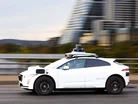
Though competition is growing, Waymo is widely considered to be the world's leading force when it comes to autonomous vehicles (AVs) that incorporates AI and machine learning (ML).
For a few years now, the Silicon Valley based firm – which is owned by Google's parent company, Alphabet – has been operating a service of driverless taxis across several major US cities, including San Francisco, Los Angeles and Phoenix.
With thousands of rides under its belt and more than 1,500 cars in its fleet, the firm now believes that the time for expansion has arrived. The company has announced its intention to take its service global, with a London launch pencilled in for 2026.
While some AV innovators, including Tesla, have started testing their technology in European cities, this will be Waymo's first foray outside the US. It will also be the first time that the UK has ever entertained the idea of so-called 'robotaxis'.
A phased rollout
The first vehicles will begin arriving in London in just a matter of weeks, though the service won't become public until next year.
Waymo has said that the first phase of the rollout will have human safety drivers behind the wheel as the company works through all the regulatory approval processes it needs to.
On this project, Waymo will collaborate with the UK's Department for Transport, as well as Transport for London, to introduce fully autonomous rides without safety drivers by 2026.
"Waymo is making roads safer and transportation more accessible where we operate," says the firm's CEO, Tekedra Mawakana.
"We've demonstrated how to responsibly scale fully autonomous ride-hailing and we can't wait to expand the benefits of our technology to the United Kingdom."
Waymo has the UK government's backing
Heidi Alexander is the UK's Secretary of State for Transport. On this issue, she expresses her support for the deployment of Waymo's AVs under the government's proposed autonomous vehicle piloting scheme.
"I'm delighted that Waymo intends to bring their services to London next year, under our proposed piloting scheme," she says.
"Boosting the [autonomous vehicle] sector will increase accessible transport options alongside bringing jobs, investment, and opportunities to the UK."
She frames the launch as part of the government's broader ambitions of technological leadership.
"Cutting-edge investment like this will help us deliver our mission to be world leaders in new technology and spearhead national renewal that delivers real change in our communities," she explains.
The reality of the market
Despite the expansion, the robotaxi industry is up against some quite significant financial headwinds.
A recent IDTechEx report found that no robotaxi service has yet achieved profitability, though the research firm projects this will change as operations scale.
The market research suggests revenue from robotaxi software could grow more than 1,000-fold over two decades, potentially reaching US$136bn by 2046.
However, the same report cautions against excessive optimism.
"Robotaxis are still in an extremely nascent stage," the analysis suggests. "As companies look to scale up to tens of thousands to potentially millions, any small error or delay could prove extremely dangerous."
It is also important to emphasise that the UK's roads present will present different challenges to those posed by American roads. Whether Waymo's AI technology will successfully acclimatise remains to be seen.

Waymo's strategy for international expansion
The London launch represents Waymo's second international market following initial testing in Tokyo.
The company currently serves Atlanta, Austin, Los Angeles, Phoenix and San Francisco with its autonomous fleet.
The expansion comes as regulatory frameworks, technical challenges and public perception continue to shape the trajectory of self-driving technology.
Industry observers note that the success of the London deployment could determine the pace of further European expansion and influence regulatory approaches across the continent.
The capital's dense urban environment and complex traffic patterns will provide a rigorous test of Waymo's autonomous systems beyond the primarily grid-based American cities where it currently operates.
Company portals


Executives
Tekedra N. Mawakana
Co-Chief Executive Officer (CEO)