
Balancing innovation and regulations in autonomous driving
The rapid surge in AI is transforming industries at an unprecedented pace. From new ways of working in marketing, to optimising production lines in manufacturing, the change is happening across sectors.
However, one area that stands to benefit is autonomous technology. Although even at its conception it heavily leaned on AI, the growth in its abilities and accessibility, alongside supporting infrastructure like 5G, has meant that we are closer than ever to seeing things like driverless cars or robotic helpers.
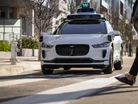
Waymo, a leader in self-driving taxis, recently announced its Waymo One is now available to anyone in Los Angeles following trials in Phoenix and San Francisco.
Yet, as this transformative wave gains momentum, it is not without challenges. One key hurdle is the inherent risk associated with AI systems operating in dynamic, real-world environments.
“A poignant concern at present is the risk of autonomous vehicles making errors and causing damage to people or property in the real world,” says Alexandre de Vigan, Founder and CEO of Nfinite.
Currently, autonomous cars can operate across various countries in the world. In Germany, the Level 3 Mercedes-Benz S-Class is allowed to use its autonomous driving feature but only on stretches of specific roads, like a portion of motorway.
“To trust AI with the responsibilities that come with mass adoption into the everyday, it ultimately needs to meet our human visual capabilities,” says Alexandre. This highlights the need for stringent standards and safeguards to ensure safety and reliability.
This is because regulators have recognised that autonomous cars can do well and drive largely accident-free on a motorway. Yet, when it comes to city driving, where more things need to be considered, they remain sceptical.
Indeed, in 2023, GM's Cruise Automation saw a significant setback when one of its vehicles was involved as a secondary vehicle in a pedestrian accident. The incident halted Cruise operations for several months, put its safety measures and development under scrutiny and saw it the subject of an independent investigation.
Regulations with such technology revolve around questions of accountability, like who bears responsibility when an autonomous system fails - the driver or the car. Moreover, ensuring that AI systems are free from biases and perform equitably across diverse scenarios is critical to building public trust.
Another pressing concern is fostering collaboration between established industry leaders and emerging innovators.
While companies like Tesla are advancing the field, a diverse ecosystem of start-ups and academic institutions can drive unique contributions. “This opens up possibilities for a wide range of providers, including emerging startups and academic ventures, to engage and push the boundaries of these technologies” says Alexandre.
As AI continues to drive autonomous technology forward, it is clear that balancing innovation with regulation is the key to its successful adoption.
Spatial AI’s ability to enhance understanding and interaction with the environment is a pivotal step to bridging the gap, but for these advancements to reach their full potential, they must be underpinned by robust rules that ensure safety, equity, and accountability.
Only then can we fully embrace the era of autonomous machines, transforming the way we navigate and interact with the world.
Panel 1 - Regulations: US and Europe
US
In the US, the regulatory landscape varies significantly from state to state, with each state responsible for its own autonomous driving laws.
The National Highway Traffic Safety Administration (NHTSA) has proposed safety standards and sought public input on automated driving system safety principles.
Several states, including California and Nevada, have enacted legislation to authorise the testing and operation of autonomous vehicles on public roads, with autonomous taxis already operating in locales within such states.
EU
The EU has been working towards a harmonised approach to autonomous vehicle regulation. Germany, in particular, has been at the forefront of these efforts:
Germany
Germany has established a legal framework for both Level 3 and Level 4 autonomous driving.
The country allows autonomous driving on public roads and has opened up public roads for large-scale tests with autonomous passenger cars and trucks. Key aspects of German regulations include:
- Requirements for approving specific automated vehicles for public road use
- Obligations for manufacturers, owners, and operators
- Requirement for a black box in all autonomous vehicles on public roads
Other European countries
The Netherlands and Sweden also allow autonomous driving on public roads and have established frameworks for testing and deployment.
The EU as a whole is working towards common standards and guidelines for the safe and efficient deployment of autonomous vehicles.
UK
The UK has taken a proactive stance on autonomous vehicle regulation with the Automated Vehicles Act 2024. This comprehensive legislation establishes a rigorous authorisation regime, requiring self-driving vehicles to pass stringent safety tests. The Act introduces new legal entities such as Authorised Self-Driving Entities and defines the concept of a 'user-in-charge'. It aims to improve road safety by mandating that automated vehicles meet or exceed the safety standards of careful human drivers.
Panel 2 - Regulations: APAC
China
China has emerged as a global leader in autonomous vehicle development and regulations. In fact, the country is testing more driverless cars than any other country.
As a result, the country has:
- Established pilot zones for autonomous vehicle testing
- Implemented regulations for road testing
- Introduced policies to support research and development, including tax incentives and subsidies
- Actively worked on developing national standards for autonomous vehicles, focusing on safety, cybersecurity, and data protection
Japan
Japan has taken significant steps in regulating autonomous vehicles, including:
- Amending existing laws like the Road Traffic Act and Road Transport Vehicle Act
- Establishing the Strategic Innovation Program (SIP) to promote research and development
- Collaborating with international organisations to develop common standards
- Defining penalties for businesses, including permit revocation
- Allowing delivery robots up to 6 km/h to travel on sidewalks
South Korea
South Korea’s government's Ministry of Land, Infrastructure and Transport laying out a Mobility Innovation Roadmap in 2022 that targeted the introduction of self-driving taxis by 2025.
Currently, autonomous taxis are operating in areas of Seoul, with the vehicles allowed to drive themselves on major roads with four or more lanes, while a safety monitor will take control on narrower residential roads.
Australia
Current Australian laws do not allow for the use of automated vehicles on public roads, with government guidance saying the laws are designed for vehicles with human drivers.
To read the full article in the magazine, click HERE.
Explore the latest edition of AI Magazine and be part of the conversation at our global conference series, Tech & AI LIVE.
Discover all our upcoming events and secure your tickets today.
AI Magazine is a BizClik brand