This Week's Top Five Stories in AI

What PwC's CEO Survey Reveals About AI Return on Investment
As fears of an AI Bubble are floated, global CEOs face mounting pressures as they navigate an increasingly complex business landscape where technological transformation, geopolitical uncertainty and cyber threats are reshaping corporate strategies and testing confidence levels across industries.
According to PwC's newly-released Global CEO Survey, presented at the World Economic Forum's Annual Meeting in Davos, leaders are reporting their lowest level of revenue confidence in five years.
The survey of more than 4,000 CEOs across 95 countries and territories reveals that, while challenges persist, leaders are seeking to mitigate them by focusing on multi-year opportunities and accelerating investment in AI.
However, a small cohort of organisations are beginning to demonstrate how AI can deliver measurable returns when deployed strategically across entire operations.
Mohamed Kande, Global Chairman of PwC, says 2026 is "shaping up as a decisive year for AI".
Davos 2026: How AI Discussion and Debate Took Centre Stage
The World Economic Forum's (WEF) Annual Meeting closed following a week of discussions focused largely on AI and technology leadership.
Business leaders and political figures came together in Davos to share their thoughts on the opportunities and challenges surrounding AI, not to mention the role of elite institutions in shaping outcomes for the wider world.
While consensus was limited on the specifics of AI’s development, leaders repeatedly returned to its central importance. Executives from multiple sectors discuss how AI influences not only the workplace but also broader national economies.
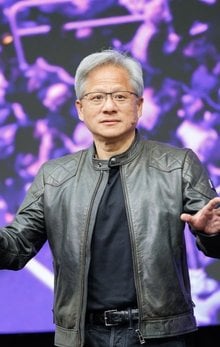
Jensen Huang, CEO at NVIDIA, told BlackRock CEO Larry Fink: "AI is infrastructure and there’s not one country in the world I can’t imagine that you need to have AI as part of your infrastructure because every country has its electricity, you have your roads – you should have AI as part of your infrastructure.”
Cisco CEO: Why AI will be 'Bigger Than The Internet'
Sticking with Davos, Chuck Robbins, CEO of Cisco, asserted that AI will be "bigger than the internet" – while also cautioning that it could spell disaster for companies that fail to adapt.
This statement carries weight coming from a leader whose company was once the world's most valuable in 2000, only to witness an 80% plunge in value when tech stocks collapsed during the dot-com bubble burst in 2000.
After recovering from that decline, Cisco partnered with NVIDIA to deploy AI capabilities and scale its infrastructure accordingly.
Chuck also noted that AI will "make cyber attacks better" and "make the scams that people see in their inboxes seem more real", highlighting the threat facing individuals globally.

Palantir CEO: How AI will Reshape Skills and Hiring
Alex Karp, CEO of AI defence organisation Palantir, has given an honest assessment: AI will "destroy humanities jobs", suggesting that humanities-based learning will be "hard to market".
This is not the first time Palantir has challenged conventional approaches to talent acquisition in the AI era.
In 2025, the company introduced its 'Meritocracy Fellowship' – a paid engineering programme for high school graduates to study philosophy and history and then work on real-world projects.
Palantir describes the fellowship on its website as a way "to cultivate exceptional talent, increasingly overlooked, regardless of background". The site continues: "We believe those with the highest aptitude deserve challenges, not a set curriculum; agency, not merely a credential; and responsibility, not busy work."
What TikTok's US Spin-Off Means for AI Regulation
TikTok's plans to separate its US app from the global business signals a change to how platforms function at scale – and puts it at the centre of a shift towards region-driven digital governance.
Built for short-form content creation, TikTok thrives through its personalised For You feed, which uses algorithmic signals to curate a user’s viewing experience.
Alongside tools for editing, filters and music, the platform allows people to watch, create and interact with clips from every category, including comedy, fashion and education. Its international appeal rests on simplicity and relevance.
But TikTok now sits at the heart of what regard to be a fragmented internet. This term describes an online ecosystem that moves away from universal access and shared services, instead catering to individual national standards and controls.
Company portals






Executives
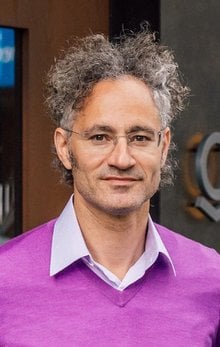
Alex Karp
CEO
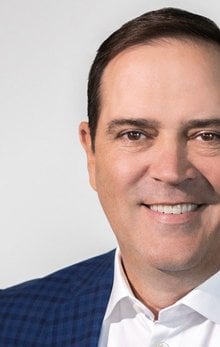
Chuck Robbins
Chair and CEO
Jensen Huang
Founder and CEO
Mohamed Kande
Global Chairman