The DeepFake Debate: Enterprise Benefits vs Ethical Dilemma
AI systems that generate synthetic voices, images and video have become embedded in enterprise operations from customer service to marketing – yet the technology is simultaneously raising unresolved questions about authenticity and consent.
The entertainment industry is emerging as a testing ground for these debates, with actors and their families pushing back against the use of AI to recreate human performances without permission.
These models work by training machine learning (ML) algorithms on datasets of real human performances, then using those patterns to generate new content that mimics specific individuals.
What started as academic research into neural networks has quickly commercialised into products that promise cost savings across multiple sectors, yet these same capabilities have triggered resistance from workers, regulators and families who find themselves confronting synthetic recreations they never authorised.
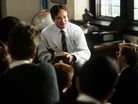
Now, Zelda Williams, the daughter of actor Robin Williams who died in 2014, has renewed calls for people to stop creating and sharing AI-generated videos of her father, describing the practice as distressing and challenging claims that such content represents innovation.
The impact of the rise of AI actors in the entertainment industry
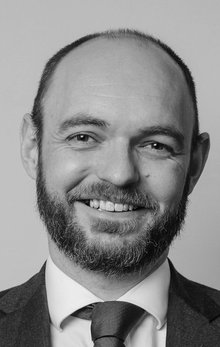
The debate has intensified following the unveiling of Tilly Norwood, marketed as an “AI actor” by its creator Eline Van der Velden.
The Dutch actor and comedian told media she wanted Tilly to become the “next Scarlett Johansson”, a statement that prompted immediate pushback from SAG-Aftra, the US union representing actors and performers.
“It’s not an actor, it’s a character generated by a computer program that was trained on the work of countless professional performers,” the union said in a statement.
“It has no life experience to draw from, no emotion and from what we’ve seen, audiences aren’t interested in watching computer-generated content untethered from the human experience.”
That training data issue keeps surfacing across different contexts.
Most commercial deepfake systems learn by analysing copyrighted material, raising questions that existing intellectual property frameworks struggle to address.
OpenAI and Stability AI both face lawsuits from creators who argue their work was used without permission or payment.
Actor Emily Blunt says: “That is really, really scary” on a podcast with Variety, the US entertainment publication.
“Come on, agencies, don’t do that. Please stop. Please stop taking away our human connection.”
Van der Velden defends her creation in different terms: “To those who have expressed anger over the creation of my AI character, Tilly Norwood, she is not a replacement for a human being, but a creative work – a piece of art,” she says.
“Like many forms of art before her, she sparks conversation – and that in itself shows the power of creativity.”
How lack of deepfake regulations leaves enterprises exposed
Legal frameworks have struggled to keep pace with commercial deployments of AI models.

The European Union’s AI Act, which came into force in 2024, requires disclosure of synthetic media in certain contexts, but regulators are still working out implementation details.
Some US states have introduced personality rights legislation that extends beyond death, yet enforcement remains patchy and does not cover all commercial uses.
Meanwhile, China mandates watermarking of AI-generated content, though compliance mechanisms continue to develop.
In other words, no global standard exists.
“It's freely available to someone with very little technical skill to copy a voice, image or even a video,” Arup's Chief Information Officer (CIO), Rob Greig, told the World Economic Forum.
This regulatory vacuum creates uncertainty for businesses considering whether to use synthetic content systems.
For example, customer service operations must decide whether to disclose that callers are speaking with AI-generated voices rather than humans.
So far, social media companies have introduced labelling for AI-generated content in some cases, but implementation varies widely and detection systems often lag behind generation capabilities.
Business platforms including LinkedIn have yet to publish policies on synthetic professional profiles or AI-generated business content.
The question of consent becomes particularly thorny when synthetic content involves deceased individuals. Social media now hosts tools that promise to “bring your loved ones back to life” through animated images, creating a market for AI recreations of people who cannot grant permission.
As a result, families find themselves confronting synthetic versions of relatives they never approved.
The personal damage of unregulated deepfake use
Zelda Williams, a film director, has experienced this ethical dilemma directly.
In 2023, Zelda supported a SAG-Aftra campaign against AI, describing attempts to recreate her father’s voice as “personally disturbing”.
A recent Instagram post reads: “Please, just stop sending me AI videos of Dad. Stop believing I wanna see it or that I’ll understand, I don’t and I won’t.
“To watch the legacies of real people be condensed down to ‘this vaguely looks and sounds like them so that’s enough’, just so other people can churn out horrible TikTok slop puppeteering them is maddening,” she writes.
“You’re not making art, you’re making disgusting, over-processed hotdogs out of the lives of human beings, out of the history of art and music – and then shoving them down someone else’s throat.”
Her criticism extends to how the technology industry frames Gen AI: “Stop calling it ‘the future,’” she writes.
“AI is just badly recycling and regurgitating the past to be re-consumed. It’s a waste of time and energy – and believe me, it’s NOT what he’d want.”