St Peter’s Basilica Debuts Live AI Translation for Mass
The power of AI-assisted language translation represents one of the most profound shifts in how humanity communicates.
For centuries, language has served as both a bridge and a barrier, defining the boundaries of communities and limiting the reach of ideas. Today, the rapid advancement of AI is dismantling these historical obstacles, allowing for real-time, fluid exchanges.
Beyond boardrooms or international trade summits, the technology is now finding its way into the most sacred of spaces, proving that the tools of the future can play a pivotal role in preserving and expanding the heritage of the past.
A historic convergence of faith and tech
The Fourth Centenary of the Dedication of Saint Peter’s Basilica, spanning from 18 November 1626 to 2026, serves as a powerful backdrop for a technological breakthrough. As the Vatican marks this significant anniversary, it is welcoming a new era of inclusivity by integrating AI into its Holy Mass.
For the first time in history, visitors attending the celebrations at the Basilica will witness the deployment of a live, AI-powered translation system known as Lara, developed by Translated – bringing together ancient tradition and cutting-edge innovation.
St Peter’s Basilica has long been a place of pilgrimage, welcoming the faithful from every nation and tongue. However, the linguistic diversity of such a gathering has previously presented a significant challenge for those wishing to participate fully in the liturgy.
By introducing a system that can translate the Holy Mass into 60 languages, the Vatican is taking a concrete step toward ensuring that the message of the church remains accessible to a global audience.
His Eminence Cardinal Mauro Gambetti, O.F.M. Conv., Archpriest of the Papal Basilica of St Peter in the Vatican, Vicar General of His Holiness for Vatican City and President of the Fabric of Saint Peter, states: “St Peter’s Basilica has, for centuries, welcomed the faithful from every nation and tongue. In making available a tool that helps many to understand the words of the liturgy, we wish to serve the mission that defines the centre of the Catholic Church, universal by its very vocation.
“I am very happy with the collaboration with Translated.”
The project represents the first large-scale application of simultaneous AI interpretation within a sacred space at the Vatican, setting a precedent for how religious institutions might utilise technology to foster deeper connection among diverse groups of people.
Engineering universal understanding
The technology powering the new service is the result of a collaboration between Translated and Carnegie-AI, a firm born from research at Carnegie Mellon University based in Pittsburgh, US. At the heart of the system is Lara, an advanced translation AI.
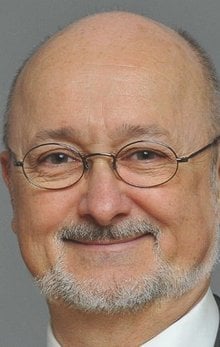
The project has been guided by the scientific expertise of Professor Alexander Waibel, a pioneer in the field of AI-powered speech translation, and reflects a wider ambition to use technology as a force for global unity.
“Today, we see the possibility to break language barriers in real time, realised in one of the most meaningful settings imaginable,” adds Professor Waibel.
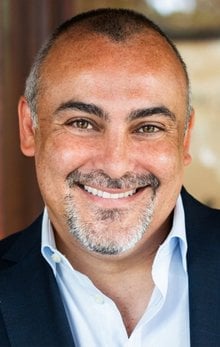
Translated CEO Marco Trombetti and Professor Waibel previously participated in the Third World Meeting on Human Fraternity alongside other other prominent AI scientists and leaders. They drafted a Declaration to uphold key principles and boundaries to guide dialogue on how AI can best serve humanity.
“We recognised mutual human understanding as one of the most significant contributions AI can make to humanity,” reflects Professor Waibel.
The mechanics of inclusive prayer
The user experience at St Peter’s Basilica has been designed with simplicity and accessibility in mind. Rather than forcing attendees to navigate the complexities of downloading new software or carrying specialised equipment, the system operates entirely through a web browser.
Upon arriving at the Basilica, worshippers can scan a QR code placed at entrances and other designated points throughout the building. This action immediately grants them access to a dedicated webpage, which provides real-time audio and text translations of the liturgy directly onto their smartphones.
By removing technical friction, developers have ensured the technology remains an aid to the experience rather than a distraction.
“Language enables meaningful encounters,” emphasises Marco. “Offering this service within St Peter’s Basilica is a concrete way to place artificial intelligence at the service of listening, participation and understanding.”
The system functions effectively because it leverages the live interpretation capability developed by Translated in conjunction with the robotics expertise of Carnegie-AI. This ensures the translation is not only accurate but also rapid enough to keep pace with the flow of a live mass, allowing the congregation to follow the liturgy in their own language without feeling alienated from the shared experience.
Marco continues: “We are honoured to contribute, with Lara, to an experience that helps people overcome linguistic barriers and feel truly included in the shared prayer of the church.”
The ethics of technological stewardship
The introduction of Lara at St Peter’s Basilica is rooted in a commitment to ethical AI, building on the Third World Meeting on Human Fraternity.
For the Vatican, the collaboration demonstrates that technological advancement, when guided by faith, can enhance religious life.
Cardinal Gambetti observes: “In this centenary year, we look to the future with prudence and discernment, confident that human ingenuity, when guided by faith, may become an instrument of communion.”
The initiative implemented at the Vatican offers a practical model for large institutions. By prioritising accessibility over novelty, organisations can ensure digital strategies remain aligned with their fundamental values. As AI systems refine their ability to interpret nuance in real time, the potential for technology to support inclusivity in sectors ranging from education to diplomacy is growing.
Ultimately, the deployment of Lara at St Peter’s demonstrates how tools can bridge linguistic divides. By facilitating greater participation in the liturgy, the Basilica is ensuring its services remain accessible to a global congregation – regardless of their native language.
Did you know?
Company portals

Executives
Alexander Waibel
Professor
Marco Trombetti
Co-Founder and CEO