Princeton Digital Group: Targeting 500MW AI & Cloud in Korea
Princeton Digital Group (PDG) has announced its expansion into South Korea, initiating a large-scale data centre strategy underpinned by a US$700m investment and a 500MW development roadmap.
PDG is positioning the move as a fundamental component of its AI and cloud services strategy for the Asia Pacific region. The initial phase is centred on developing a 48MW campus in Incheon.
This expansion marks South Korea as the seventh market for PDG, joining its existing presence in Singapore, Japan, India, Indonesia, China and Malaysia. PDG intends to develop multiple campuses across the country, building up to 500MW of total capacity designed to meet the increasing AI and cloud demand in the nation.
AI and cloud data centre capacity
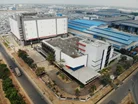
The first project is the SE1 campus in Greater Seoul. This 48MW site in Incheon is located approximately 40 minutes from the capital's central district. Spanning a land area of about 11,000m², PDG is targeting an operational start date in early 2028.
Power for the facility is fully contracted, and construction is scheduled to begin this month.
The build is described as a hyperscale and AI-ready site. Its design incorporates high-density halls, advanced cooling systems and an energy-efficient structure aligned with PDG’s Net Zero by 2030 and RE100 commitments.
According to PDG, the campus design addresses the intensity of AI workloads through higher rack densities, cooling systems suited for sustained thermal loads and electrical layouts that support phased growth.

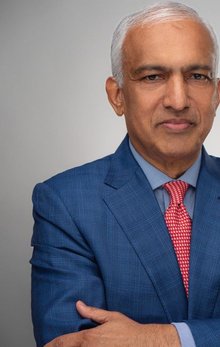
Rangu Salgame, Chairman, CEO and Co-founder of PDG, says: “South Korea is one of Asia Pacific's most advanced digital economies and a critical market for cloud and AI hyperscalers. Our entry is part of a long-term plan to be a significant provider of AI and cloud data centre capacity in the country. With this expansion, PDG continues to strengthen its position as one of the top pan-Asia operators serving the world's largest technology customers.”
Navigating high-barrier markets
While South Korea presents one of Asia’s most developed digital economies, PDG explains that the market also has complex development conditions. These include constraints on land and grid availability alongside stringent permitting frameworks.
PDG suggests its entry into the country demonstrates an ability to operate within high-barrier markets, based on a multi-pronged entry strategy and experience across varied Asian geographies.
PDG highlights that power availability and securing approval pathways are two of the most challenging aspects of data centre development in South Korea.
The fully contracted power at the SE1 site could be seen as evidence of early-stage coordination with energy suppliers to meet long-term load requirements. PDG states this approach helps ensure grid alignment for its wider 500MW plan.
Pan-Asia portfolio growth
The inclusion of SE1 brings PDG’s total portfolio to over 1.2GW of IT power across more than 20 campuses in seven countries.
PDG’s expansion in South Korea is part of a wider pan-regional strategy that establishes a consistent campus model engineered for scale, high-density operations and energy efficiency.
This model is built to accommodate AI training clusters, cloud availability zones and high-bandwidth interconnection as each market develops.
PDG notes the strategic role of the Incheon site, which links the connectivity of the Greater Seoul area with a campus footprint that avoids the severe land and power limitations often seen in the city centre.
The SE1 campus, therefore, provides a platform for hyperscale organisations that need proximity to the metro area while also requiring space for future AI compute expansion.
PDG confirms that the initial work in Incheon signifies the beginning of a broader national strategy that establishes South Korea as a core part of its Asia Pacific presence.
This plan, according to PDG, supports its objective to deliver regional scale for AI and cloud providers through a standardised, multi-campus development model designed for sustained growth.
Company portals

Executives
Rangu Salgame
Chairman & CEO, Co-Founder