
Why has South Korea Banned new DeepSeek Downloads?
New downloads of DeepSeek’s AI chatbot have been temporarily suspended in South Korea, according to the country’s personal data protection agency.
The Personal Information Protection Commission (PIPC) said in a media briefing that the ban had been enforced after DeepSeek acknowledged failing to take into account some of its rules around protecting personal data.
The measure began on Saturday 15 February with the app becoming unavailable on Google Play and Apple’s App Store.
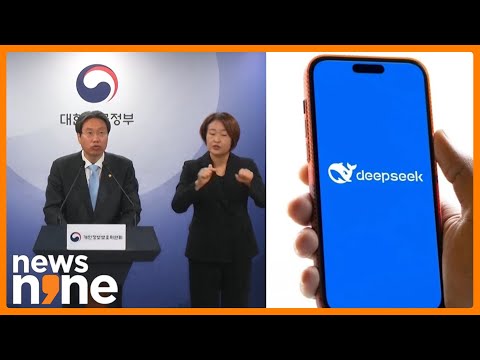
The PIPC says that DeepSeek will become available again once “improvements and remedies” have been made in order for it to comply with the country’s data protection laws. Its web service remains accessible in the country and users who already have the app on their phones can continue using it.
Discussing the suspension in a media briefing, the PIPC pointed to “certain deficiencies” in DeepSeek’s handling of personal information policies and its communication with third-party operators.
It says: “We are determined it will take a significant amount of time to rectify the DeepSeek service. To prevent further concerns from spreading, we recommended that DeepSeek temporarily halt its service in Korea while making necessary adjustments.”
How has South Korea reacted to DeepSeek?
This is the latest of several steps South Korea has taken against DeepSeek. The country has previously banned employees at several government agencies from downloading the app to their devices.
On 31 January an official inquiry was sent to DeepSeek’s HQ after concerns emerged over its data collection practices – the PIPC is investigating the kinds of data the Chinese start-up collects, how it is stored, if it is shared and, if so, who can access it.
On 9 February, South Korea’s National Intelligence Service (NIS) warned about security vulnerabilities in DeepSeek, citing concerns over unrestricted data collection and inconsistent responses to sensitive questions.
The NIS explained that DeepSeek collects identifiable user information such as keyboard input patterns, and that personal data could be stored indefinitely and shared with other third parties.
Global action on DeepSeek
The buzz around DeepSeek shows no sign of slowing. Since launching in January the Chinese start-up’s R1 model has disrupted the global AI sector including topping global app stores and upending the US markets.
But this rapid rise has also fuelled existing concerns about AI security and the safety of personal data in apps more broadly, particularly after US action against TikTok pushed concerns about the Chinese government’s collation of data up the agenda for government agencies and countries globally.
DeepSeek says in its privacy policy that it keeps user information in secure servers in China and that data it collects can be stored ‘for as long as possible’ and used for various purposes.
Exactly what happens to this data is still being investigated.
Researchers from web security firm Feroot Security recently claimed to have found links between DeepSeek and a Chinese state-controlled telecoms company previously flagged for possible security risks.

Feroot’s CEO Ivan Tsarynny said to ABC news: “We see direct links to servers and to companies in China that are under control of the Chinese government. And this is something that we have never seen in the past.”
As well as South Korea, other countries have acted on these concerns. Australia banned DeepSeek products from government systems and devices on 4 February. Italy’s Data Protection Authority has put in place a nationwide ban preventing downloads in the country and Taiwan has also banned its use by government agencies.
In the US, several agencies and organisations have banned workers from using DeepSeek, while broader government measures are also being considered.
Explore the latest edition of AI Magazine and be part of the conversation at our global conference series, Tech & AI LIVE.
Discover all our upcoming events and secure your tickets today.
AI Magazine is a BizClik brand