
DeepSeek: How a Chinese AI Startup Rattled Silicon Valley
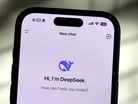
A Chinese AI company founded less than a year ago has sparked tumult in US markets after revealing technology that it says rivals Silicon Valley’s offerings at a fraction of the cost.
DeepSeek, launched in Hangzhou by hedge fund manager Liang Wenfeng, claims its R1 model can match or outperform systems from established players, while costing under US$6 million to develop.
With US tech giants like Microsoft, Google and OpenAI having poured billions of dollars into developing LLMs – often spending hundreds of millions on individual models and billions in infrastructure – the emergence of DeepSeek represents a potentially disruptive moment in the global AI race.
The development comes against the backdrop of intense technological competition between the United States and China, with the Biden administration implementing strict export controls on advanced microprocessors to limit Chinese AI capabilities – a strategy that now appears to have potentially unintended consequences – and the 2025 Trump administration having pledged its support for the US$500bn Stargate initiative.
How DeepSeek built its AI arsenal
The startup’s emergence has proved to have particular significance for Nvidia, which supplies the chips that power many LLMs. Nvidia’s share price fell 3% as investors digested claims about DeepSeek's capabilities and development costs.
In an interview with CNBC at the 2025 World Economic Forum, ScaleAI chief executive Alexandr Wang, whose company provides training data for AI systems, said: “What we found is that DeepSeek, which is the leading Chinese AI Lab, their model, is actually the top performing, or roughly on par with the best American models.”

Wang’s claim that DeepSeek has acquired 50,000 H100 chips from Nvidia, despite US restrictions on sales of advanced processors to China, has prompted scrutiny of export control effectiveness.
The company's mobile application, running on its V3 model, reached the top position for free downloads in Apple's US App Store in January. This success triggered an outage of DeepSeek's website and API.
“DeepSeek has certainly been in the limelight in recent days which can act as a huge honeypot for cybercriminals,” comments Jake Moore, Global Cybersecurity Advisor at ESET. “This is typical for any new platform which contentiously dominates the media for multiple reasons and can attract multiple groups of threat actors looking for any potential vulnerability to exploit.
“Irrespective of who is behind DeepSeek and its values, such attacks act as a reminder to bolster existing defences and to expect the unexpected – especially when attention grows quickly.”
The funding gap puzzling Wall Street
The contrast between DeepSeek's claimed development costs and the billions invested by US technology companies in AI has unsettled investors who backed the AI narrative driving market gains.
- US$6M: Total development cost for DeepSeek's R1 model
- 50,000: Number of H100 chips reportedly acquired by DeepSeek
- 2 Months: Time taken by DeepSeek to develop its open-source LLM
The Biden administration implemented restrictions on shipping advanced microprocessors to China in 2021, aiming to limit Chinese companies’ AI development capabilities.
DeepSeek reports it trained its V3 model using Nvidia H800 chips – processors less advanced than those covered by export restrictions. The company emerged after search engine Baidu released China's first LLM, leading to a wave of AI development across Chinese technology firms.
Marc Andreessen, co-founder of venture capital firm Andreessen Horowitz which has invested in companies including Airbnb and numerous AI startups, highlighted the significance of DeepSeek's approach on social media platform X, describing the company’s R1 model as ‘AI's Sputnik moment’.
The technology uses a reasoning system that generates step-by-step explanations before providing answers, a method that has caught the attention of Silicon Valley veterans.
Chamath Palihapitiya, a technology investor, writes on X that DeepSeek's R1 model “essentially cracked one of the holy grails of AI: getting models to reason step-by-step without relying on massive supervised datasets.
This report is long but very good.
— Chamath Palihapitiya (@chamath) January 26, 2025
“With R1, DeepSeek essentially cracked one of the holy grails of AI: getting models to reason step-by-step without relying on massive supervised datasets. Their DeepSeek-R1-Zero experiment showed something remarkable: using pure reinforcement…
“This wasn't just about solving problems,” he added. “The model organically learned to generate long chains of thought, self-verify its work, and allocate more computation time to harder problems.”
Explore the latest edition of AI Magazine and be part of the conversation at our global conference series, Tech & AI LIVE.
Discover all our upcoming events and secure your tickets today.
AI Magazine is a BizClik brand