
Why the Pentagon has Signed Defence Deals with AI Giants
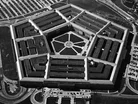
The Pentagon’s US Department of War (DOW) has entered agreements with SpaceX, OpenAI, Google, NVIDIA, Reflection, Microsoft, Amazon Web Services and Oracle, whose tech is set to be integrated into secret and top-secret network environments.
The deal marks a departure from the Department’s reliance on singular providers and a strategic shift toward a multi-vendor ecosystem. The move will result in the deployment of advanced AI capabilities on the Pentagon’s classified networks for lawful operational use.
In a statement, the DOW said: "These agreements accelerate the transformation toward establishing the United States military as an AI-first fighting force and will strengthen our warfighters' ability to maintain decision superiority across all domains of warfare."
Conspicuous by its absence from the coalition is Anthropic, the developer behind the popular Claude models. The company has found itself sidelined following a dispute with the Pentagon regarding specific ways the military intends to deploy its AI tools.
However, an interesting addition is the lesser-known Reflection AI, which is backed by 1789 Capital, a venture capital firm in which Donald Trump Jr. is a partner and investor.

Fast-tracking the process
The Pentagon will integrate secure frontier AI into Impact Level 6 (IL6) and Impact Level 7 (IL7) network environments to streamline how the military synthesises data. These two levels are the highest security classifications established for cloud computing environments, designed to manage classified information and ensure national security.
By providing the resources for these deployments, the eight AI companies will elevate situational understanding and augment decision-making during complex operations.
The initiative supports the Department's AI Acceleration Strategy by enabling new tools across three core areas: warfighting, intelligence and enterprise operations. GenAI.mil, the official AI platform of the DOW, already demonstrates the impact of this shift.
More than 1,300,000 personnel have used the platform in only five months, generating tens of millions of prompts and deploying hundreds of thousands of digital agents. Warfighters and civilians are putting these capabilities to practical use, cutting many tasks from months to days.
Integrating a new technology into such high-profile environments was once a bureaucratic marathon that often took 18 months or more. The Pentagon has now drastically accelerated its onboarding processes to meet the rising demand. Newer entrants now report being integrated into Impact Level 6 (IL6) and Impact Level 7 (IL7) data environments in less than three months.
Beyond administration, the acceleration is designed to avoid "AI vendor lock and ensure long-term flexibility for the Joint Force".
Cameron Stanley, Chief Digital and Artificial Intelligence Officer at DOW, told CNBC: "Overreliance on one vendor is never a good thing."
The DOW adds: “Access to a diverse suite of AI capabilities from across the resilient American technology stack will give warfighters the tools they need to act with confidence and safeguard the nation against any threat.”
Sidelining Anthropic
Anthropic’s Claude model was once the exclusive AI deployed on classified military networks. The company is now arguably the only major AI provider left out of the latest Pentagon deal.
Back in January, the DOW issued its Artificial Intelligence (AI) Acceleration Strategy, mandating an “AI-first warfighting force”. This required all contracted AI models to be available for “all lawful purposes”.
Anthropic refused to permit the use of its technology for mass domestic surveillance or fully autonomous weapons, prompting a security dispute with the Pentagon regarding guardrails on military applications.
The rift centres on a fundamental disagreement over these safety restrictions. While Anthropic insists on preventing specific use cases, the government seeks more permissive terms for lawful operational use.
This fallout has resulted in a complex legal and security dispute between the two. The Pentagon designated Anthropic a ‘supply-chain risk’ in March 2026, a move the company is currently challenging in federal court.
Dario Amodei, CEO of Anthropic, said at the time: "The Department of War has threatened to designate us a ‘supply chain risk’ and to invoke the Defense Production Act to force the safeguards’ removal. These threats are inherently contradictory: one labels us a security risk; the other labels Claude as essential to national security."
Anthropic then sued the Trump administration following the ban, accusing the government of an "unlawful campaign of retaliation".
Reuters has since reported that Pentagon staffers, former officials and IT contractors are reluctant to give up Claude tools. Many users view the technology as superior to alternatives, despite orders to remove it within six months.
One could view Pentagon’s efforts to avoid the AI vendor lock as a move to dilute its overdependence on Anthropic. By diversifying, the military ensures it is no longer reliant on a single dominant service provider.








Executives

Dario Amodei
CEO and Co-Founder