NVIDIA and SK Hynix: Partnering on Next‑Gen Memory for AI
NVIDIA and South Korean manufacturer, SK Hynix, have announced a multi-year partnership to co‑develop next‑generation memory, align long‑term supply and accelerate semiconductor design and manufacturing for AI factories.
The agreement supports supply for advanced memory, reflecting extended development cycles, sophisticated fabrication and capital investment needs as AI demand scales worldwide.
AI factories and advanced memory
In April 2026, the Financial Times reported that SK Hynix plans to increase capital spending in response to long‑term demand growth as big technology companies invest heavily in AI hardware.
Both companies position the deal as core to the performance and pace of AI infrastructure.

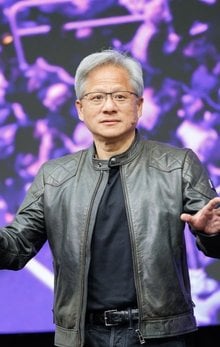
Jensen Huang, Founder and CEO of NVIDIA, says: “AI factories are the engines of the next industrial revolution and advanced memory is essential to their performance.
"SK Hynix has been an extraordinary partner to NVIDIA, playing a central role in delivering advanced memory technologies for NVIDIA AI computing platforms.
"Together, we will co‑develop the next generation of memory for AI factories and support the accelerating global expansion of AI infrastructure, from frontier model training to agentic and physical AI."
As part of the deal, SK Hynix will diversify into markets which NVIDIA is creating across AI infrastructure, personal AI and physical AI.
The companies plan to co‑develop memory for NVIDIA Vera Rubin AI supercomputers, Vera CPUs, RTX Spark‑powered PCs and Jetson Thor robotic computing platforms.
Both parties frame this roadmap as a way to match memory innovation with the compute needs of emerging AI workloads.
The partnership also signals a wider shift to platform‑level co‑design spanning hardware, software and supply.
Applying AI to semiconductor design and manufacturing
NVIDIA says the companies will apply AI to chip design and fabrication using NVIDIA CUDA‑X libraries.
NVIDIA PhysicsNeMo will also be used to accelerate semiconductor simulations, technology computer‑aided design (TCAD) workflows and in‑house engineering codes.
Chey Tae‑won, Chairman of SK Group, says: “SK Hynix and NVIDIA have been building toward this for years, and this partnership reflects the depth of that collaboration.
“Together, we are co‑developing the next generation of memory for AI factories and applying AI to how we design and manufacture semiconductors, work that will shape the future of AI infrastructure.”
SK Hynix uses NVIDIA frameworks and libraries to speed semiconductor simulation, including TCAD and computational lithography workflows.
It is also delivering core‑workload acceleration across in‑house simulation codes and AI physics workflows. These efforts aim to reduce verification time, improve yield prediction and shorten technology bring‑up cycles.
They also help align design choices with manufacturing constraints earlier in the process.
Digital twins for autonomous fabs
SK Hynix is developing fab digital twins as a foundation for more autonomous manufacturing operations.
Teams use scene optimisation technologies, NVIDIA Omniverse libraries and OpenUSD pipelines to build 3D factory environments for visualising, simulating and optimising complex processes.
These digital twins support operational optimisation, including the movement of autonomous mobile robots and other fab assets, using the open‑source, GPU‑accelerated NVIDIA cuOpt decision optimisation engine and the NVIDIA Metropolis platform.
The approach is designed to improve throughput, reduce downtime and enhance safety in high‑mix, high‑volume fabs. It also provides a shared data backbone for continuous improvement across sites.
Wider SK Group collaborations
NVIDIA has also announced an agreement with SK Telecom, which is part of SK Group, spanning factory architecture to accelerate AI startups, robotics and industrial physical AI.
SK Telecom plans to build a gigawatt‑scale AI cloud in South Korea using the NVIDIA DSX platform, with the first AI factory due to come online in 2027.
Jensen says: “Telecom networks are becoming national AI infrastructure. They connect people, companies, devices and machines and now they can become the backbone of new AI clouds.
“With NVIDIA DSX, SK Telecom can build Korea’s AI cloud at scale and bring agents, enterprise and physical AI to the companies and industries that power Korea and the world.”
NVIDIA also signed a deal with Doosan Group, expanding collaborations across physical AI, robotics and AI factory infrastructure.
Company portals




Executives
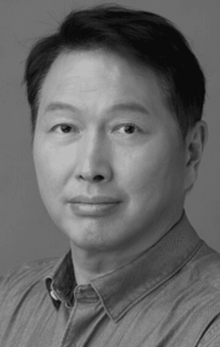
Chey Tae-won
Chairman
Jensen Huang
Founder and CEO