Could AI Imaging Spot Pregnancy Health Risks Earlier?
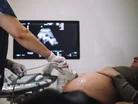
Mount Sinai, one of the oldest and largest teaching hospitals in the US, is advancing AI tools that could shift pregnancy risk assessment earlier in the care pathway.
The focus is on two key stages: before conception for placenta accreta spectrum (PAS) and during routine mid-trimester scans for congenital heart defects (CHD).
Placenta accreta spectrum (PAS) is a serious complication where the placenta grows too deeply into the uterine wall, making delivery high risk and resource-intensive.
PAS and CHD are associated with high morbidity, substantial costs and intensive resource needs. Moving risk identification upstream opens the door to earlier counselling, targeted surveillance and planned deliveries in hospitals.

At the recent 2026 SMFM Annual Pregnancy Meeting, Mount Sinai specialists presented an AI-assisted workflow to detect severe CHD from fetal ultrasound and machine learning models that predict PAS risk using preconception electronic medical record (EMR) data.
The work sits alongside studies on social vulnerability, gun violence exposure and labour management, which signals a move toward data-informed pregnancy care that integrates clinical, social and operational signals.
Preconception health risks identified by AI
In Mount Sinai’s case-control study of 118,890 deliveries from 2013 to 2023, PAS occurred in 0.23% of cases but carried high risks for severe maternal morbidity and mortality, making precise preconception risk stratification strategically valuable.
The AI found that having anaemia before pregnancy is an additional risk factor, something not previously recognised. It sits alongside known risks like older maternal age, a previous C-section, prior gynaecologic surgery and past pregnancy or birth problems.
Because anaemia is potentially modifiable, health systems could alleviate risks by routing patients into nutritional support, consults or preconception counselling before pregnancy, with the goal of avoiding emergency deliveries and enabling planned care at specialised hospitals.
Model development and performance
The team trained multiple machine learning models on pre-pregnancy EMR data, including demographics, obstetric and surgical history, vitals, labs and more.
An XGBoost model achieved an area under the ROC curve of 0.86, outperforming logistic regression at 0.76. Random forest provided the highest sensitivity at 91%, while logistic regression achieved 91% specificity, highlighting the trade-offs organisations must manage when tuning models for recall versus false positives.
XGBoost was best overall at telling high- from low-risk cases (AUC 0.86 vs 0.76 for logistic regression), while another AI model caught the most true cases (91% sensitivity), and logistic regression had the fewest false alarms (91% specificity), showing you must choose between catching more cases and triggering more false alerts.
AI-assisted screening
On the imaging front, Mount Sinai West has deployed software from BrightHeart to bolster fetal ultrasound screening for major CHD across a multicentre dataset.
In a study of 200 second-trimester ultrasounds from 11 medical centres in two countries, AI assistance raised detection of major CHD to more than 97%, cut reading time by 18% and increased reader confidence by 19%.
Seven gynaecologists and seven maternal-fetal medicine specialists reviewed each exam with and without AI, demonstrating value for both generalists and subspecialists.
The technology is now under evaluation in a real-world prenatal diagnostic centre, where it flags suspicious findings for severe CHD within standard screening workflows.
Governance and scaling
This rollout is not without governance challenges. Mount Sinai emphasises rigorous validation on diverse populations, careful stewardship of large retrospective datasets and continuous monitoring for bias when incorporating social indices such as composite social vulnerability scores and neighbourhood gun violence exposure.
The institution also stresses the need for clear clinical sponsorship with metrics tied to morbidity, cost and workflow, as well as a deliberate plan to scale from single-centre pilots to system-wide decision support.
By pairing EMR-driven preconception risk prediction for PAS with AI-augmented fetal cardiac imaging, Mount Sinai is redefining when and how pregnancy risk is identified.
The early results suggest tangible gains in accuracy, efficiency and care planning, provided health systems match technical performance with robust governance and careful integration into clinical workflows.