Inside Bosch's US$2.9bn Bet on AI for Automated Driving

Bosch, the global supplier of technology and services, is systematically expanding the use of artificial intelligence across all its business divisions following a challenging 2025 financial year.
Despite a weak global economy that saw sales revenue grow slightly to US$107bn, the company is doubling down on "Software-Defined Mobility" as a core growth pillar.
The firm plans to have invested a total of US$2.9bn in AI by the end of 2027. At the recent US electronics trade show CES, Bosch presented an AI-enabled high-performance computer designed to make the AI-controlled car cockpit a reality, marking a shift toward centralised vehicle intelligence.
Accelerating software-driven mobility momentum
The company expects market momentum for software-driven mobility to accelerate significantly over the coming decade. A key component for Bosch is the Vehicle Motion Management software, which provides central control for brakes, steering, powertrain and chassis.
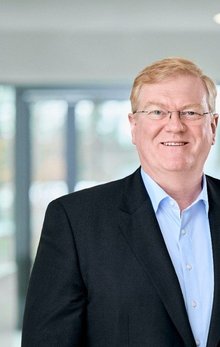
"We assume that market momentum in the crucial field of software-driven mobility will initially be restrained, but will then accelerate significantly, especially in the coming decade," said Stefan Hartung, Chairman of the Board of Management and CEO of Bosch.
Stefan explained that integrated software solutions are already being well received, helping the firm win US$10.9bn in orders for automated driving and sensor technology last year.

Intensive use of generative AI
To narrow a US$2.9bn cost gap in its Mobility sector, Bosch is using AI to drive internal productivity and streamline complex engineering processes.
The company is already a prolific patent applicant, having filed more than 2,000 patent applications in the field of AI since 2018. "We are working hard on our material costs, we are making even more intensive use of AI to increase our productivity, and we are weighing up every investment even more carefully than before," said Stefan.
He said that the strategic use of AI is essential to secure the company’s long-term competitiveness and investment capacity.
Bosch milestones in technical innovation
-
1886: Robert Bosch opens the "Workshop for Precision Mechanics and Electrical Engineering" in Stuttgart
-
1902: The company patents the high-voltage magneto ignition system with a spark plug
-
1906: Bosch establishes its first sales office in the United States, which now employs 20,000 associates
-
1978: The firm launches the first electronic anti-lock braking system (ABS) for passenger cars
-
2021: Bosch opens its first fully automated semiconductor wafer fab in Dresden to support the automotive industry.
Vehicle computers as digital brains
The transition to software-defined vehicles requires a shift in electronic architecture. Bosch is developing central vehicle computers that consolidate computing power, functioning as a digital brain connected to a nervous system of sensors.
These high-performance computers interpret data from cameras, radars and ultrasonic sensors to manage driver assistance and automated driving. By the end of 2027, the company intends for AI to be used throughout the entire organisation to optimise energy flows and increase the range of electric powertrains.
This energy efficiency software is designed to reduce losses and improve the overall performance of electric vehicle systems.
All sustainability, net zero and sustainable supply chain leaders should attend:
- Sustainability LIVE: The Net Zero Summit - QEII Centre, London, March 4-5
- Sustainability LIVE: The US Summit - Navy Pier, Chicago, April 21-22
Co-located with Procurement & Supply Chain LIVE, these events brings together CSOs, ESG leaders and senior decision-makers at a moment when sustainability, supply chains and commercial performance are increasingly interconnected.
Tickets can be booked online today for The Net Zero Summit and The US Summit. Group discounts available.
Overcoming septicism toward technological progress
In Europe, Bosch is advocating for a more decisive engagement with new technologies to ensure regional prosperity.
Stefan expressed concern regarding the "Bosch Tech Compass" survey, which revealed that less than two-thirds of Germans believe technological progress has a positive impact.
"This is highly alarming," said Stefan. He argued that society can only survive in global competition if there is sufficient will to make technological progress in fields like hydrogen and AI.
He called on policymakers to introduce targeted local content rules to make the currently distorted global competition fairer for innovative European firms.
Target margins and economic reality
Despite the push for innovation, Bosch reported that its 2025 EBIT margin of 2% was below expectations due to weak demand and structural adjustments.
The company has announced the need to cut approximately 13,000 jobs to maintain its financial independence and reach a target margin of 7% by 2027.
"The economic reality is reflected in our results – 2025 was a difficult and sometimes painful year for Bosch," said Stefan. He emphasised that even a foundation-owned company must keep an eye on its existence.
Company portals

Executives
Dr. Markus Forschner
Member of the Board of Management (CFO)
Stefan Hartung
Chairman of the Board of Management