AI Humanoid Robots Central to Hyundai's Manufacturing Vision
Hyundai Motor Group has unveiled plans to integrate AI-powered humanoid robots into its manufacturing operations from 2028, marking a significant shift in how automotive production could be transformed by advanced AI systems.
The announcement centres on Atlas, a humanoid robot developed by Boston Dynamics, which was showcased at CES 2026 in Las Vegas. Hyundai, which owns a majority stake in Boston Dynamics, says it aims to establish a production system capable of manufacturing 30,000 robot units annually by 2028.
The development of Atlas has been accelerated through a strategic partnership between Boston Dynamics and Google DeepMind, bringing together robotics engineering and cutting-edge AI capabilities. This collaboration could represent a crucial step in advancing AI-driven automation across industrial settings.
"The convergence of robotics and AI represents more than a technological advancement," says Zachary Jackowski, Vice President and General Manager of Atlas at Boston Dynamics. "It is a transformative innovation that will make human life safer and more enriching.
"By combining capabilities of Boston Dynamics and Google DeepMind through this strategic partnership, we are taking a significant step toward redefining the future paradigm of the industry."
AI-enhanced capabilities and deployment timeline
Atlas features 56 degrees of freedom, predominantly with fully rotational joints, and human-scale hands equipped with tactile sensing technology. According to Hyundai, the robot can perform precision tasks and lift loads up to 50 kg.
The company plans to introduce Atlas initially on processes with proven safety and quality benefits from 2028, such as parts sequencing. By 2030, Hyundai expects the robot's applications to extend to component assembly and tasks involving repetitive motions and heavy loads, areas where AI-driven adaptation could prove particularly valuable.
The AI infrastructure underpinning this robotics initiative involves NVIDIA's AI frameworks and simulation libraries, which will be deployed across Hyundai Motor Company, Kia Corporation and Hyundai Mobis Company. This technological foundation will work alongside Boston Dynamics' partnership with Google DeepMind to train and develop the robots' AI capabilities.
The phased deployment strategy reflects Hyundai's cautious approach to integrating humanoid robots into complex manufacturing environments. The initial focus on parts sequencing allows the company to evaluate Atlas' performance in controlled conditions before expanding to more demanding applications that require greater AI sophistication and autonomous decision-making capabilities.

Building an AI robotics ecosystem
Hyundai is constructing what it describes as a Group Value Network around an end-to-end AI Robotics Value Chain. Software-defined factories and a Robot Metaplant Application Center will be used to train the robots using real-world production data, focusing on safety protocols for human-robot collaboration.
The AI training approach aims to enable robots to learn from actual manufacturing environments, potentially allowing them to adapt to varying production requirements and safety scenarios.
Carolina Parada, Senior Director of Robotics at Google DeepMind, adds: "We are excited to begin working with the Boston Dynamics team to explore what's possible with their new Atlas robot as we develop new models to expand the impact of robotics, and to scale robots safely and efficiently."
Within Hyundai's group structure, specific roles have been assigned to different affiliates. Hyundai Mobis will develop high-performance actuators and standardise key components, while Hyundai Glovis will optimise logistics and supply chain management.
Expanding AI robotics services
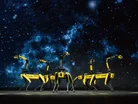
Beyond Atlas, Boston Dynamics' existing robots are already operational globally.
Spot, a quadruped robot, performs tasks including data collection and safety monitoring across more than 40 countries, while Stretch, a warehouse robot, has unloaded more than 20 million boxes globally since its launch in 2023.
Hyundai says it will leverage the group's manufacturing expertise to accelerate mass production of AI robotics and expand Robotics-as-a-Service (RaaS) offerings. This model transitions robotics from a one-time purchase into a flexible, ongoing service delivered through subscription plans, with artificial intelligence updates and improvements potentially deployed remotely.
The RaaS model has already been deployed with companies including DHL, Nestlé and Maersk, suggesting growing industry acceptance of AI-powered robotic solutions.
Supporting this AI robotics push, Hyundai has announced a US$86bn (£69bn) investment in Korea over five years and a US$26bn (£21bn) investment in the US – both aimed at advancing robotics powered by AI technologies. These investments could power the automotive industry's broader shift towards AI-integrated manufacturing processes.






Executives
Carolina Parada
Senior Director and Head of Robotics
Zachary Jackowski
General Manager - Atlas